

"He Reaches for Everything. But He Never Points."
You've watched other toddlers point at birds, at dogs, at anything that catches their eye. Your child stares. Reaches. Grabs your hand and places it on things. But that index finger never extends toward the world. You are not failing. Your child's communication system is speaking — and pointing is the gateway it hasn't found yet.
"My child grabs for things but never points. Other toddlers point at everything — dogs, airplanes, toys they want. Mine just stares or reaches. Is this a problem?" — A mother's words. Heard across 70+ Pinnacle Blooms centers. Every single day.
Pinnacle Blooms Network® Clinical Consortium
Powered by GPT-OS®
Pre-Linguistic Communication Series — Episode B-123

You Are Among Millions
If your child is between 9 and 24 months and does not point, you are not navigating this alone. Across India — and across 70+ countries served by Pinnacle's knowledge ecosystem — millions of families are working on building this exact milestone right now. Pointing is not a small thing. It is the developmental bridge between pre-verbal communication and spoken language. And it can be built.
50-70%
Early Indicator
Of children later diagnosed with autism showed absent or delayed pointing before 18 months. Source: Baron-Cohen (1989); Colgan et al., J Autism Dev Disord, 2006
9-14mo
Typical Window
When pointing emerges — first to request, then to share interest. Source: Bates, Camaioni & Volterra (1975); Tomasello (2007)
21M+
Therapy Sessions
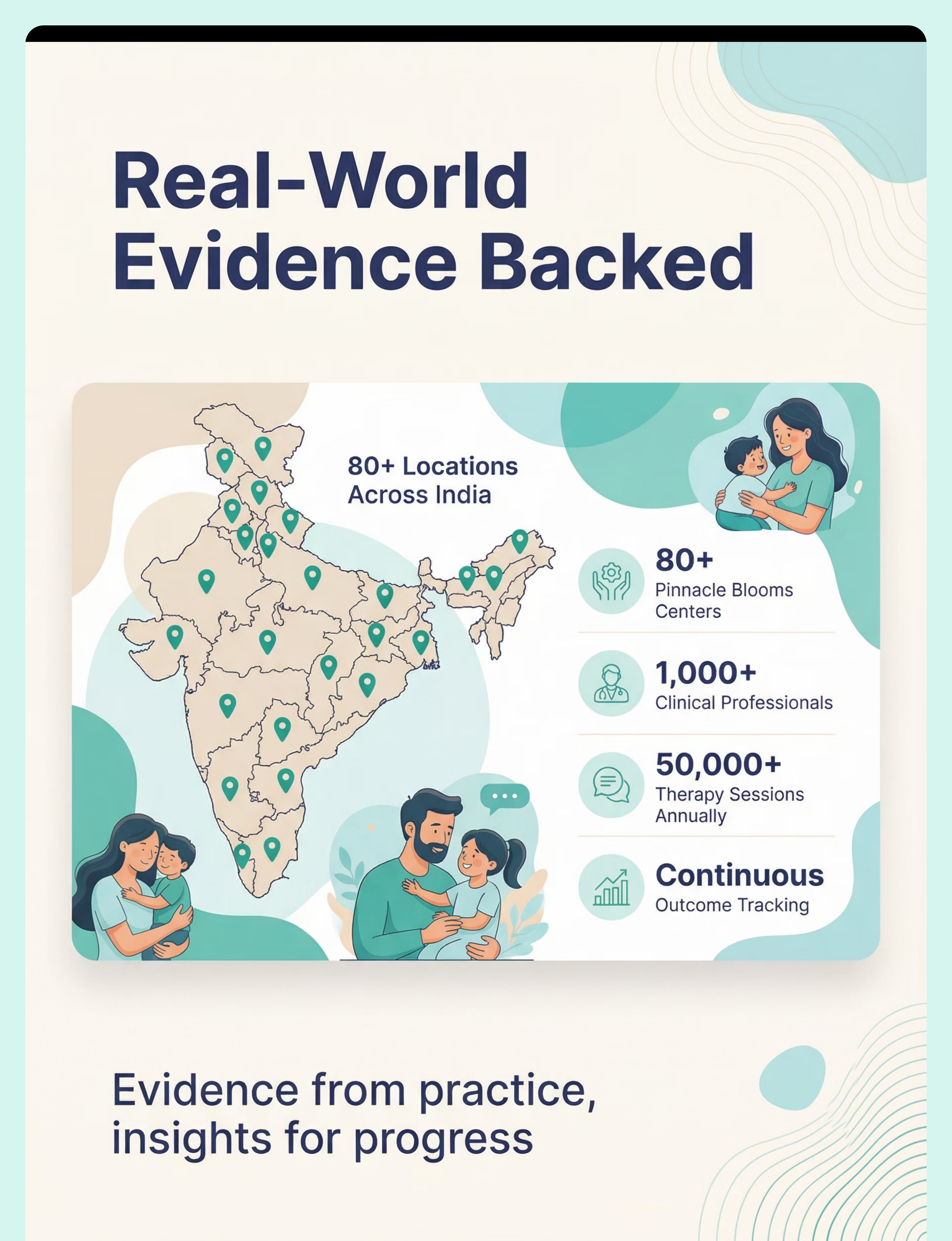
Delivered by Pinnacle Blooms Network, with gesture and pointing development as one of the most common early intervention targets. Source: Pinnacle Blooms Network® Clinical Data, 2024

Why Pointing Isn't "Just a Gesture"
Pointing requires your child's brain to do three things simultaneously — and this is what makes it such a powerful developmental marker. It is a wiring difference, not a behavior choice. The right materials accelerate this process.
Three Brain Systems in Action
1. Prefrontal Cortex — The decision to share or request (communicative intent)
2. Superior Temporal Sulcus (STS) — Reading where another person is looking (social attention)
3. Motor Cortex + Premotor Area — Isolating the index finger from the fist (fine motor execution)
Motor Skill: Index Finger Isolation
Your child must learn to extend one finger while curling the others. This fine motor milestone is governed by the motor cortex. Without it, the physical act of pointing is impossible.
Social Understanding
Your child must understand that other people have a focus of attention — and that this focus can be redirected. This theory-of-mind precursor is processed in the superior temporal sulcus.
Communicative Intent
Your child must have the desire to either request something (proto-imperative) or share an experience (proto-declarative). This requires the prefrontal cortex and is fundamentally a social-communicative decision.
Reference: Frontiers in Integrative Neuroscience (2020), DOI: 10.3389/fnint.2020.556660

The Pointing Development Timeline
Understanding where your child is — and where they're heading — is the first step to meaningful support. Every milestone below is a building block toward expressive language.
6–8 Months
Reaching toward desired objects — the earliest precursor ✅
8–9 Months
Following another person's point (gaze following) — precursor ✅
9–12 Months
🎯 Proto-imperative pointing — pointing to REQUEST ("I want that")
12–14 Months
🎯 Proto-declarative pointing — pointing to SHARE ("Look at that!")
16–18 Months
Integrated pointing with gaze + vocalization — mastery level
18+ Months
Full gesture repertoire with pointing as foundation — generalization
🔬WHO/UNICEF Developmental Framework: The Care for Child Development (CCD) Package, implemented across 54 low- and middle-income countries, identifies gesture development in the 9-18 month window as a critical marker for communication readiness. Delayed pointing commonly co-occurs with limited eye contact, reduced social responsiveness, and language delays. When present together, comprehensive developmental assessment is recommended. References: PMC9978394 | WHO/UNICEF CCD Package (2023)

Clinically Validated. Home-Applicable. Parent-Proven.
Evidence Grade: Level II
Systematic Reviews + Controlled Studies + Longitudinal Research
📊 Systematic Review (2024)
Meta-analysis across 24 studies confirms that structured intervention targeting social communication skills — including gesture development — effectively promotes social skills, adaptive behavior, and motor skills in children with ASD. Reference: PMC10955541 | World J Clin Cases, 2024
📊 PRISMA Model Review (2024)
16 articles from 2013–2023 confirm sensory integration and early communication interventions meet criteria for evidence-based practice for children with ASD. Reference: PMC11506176 | Children, 2024
📊 Indian RCT (2019)
Home-based interventions targeting early communication milestones demonstrated significant outcomes when structured protocols were provided to parents. Reference: DOI: 10.1007/s12098-018-2747-4 | Padmanabha et al., Indian J Pediatr, 2019
📊 Foundational Research
Bates, Camaioni & Volterra (1975) established pointing as a pre-linguistic performative that precedes and predicts language. Baron-Cohen (1989) identified absent proto-declarative pointing as a key early indicator of autism.
"The materials and approach on this page are drawn from the intersection of developmental psychology, speech-language pathology, occupational therapy, and applied behavior analysis. Every recommendation is traceable to peer-reviewed research."
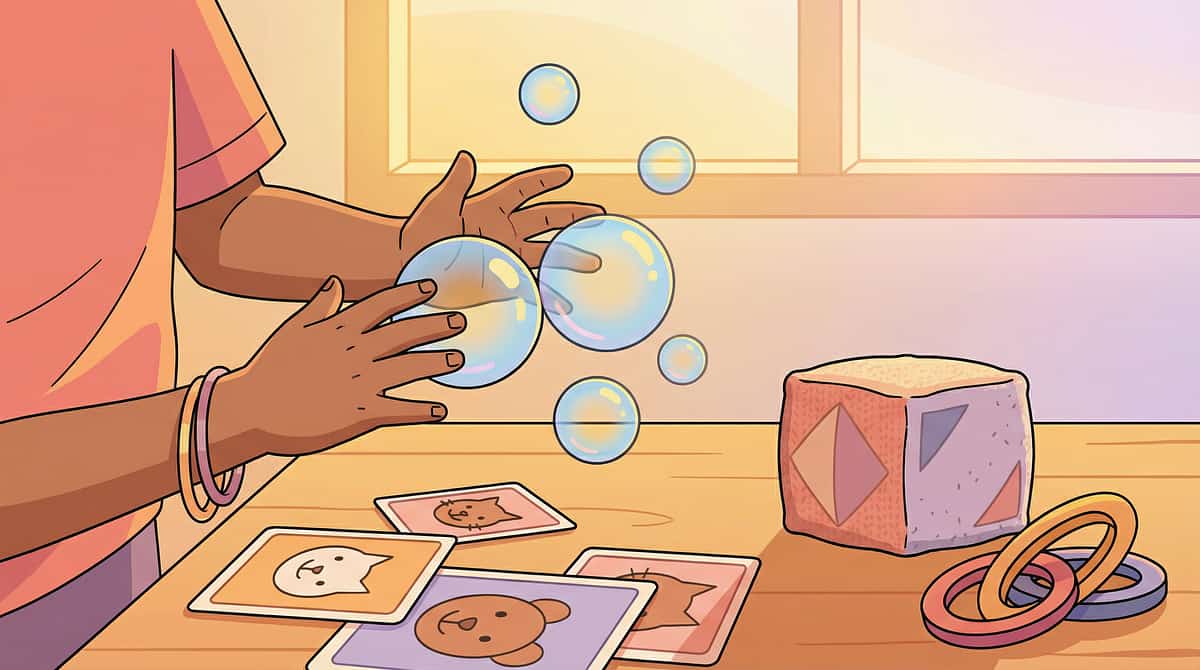
Material-Assisted Pointing Development Protocol
Parent-Friendly Alias: "Teaching Your Child the Power of the Pointing Finger"
This is a structured, play-based intervention that uses 9 categories of carefully selected therapeutic materials to build pointing skills in children aged 9–24 months. Each material targets a specific component of pointing: the motor skill (index finger isolation), the understanding (pointing affects others), or the motivation (pointing gets results). Used together across daily routines, these materials create a multi-sensory, multi-pathway approach to unlocking this essential communication milestone.
📁 Domain
Social Communication — Gesture Development & Joint Attention
📅 Age Range
9–24 months
⏱️ Session Duration
5–15 minutes
🔄 Frequency
3–5× daily, integrated into routines

Four Disciplines. One Unified Goal.
Speech-Language Pathologist (SLP)
SLPs target pointing as a pre-linguistic communication milestone. They work on communicative intent — building the child's understanding that pointing is a way to share, request, and comment. SLPs use pointing as the bridge to verbal language. "Pointing is where language begins — before the first word, there is the first point."
Occupational Therapist (OT)
OTs target index finger isolation — the fine motor foundation of pointing. Through finger puppets, button pressing, sticker activities, and hand-over-hand guidance, OTs build the physical capability to extend one finger while curling the others. "Before a child can point, the hand must learn to isolate."
BCBA / ABA Therapist
ABA therapists use functional communication training to teach that pointing produces results. Choice boards, pairing procedures, and reinforcement schedules ensure pointing becomes a motivated, functional behavior. "When pointing works — when it gets the cookie, the toy, the attention — pointing sticks."
Special Educator
Special educators embed pointing across learning contexts — during book reading, during choice-making, during daily routines. They ensure pointing generalizes beyond the therapy session into the child's natural environment. "Pointing in therapy means nothing if it doesn't happen at the dinner table."
"This technique crosses therapy boundaries because the brain doesn't organize by therapy type. Pointing requires motor, cognitive, social, and communicative systems working together — which is why the Pinnacle Blooms Consortium integrates all four disciplines through FusionModule™." Reference: DOI: 10.1080/17549507.2022.2141327
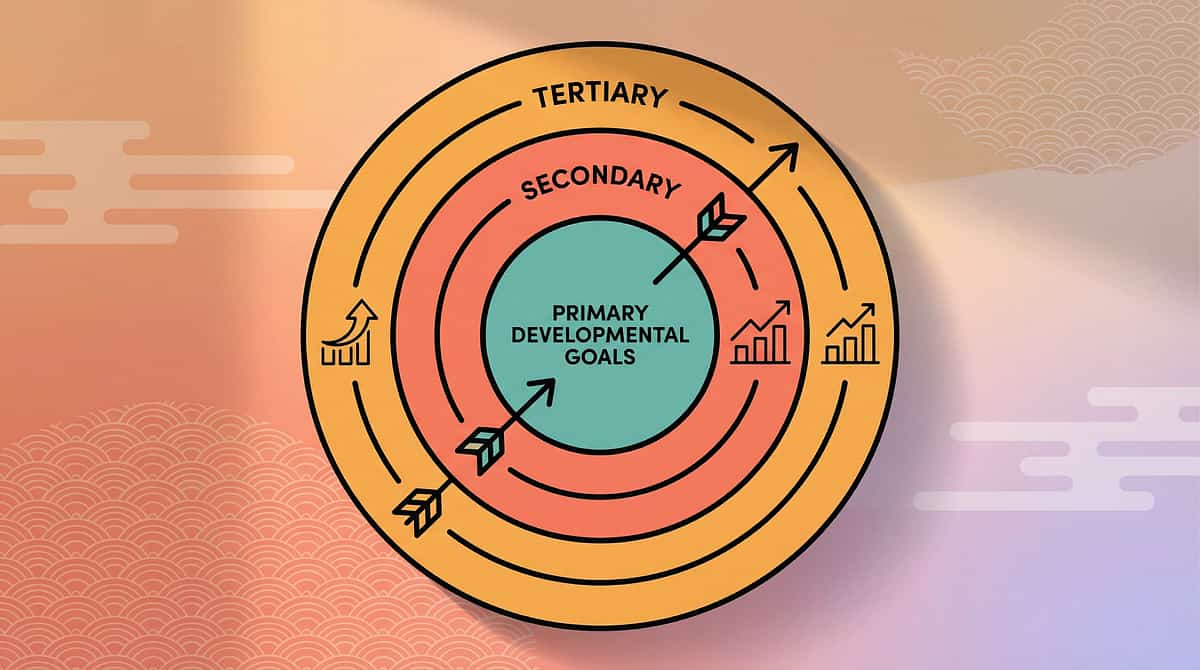
Precision Targeting — What Pointing Builds
Pointing development creates a cascade of connected skills — each one opening the door to the next. The targets below represent the full developmental architecture this protocol is designed to build.
🎯 Primary Targets
- Proto-imperative pointing — "I want THAT"
- Proto-declarative pointing — "Look at THAT!"
- Index finger isolation and extension
- Coordinated gaze + point + vocalization
🔵 Secondary Targets
- Joint attention (shared focus)
- Social referencing (looking back at adult while pointing)
- Communicative intent
- Fine motor hand development
🟢 Tertiary Gains
- Pre-linguistic vocabulary building
- Theory of mind precursors
- Social reciprocity foundations
- Expressive language readiness
Observable Behavior Indicators
✅ Child extends index finger toward objects of interest
✅ Child looks back at adult after pointing (gaze coordination)
✅ Child points to request desired items (proto-imperative)
✅ Child points to share discoveries (proto-declarative)
✅ Child follows when others point (receptive pointing)
Reference: PMC10955541 | Meta-analysis on social communication intervention outcomes
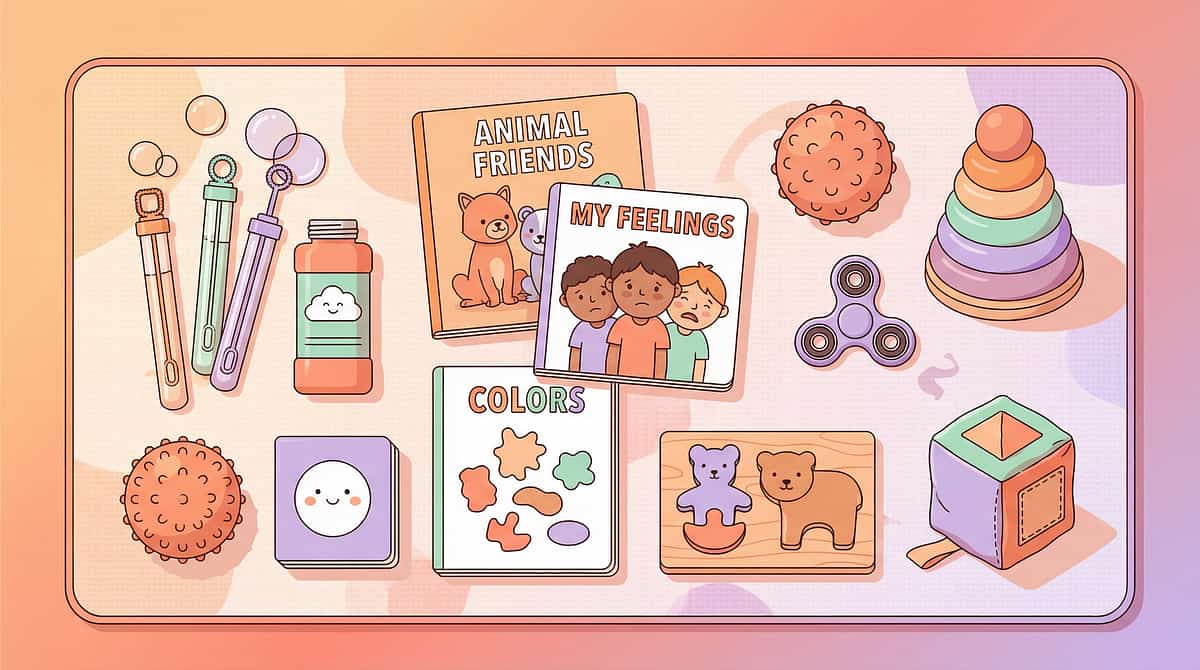
Your 9-Material Pointing Development Kit
Each material in this kit targets a specific component of pointing development. Together they create a multi-sensory, multi-pathway approach. Total Kit Cost: ₹1,000–4,000 for comprehensive setup. Essential Starters (₹250–1,000): Bubbles + Finger Puppets + Choice Boards + Joint Attention Games.
# | Material | Canon Category | Price (INR) | Essential? | |
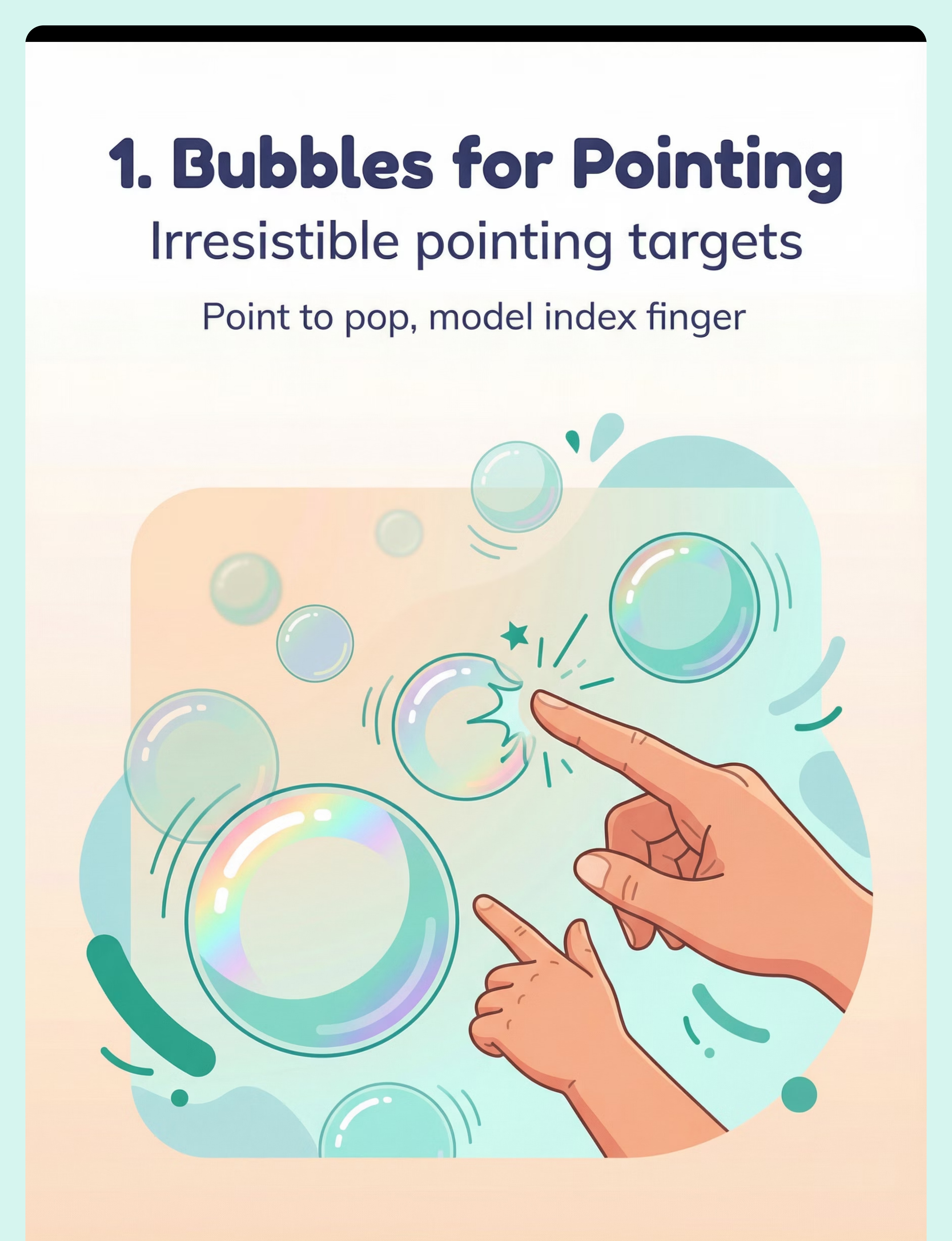
1 | Bubble Wands & Solutions | Sensory Visual Toys | ₹50–300 | ⭐ Starter | |
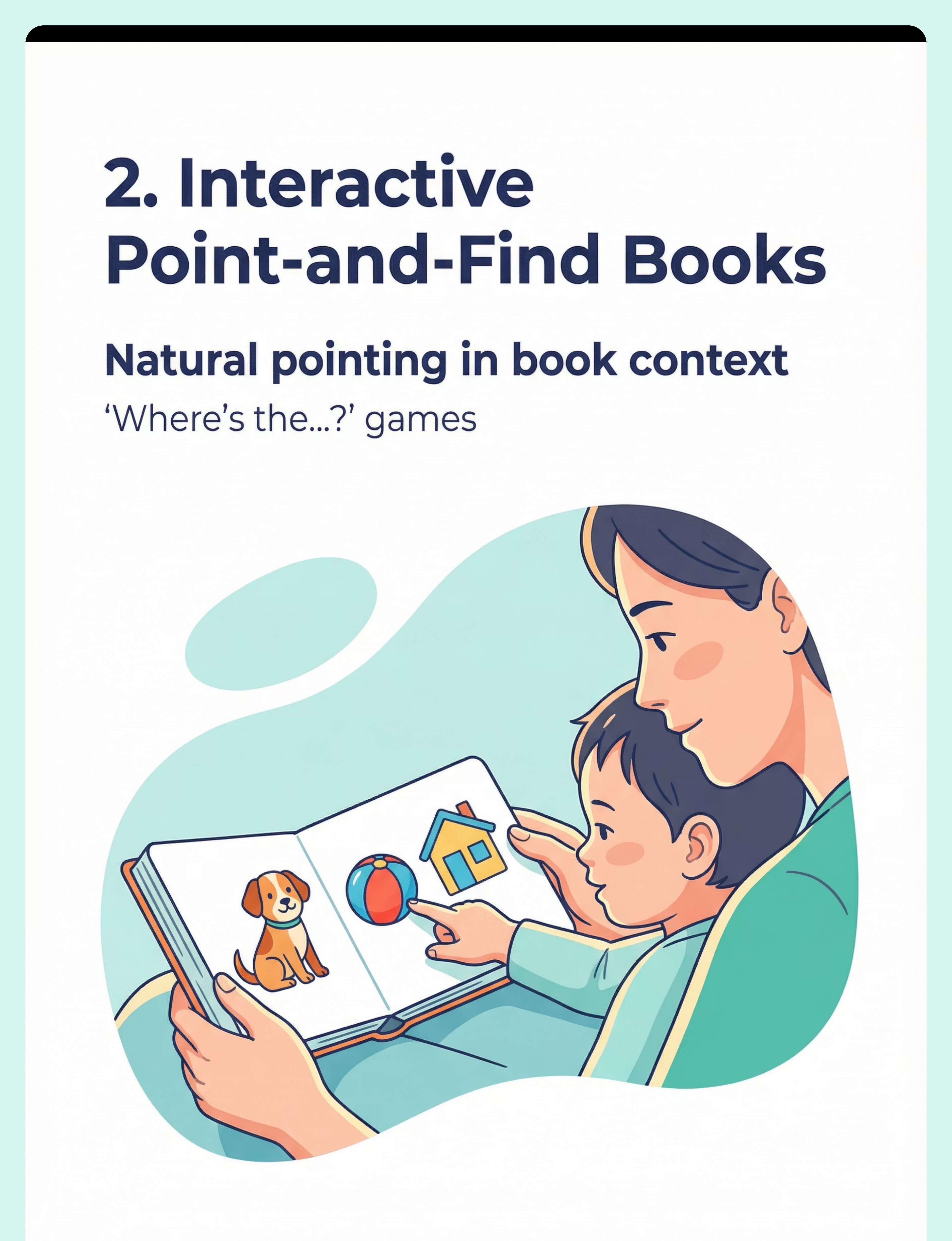
2 | Interactive Point-and-Find Books | Interactive Books & Literacy | ₹200–600 | Core | |
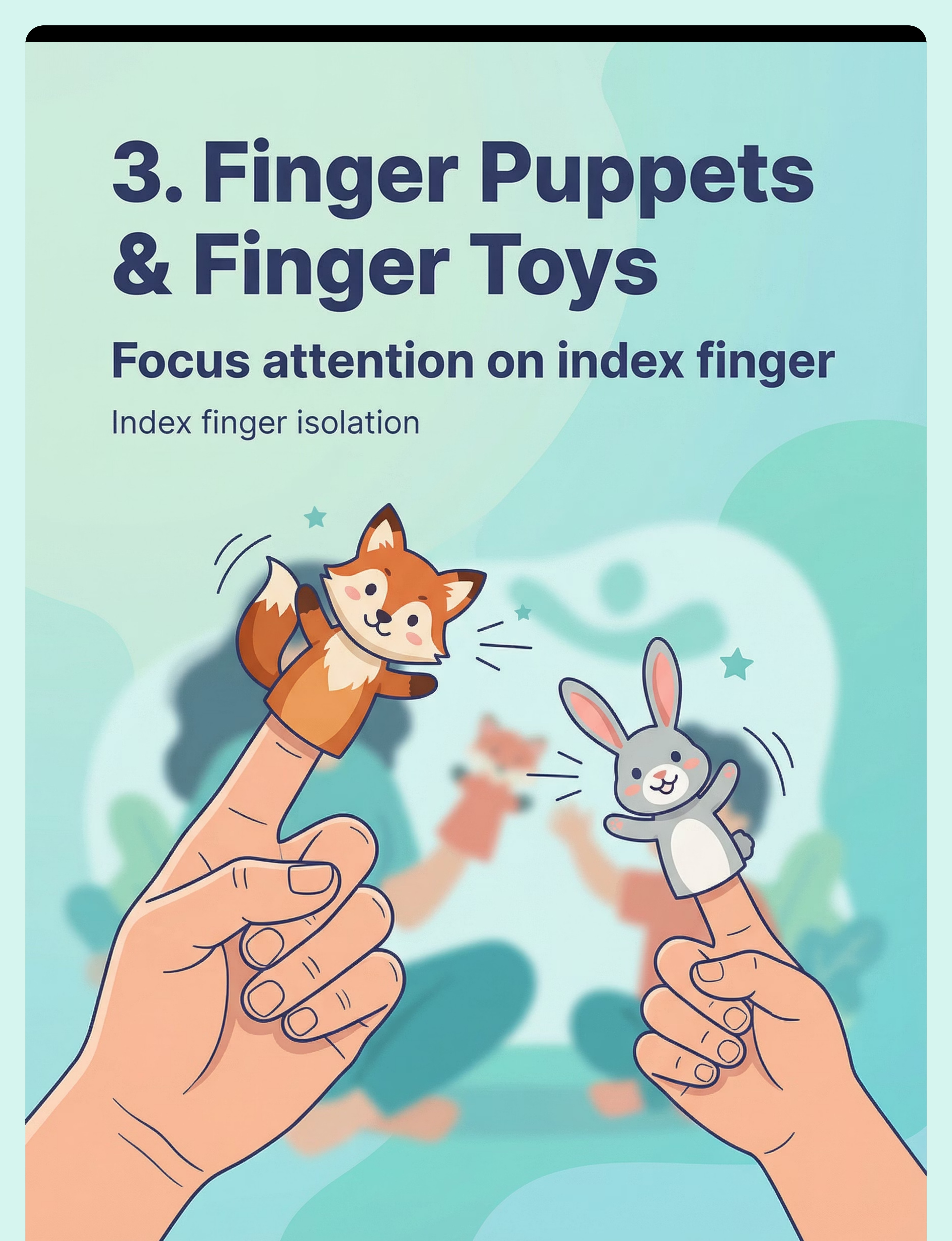
3 | Finger Puppets & Finger Toys | Puppets & Dramatic Play | ₹100–400 | ⭐ Starter | |
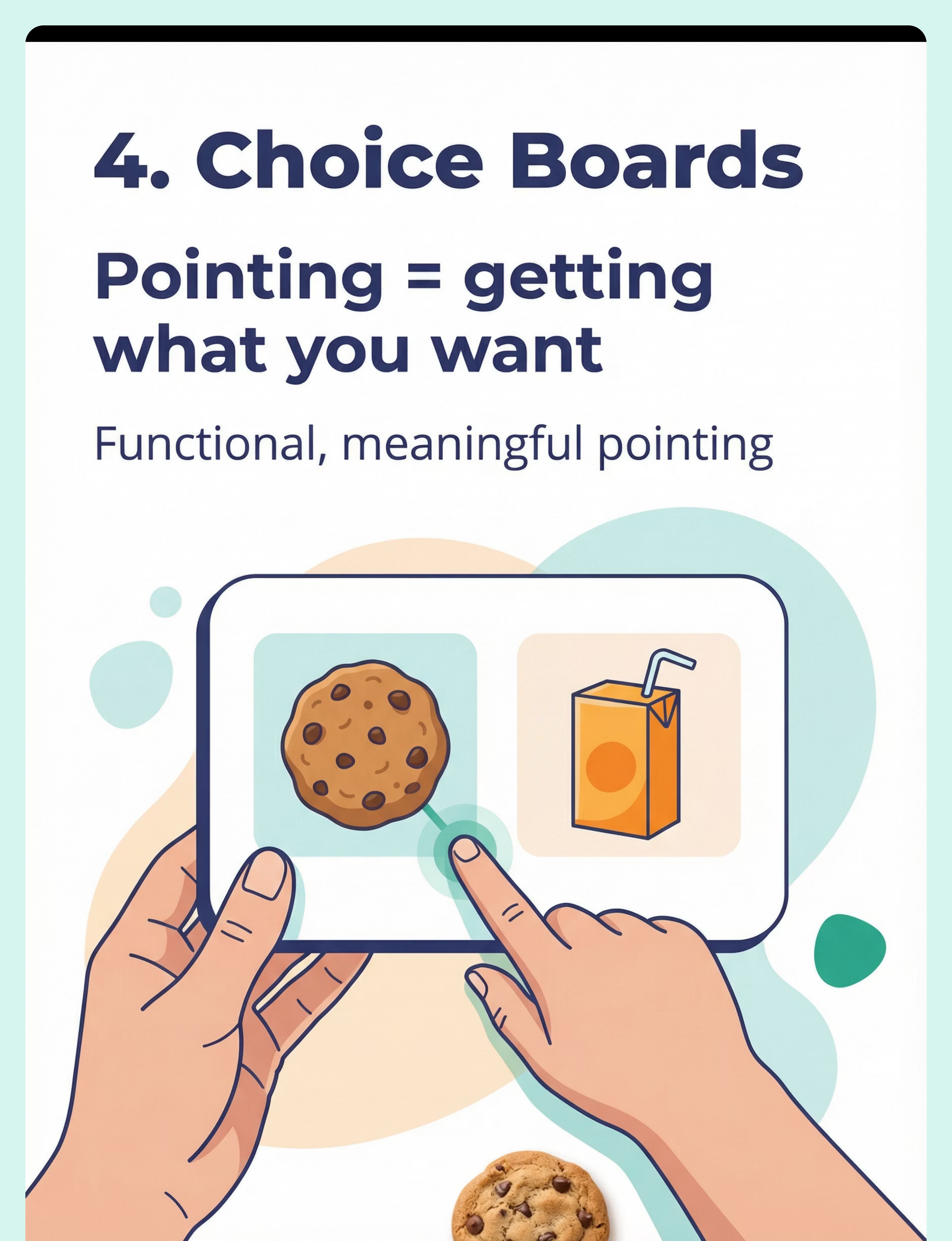
4 | Choice Boards & Picture Cards | AAC & Visual Supports | ₹100–500 | ⭐ Starter | |
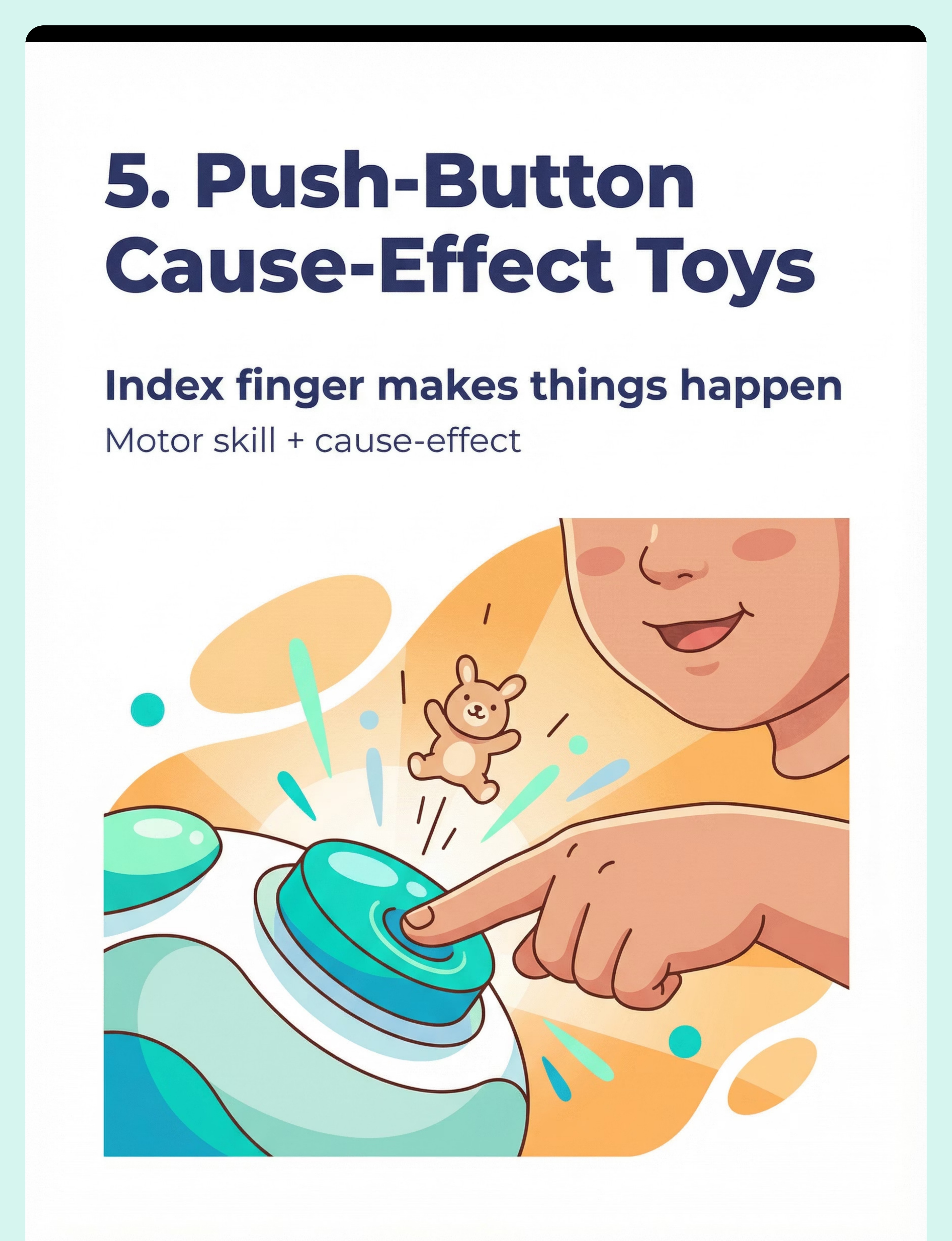
5 | Push-Button Cause-Effect Toys | Cause-Effect & Switch Toys | ₹300–1,000 | Core | |
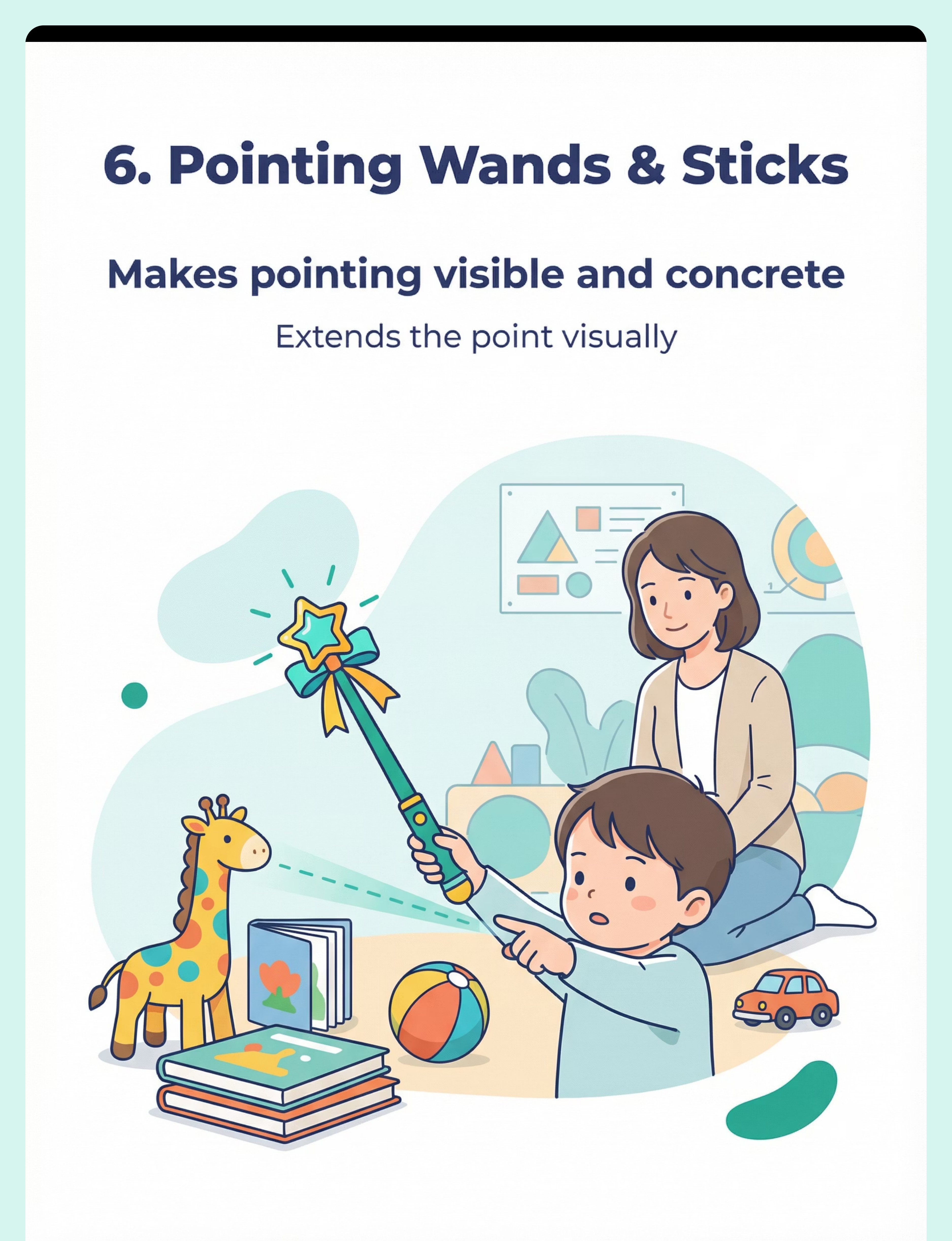
6 | Pointing Wands & Sticks | Fine Motor Tools | ₹50–300 | Optional | |
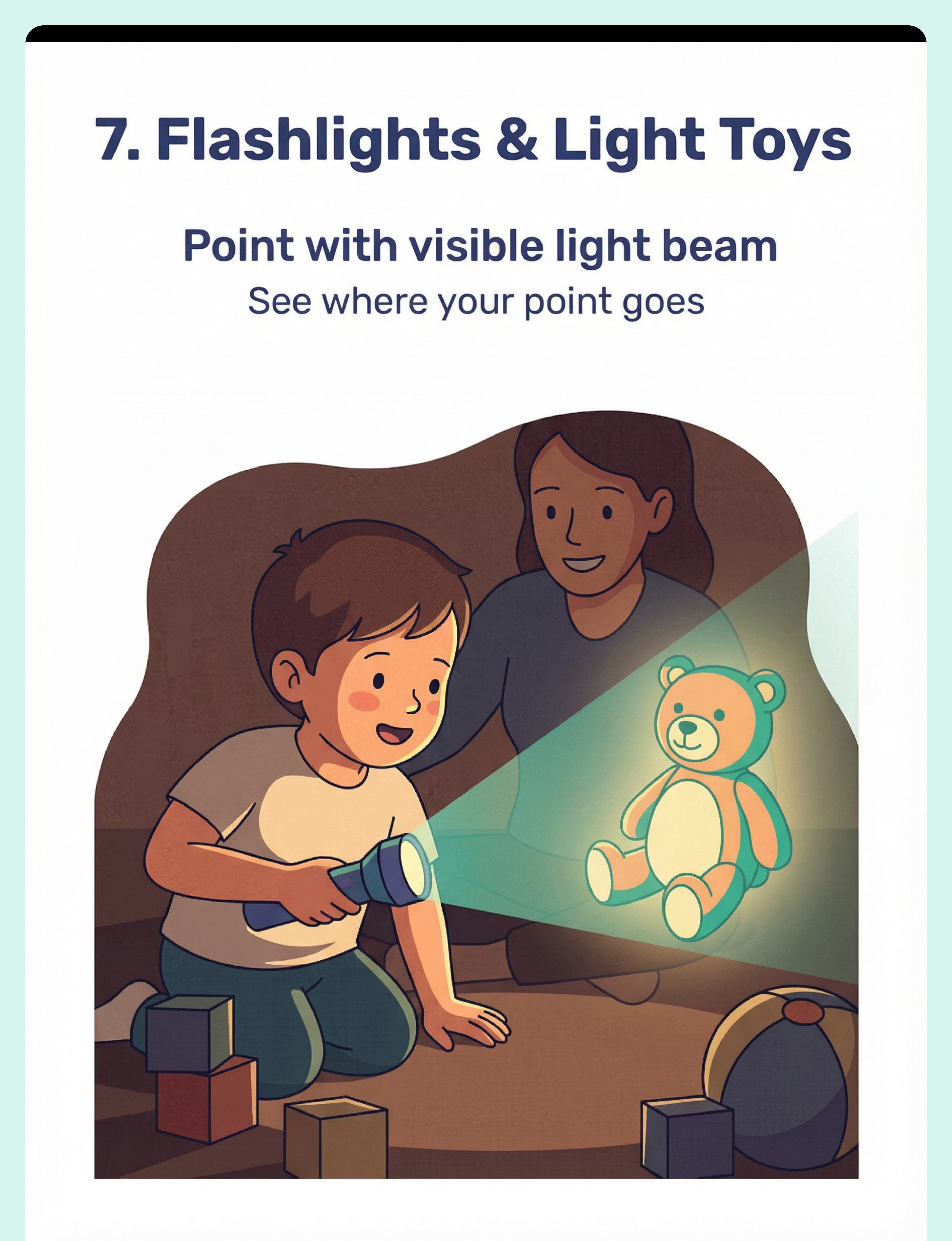
7 | Flashlights & Light Toys | Light & Projection Toys | ₹100–500 | Core | |
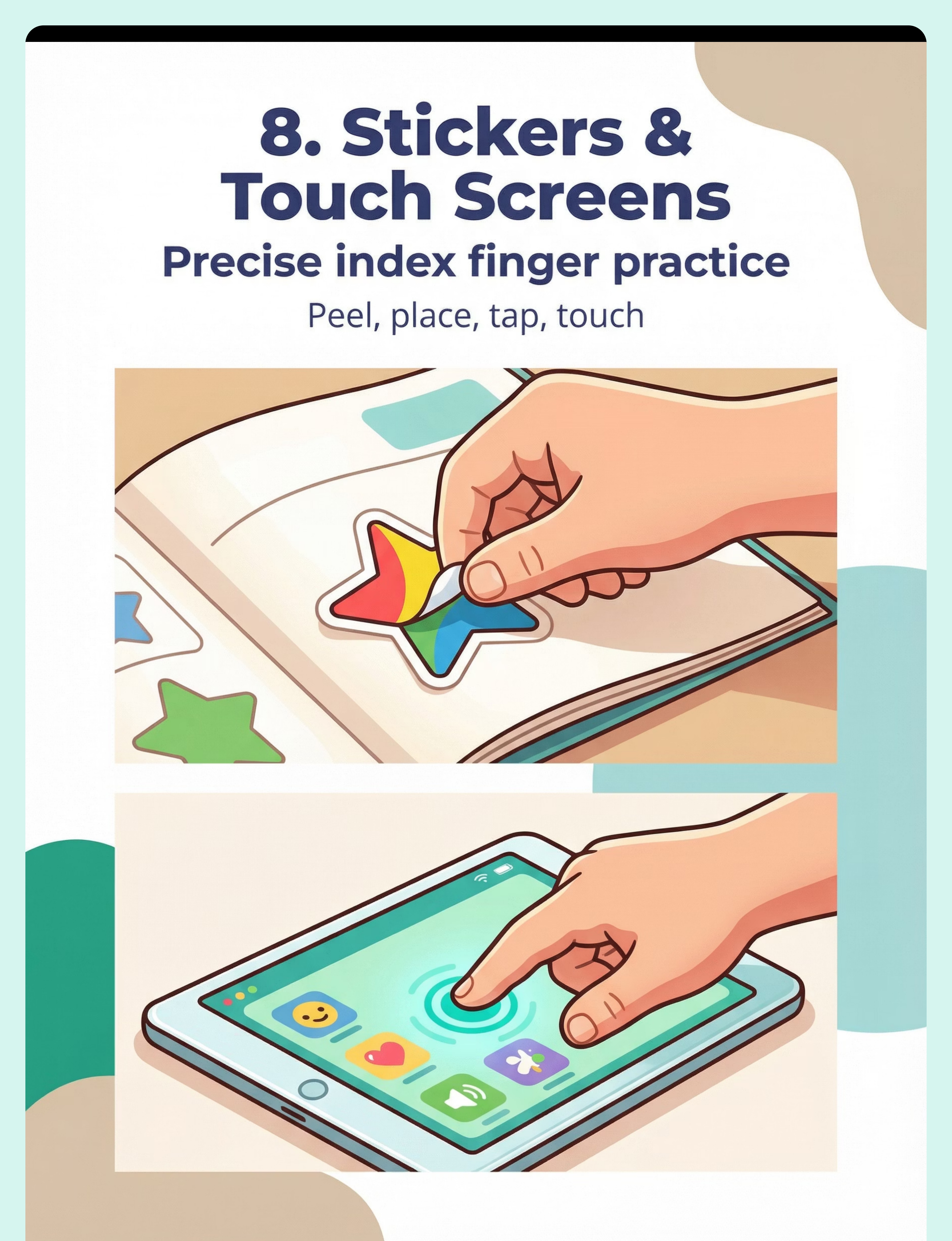
8 | Stickers & Touch-Screen Apps | Fine Motor + Digital Tools | ₹100–400 | Core | |
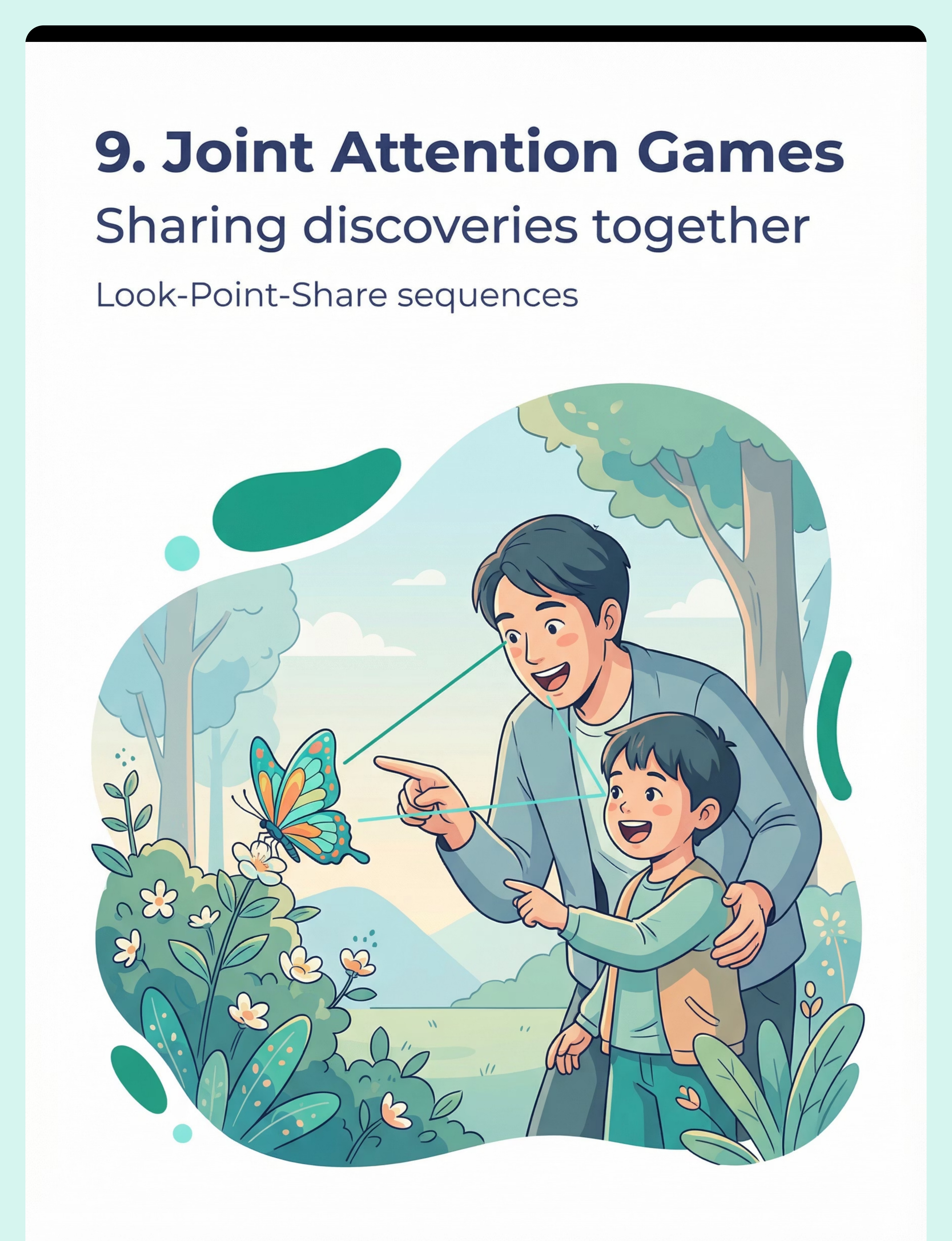
9 | Joint Attention Games | Social Play & Interaction | ₹0–300 | ⭐ Starter |

Zero-Cost Alternatives — Start Today With What You Have
"Not every family can order from Amazon. Not every village has same-day delivery. The WHO Nurturing Care Framework mandates equity-focused interventions. Every parent, regardless of economic status, can execute this technique TODAY."
Buy This | Make This at Home | Why It Works | |
Bubble solution & wands | Mix dish soap + water + glycerin. Use a bent wire loop or straw. | Same visual tracking + pointing targets. | |
Point-and-find books | Use any picture book or family photo album. Ask "Where's the...?" | Same shared attention + pointing context. | |
Finger puppets | Draw faces on fingertips with washable markers. Fold paper into finger caps. | Same index finger attention + isolation. | |
Choice boards | Print/draw 2–3 photos of favorite items on paper. Laminate with tape. | Same functional pointing motivation. | |
Push-button toys | Doorbells, elevator buttons, light switches, calculator keys. | Same index finger cause-effect learning. | |
Pointing wands | Wooden spoon, safe dowel, decorated stick, rolled-up paper. | Same pointing extension + visual concept. | |
Flashlights | Phone flashlight, any household torch. Dim the room. | Same light-pointing connection. | |
Stickers | Tape pieces (sticky side out), homemade dot stickers from paper + glue. | Same index finger precision practice. | |
Joint attention games | Hide a toy under a cloth. Notice birds outside. Create any "surprise" together. | Same shared discovery + pointing motivation. Zero cost. |
The clinical principle works regardless of the price tag. What matters is: index finger isolation, cause-effect understanding, and shared attention. These can be built with household items. Reference: PMC9978394 | WHO NCF Handbook (2022) — CCD Package implemented across 54 LMICs using household materials
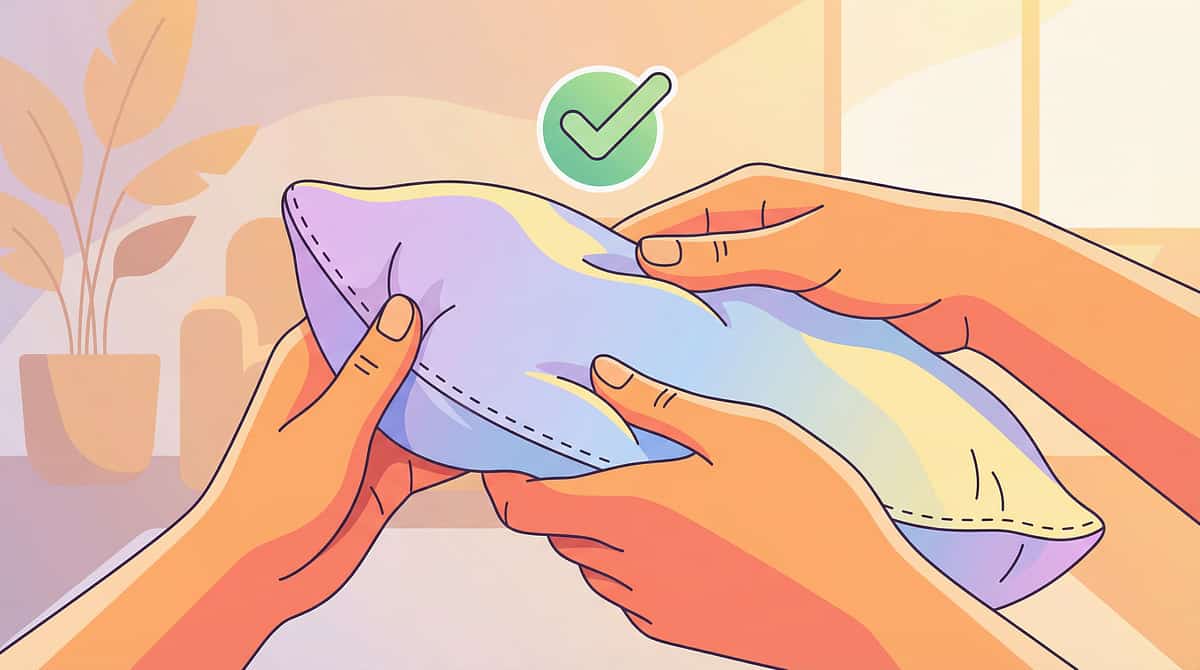
Safety Protocols — Read Before Starting
🔴 DO NOT PROCEED IF:
- Child is ill, feverish, or in pain
- Child has had a recent meltdown (allow 20+ minutes)
- Child shows signs of significant distress
- Any material has small parts accessible to a child who mouths objects (choking hazard)
🟡 MODIFY IF:
- Child appears tired or overstimulated — reduce to 2–3 minutes
- Child resists a specific material — skip it, never force
- Environmental noise is high — find a quieter space
🟢 PROCEED WHEN:
- Child is fed, rested, and regulated
- Environment is quiet with minimal distractions
- Materials are prepared within reach
- You have 5–15 uninterrupted minutes
⚠️ Material-Specific Safety
- Bubbles: Non-toxic solution ONLY. Supervise consumption. Moderate excitement for sensitive children.
- Finger Puppets: Choking hazard — supervise closely. Some children mouth rather than wear them.
- Push-Button Toys: Choose toys requiring finger isolation, not palm activation.
- Pointing Wands/Sticks: Supervise — can poke eyes. Choose safe, blunt materials.
- Flashlights: NEVER shine in eyes. No hot bulbs. Adjust lighting to child's comfort.
- Stickers: Non-toxic only. Can be choking hazards for small children.
- Touch Screens: Limit per AAP/WHO guidelines. Balance with non-screen activities.
🛑 CONTRAINDICATIONS
- Don't force pointing through frustration or withholding
- Don't demand pointing before providing all requests
- Don't create high-pressure "test" situations
- Keep ALL activities playful and low-demand
- Some motor delays require professional OT support — these materials supplement, never replace, clinical guidance
Reference: DOI: 10.1007/s12098-018-2747-4 | Indian J Pediatr RCT safety protocols

Your Pointing Practice Space — 2 Minutes to Prepare
The right environment isn't elaborate — it's intentional. A few simple adjustments to your space dramatically improve session outcomes by reducing distraction and keeping your child's attention where it matters most.
Setup Checklist
- ☐ Materials prepared and within YOUR reach (you control the pacing)
- ☐ Child positioned for face-to-face or side-by-side interaction
- ☐ Distracting toys, screens, and noise sources removed
- ☐ Lighting is comfortable (for flashlight activities, you'll dim later)
- ☐ 5–15 minutes of uninterrupted time available
- ☐ Your phone is on silent
- ☐ You are calm, present, and ready to be playful
Positioning by Material
- Bubbles / Flashlights / Wands: Side-by-side — you both point at the same targets
- Books / Choice Boards: Face-to-face or child in your lap
- Finger Puppets / Stickers: At a table or on the floor
- Joint Attention Games: Flexible — wherever discoveries happen
Key Environmental Principle
Materials basket within YOUR reach, not the child's. You control the pacing and presentation of each material. Child proximity: 30–60 cm for optimal face-to-face engagement. Soft, natural lighting. Quiet environment. Comfortable temperature.
Reference: PMC10955541 | Meta-analysis confirming structured environment importance

60-Second Pre-Session Readiness Check
The best session is one that starts right. A forced session does more harm than a skipped one. Run through this quick checklist before every practice.
✅ Child is fed
Not hungry or thirsty — basic needs met before communication work begins.
✅ Child is rested
Not overtired or just woken up — alert state required for learning.
✅ Child is calm and regulated
Not mid-meltdown, not zoned out — emotionally available.
✅ No illness or pain indicators
Physical discomfort blocks communication engagement.
✅ No meltdown in last 20 minutes
Regulatory recovery time is non-negotiable.
✅ Social availability present
Child makes eye contact, responds to your voice, shows some social interest.
🟢 GO (5+ checks)
Proceed to Step 1: The Invitation
🟡 MODIFY (3–4 checks)
Simplified version: Use only bubbles or joint attention games, 2–3 minutes maximum, ultra-low demand
🔴 POSTPONE (0–2 checks)
Calming activity instead: deep pressure hugs, soft music, rocking. Try again later.

Step 1 — The Invitation (30–60 Seconds)
Step 1 of 5
"Hey [child's name]! Look what I have! Want to play with me?"
What to Do
- Sit at the child's level
- Show one material (start with bubbles — universally motivating)
- Use an animated, warm voice — NOT a demand voice
- Wait 3–5 seconds for the child to show interest
- Mirror their excitement if they reach toward it
ABA Principle
This is the pairing phase — associating YOU and the materials with positive experiences before any demand is placed.
✅ Acceptance Looks Like:
- Child looks at the material
- Child reaches toward it
- Child moves closer to you
- Child vocalizes with interest
⚠️ Resistance & How to Modify:
- Child turns away → Try a different material. Try again in 5 minutes.
- Child pushes away → Accept the rejection. Offer a comfort activity instead.
- Child is distracted → Remove competing distractions. Reduce environmental stimulation.
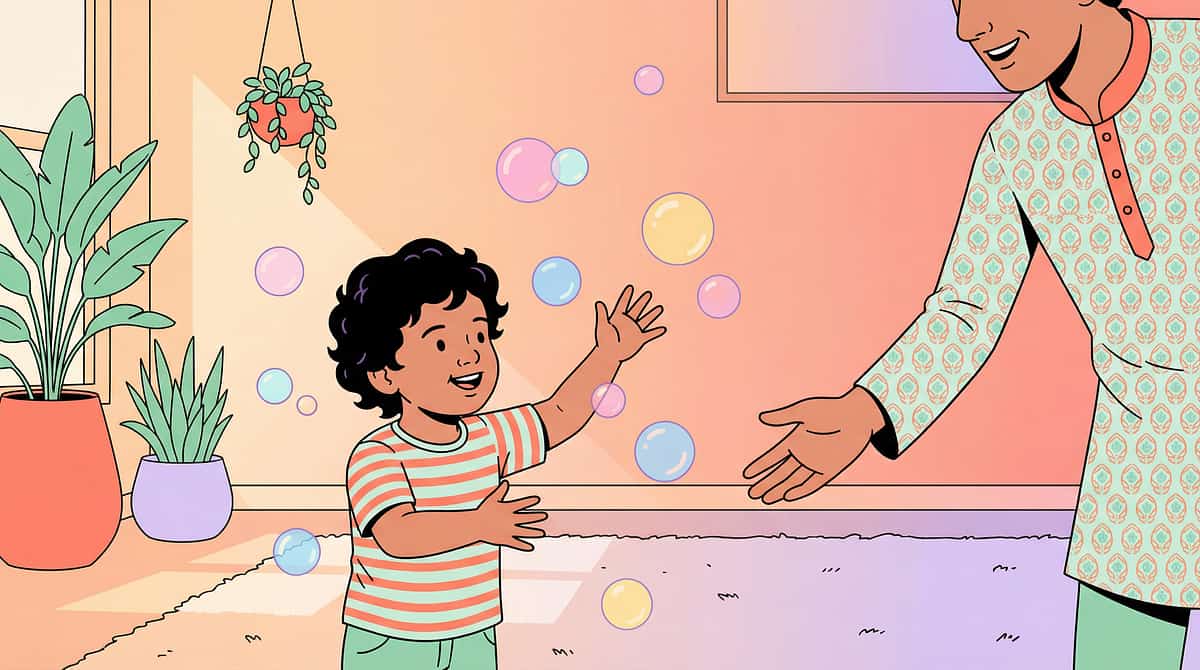
Step 2 — The Engagement (1–3 Minutes)
Step 2 of 5
Introduce the material playfully. Your job is to make your index finger — and where it points — the most interesting thing in the room.
🫧 If Using BUBBLES
"Watch! Look at the bubbles!" Blow 5–6 bubbles. Point at one with YOUR index finger and say "Look! A bubble! Pop!" Pop it with your extended index finger. Exaggerate the pointing gesture. Make it dramatic and fun.
📖 If Using BOOKS
Open to a colorful page. Point at a picture with your index finger: "Look! A dog! Where's the dog?" Tap the picture with your finger. Wait for the child to look where you're pointing.
🧸 If Using FINGER PUPPETS
Put a puppet on YOUR index finger. Wiggle it. Say "Hello! I'm on this finger! This is the pointing finger!" Draw attention to the index finger specifically.
🟢 Engagement
Child looks at material, at your hands, at where you point. Stay here.
🟡 Tolerance
Child is present but not actively engaged. Increase animation. Add sound effects.
🔴 Avoidance
Child looks away or moves away. Reduce intensity. Return to Step 1 or stop.
Reinforcement Cue: Any time the child looks where you point, reaches toward a target, or shows any index finger extension — immediately praise: "YES! You're looking! You see it!"
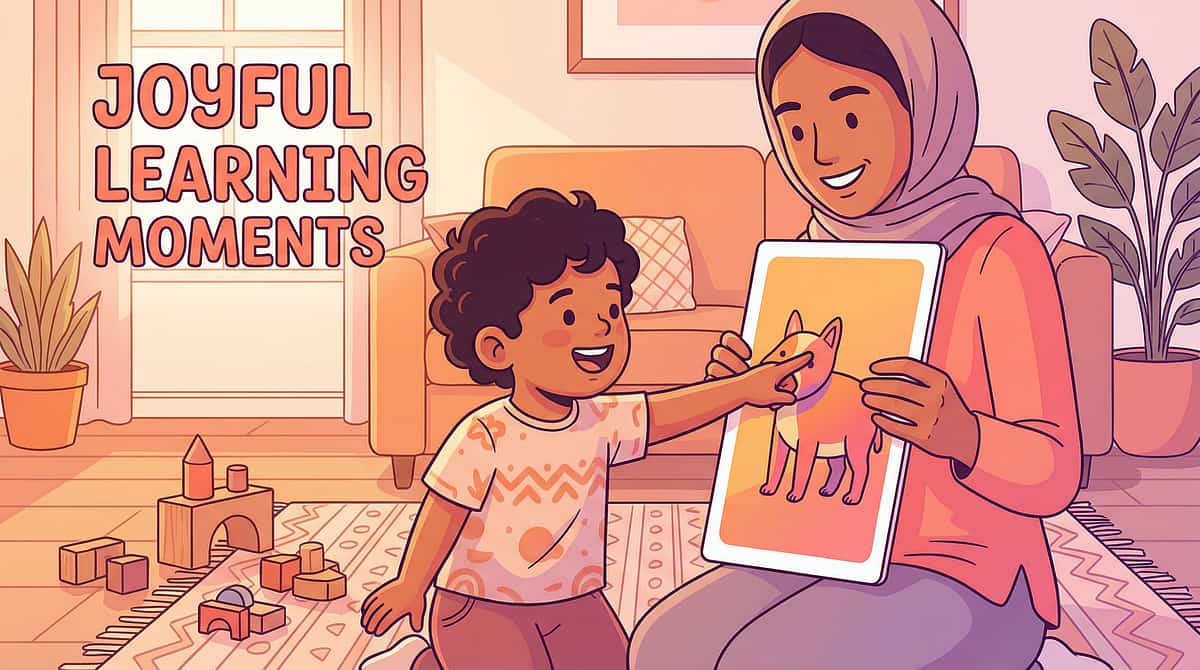
Step 3 — Building the Point (3–7 Minutes)
Step 3 of 5
Core Protocol
This is the heart of the session. Choose ONE primary material per session. Rotate across sessions. Each protocol below targets a different pathway to the same goal: independent pointing.
Protocol A: Bubbles → Pointing Targets
Blow bubbles. Let them float. Point at one with your extended index finger: "Look! THAT one!" Pop it with your finger. Wait. If child reaches with whole hand → guide into a point. Help isolate the index finger. Pop the bubble WITH their pointed finger. Celebrate every extension.
Protocol B: Books → Pointing in Context
Ask "Where's the [dog/ball/car]?" Wait 5 seconds. If no response → point yourself: "THERE it is!" If child reaches → guide their index finger to the picture. If child points → "YES! You found it!" Repeat across 3–5 pages.
Protocol C: Choice Boards → Functional Pointing
Hold up 2 photos of highly desired items. "Which one do you want? POINT to it." Wait 5–10 seconds. Accept reaching; model pointing alongside it. If child points → IMMEDIATELY give the item. ALWAYS honor the choice. Never bait-and-switch. Gradually increase to 3 choices.
Protocol D: Finger Puppets → Index Finger Isolation
Place a puppet on the child's index finger (with gentle guidance). "Look! Your pointing finger has a friend!" Make the puppet talk or move. Place a puppet on YOUR index finger. Point at things together. When the puppet is removed, the finger memory remains.
Protocol E: Push-Button Toys → Cause-Effect Pointing
Press the button with YOUR index finger. Show the result. Guide child's INDEX finger (not palm) to the button. When it activates → "YOUR finger did that! Your pointing finger is powerful!" Repeat. Always emphasize the index finger.
Protocol F: Flashlights → Light Pointing
Dim the room (not dark — dim). Show how the flashlight creates a beam. "Point the light at the teddy bear!" Aim the flashlight together. Bridge from light-pointing to finger-pointing: "Now point with your FINGER where the light should go."
Protocol G: Joint Attention → Natural Pointing
Create a surprise moment: hide a toy under a cloth and reveal it. "WOW! LOOK!" Point at it and look at child, then look back at object. Model this look-point-share sequence repeatedly. Notice things naturally — a bird, a sound — and point. WAIT for the child to follow, then initiate their own.
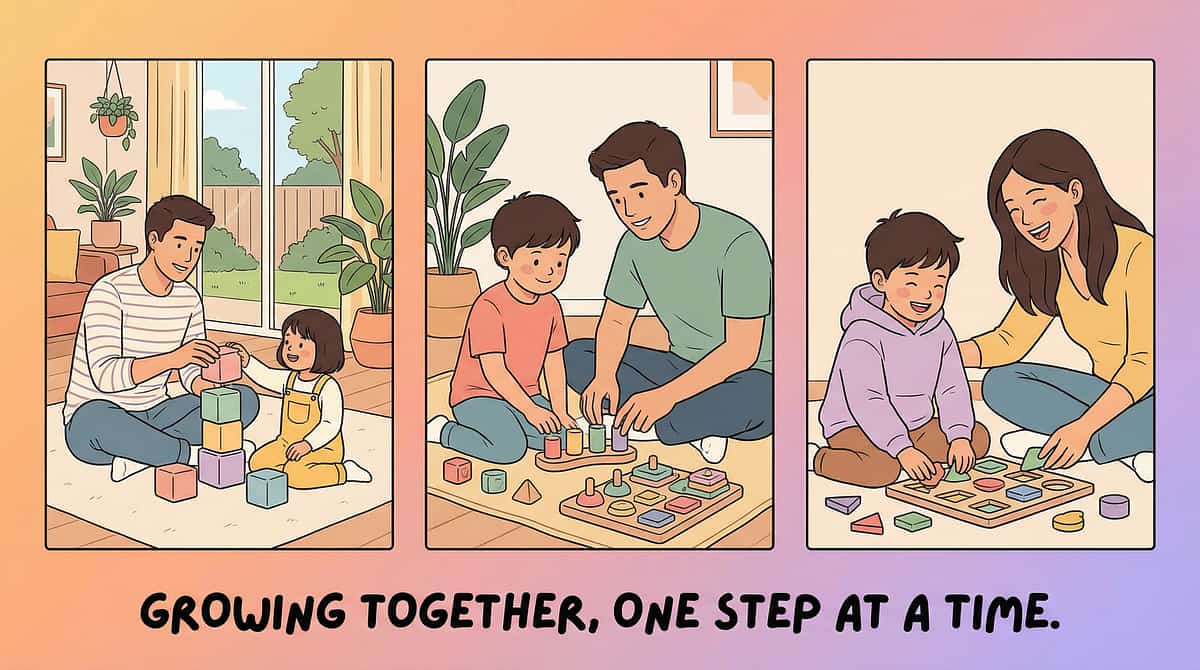
Step 4 — Reinforce Every Attempt (Continuous)
Step 4 of 5
Level 1 — Accept Reaching
Child reaches toward a target → "You're showing me what you want! Let me help your finger find it." Shape the reach toward a point.
Level 2 — Celebrate Any Index Finger Extension
Child's index finger extends even slightly → "LOOK! Your pointing finger! You're doing it!" Immediate, enthusiastic praise.
Level 3 — Honor Functional Pointing
Child points to request → IMMEDIATELY give them what they pointed at. The natural consequence IS the reinforcement. Pointing = getting what you want.
Level 4 — Respond to Declarative Pointing
Child points to share → "Wow! You found a bird! That IS amazing! Thank you for showing me!" Social reinforcement — shared joy is the reward.
Critical Rule: NEVER withhold desired items to force pointing. This creates frustration, not communication. Instead, accept reaching while MODELING pointing alongside it. Shape gradually: reach → guided point → independent point.

Step 5 — Session Close (1–2 Minutes)
Step 5 of 5
"We did such good playing! Your finger is getting so smart! We'll play again later."
Cool-Down Protocol
- Put materials away together (child can "point" to where they go)
- Offer a preferred comfort activity — cuddle, song, favorite toy
- No demands. This is transition time.
- End on a high note — don't extend a session that's going well
Session Length Guide
- First sessions: 2–5 minutes maximum
- Building tolerance: 5–10 minutes
- Established routine: 10–15 minutes
- NEVER exceed 15 minutes for this age group
Ending while the child still wants more is a gift to your next session. Positive endings build positive associations with the practice itself.
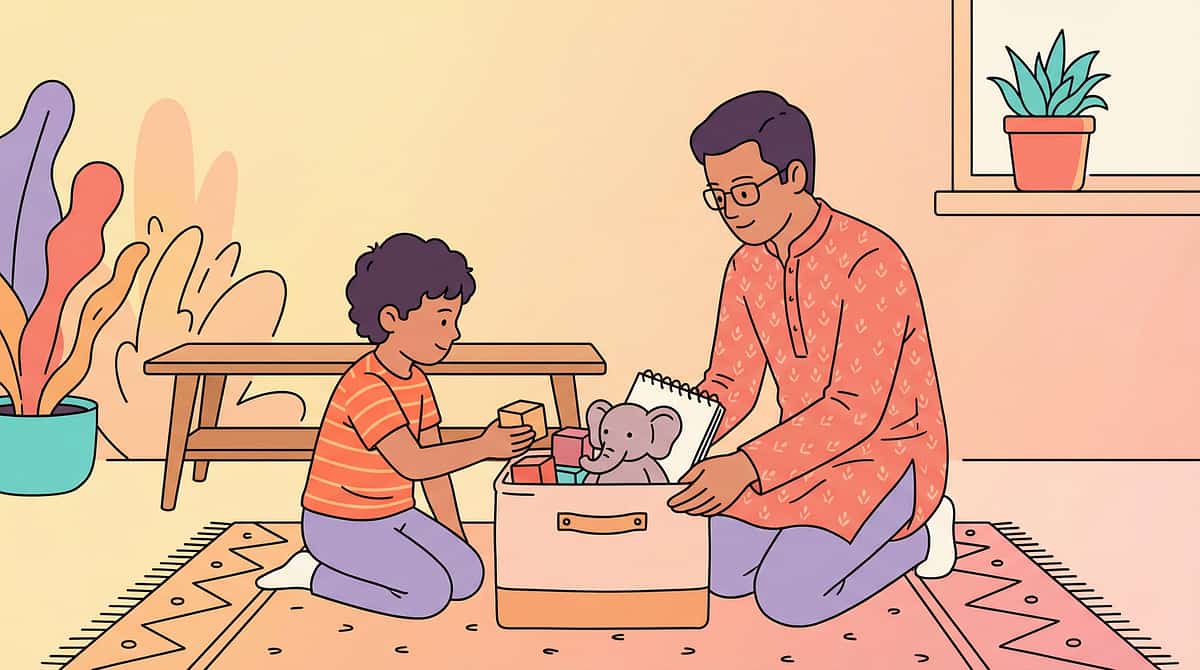
Pointing Practice Doesn't Stop — It Becomes Life
The 5–15 minute structured session is the training ground. But the real development happens all day long, when pointing is woven into the fabric of your child's natural routines. Every time YOU point, you teach.
🍽️ Mealtimes
"Which one do you want? Point to it." Offer 2 food choices consistently. This is the highest-motivation moment for proto-imperative pointing.
📖 Reading Time
"Where's the [picture]?" with every book. Every page turn is a pointing opportunity. Any book works — it doesn't have to be a special one.
🛁 Bath Time
"Point to the duck!" among bath toys. Water play reduces anxiety and increases engagement — a great pointing context for sensory-seeking children.
🚶 Walks
Point at everything YOU see. A dog. A bird. A red car. A cloud. Model, model, model. The world outside is an unlimited pointing curriculum.
🎵 Songs
Finger-play songs that isolate the index finger. "Where is Pointer?" and similar songs build the motor memory of index finger isolation in a joyful context.
🪟 Window Time
"Look! A bird! Point to the bird!" Any window with a view becomes a joint attention and pointing opportunity. Natural, spontaneous, and free.

What to Track — Your Weekly Pointing Log
Progress in pointing development is often subtle at first — a longer glance, a half-extended finger, a brief follow of your point. Tracking these micro-changes keeps you motivated and informs your therapist.
📊 Key Metrics to Watch
- Does the child reach toward pointed objects? (Pre-pointing)
- Does the child follow YOUR point? (Receptive pointing)
- Does the child extend the index finger at all? (Motor precursor)
- Does the child point to request? (Proto-imperative)
- Does the child point to share? (Proto-declarative — the big one)
- Does the child look back at you while pointing? (Gaze coordination)
📋 Simple Session Log
Track: Date | Material Used | Duration | Child's Best Response
Child Response Options: Reached / Guided Point / Independent Point / Pointed to Share
Can use paper, phone notes, or GPT-OS® tracker. Even one line per session creates a meaningful record over weeks.
🔬 GPT-OS® Integration
For Pinnacle Blooms families, session data feeds directly into the Social Participation Index via GPT-OS® — enabling automated progress tracking, personalized recommendations, and therapist visibility. Your data helps refine recommendations for every child that follows.

When Things Don't Go As Planned
Every child's path to pointing is unique. If a session goes sideways — or weeks pass with less visible change than expected — these evidence-based responses will guide you through the most common challenges.
❓ "My child has no interest in bubbles or any material."
Observe what DOES captivate your child. Use THAT as the pointing target. Food? Favorite character? A specific toy? The material doesn't matter — the pointing opportunity does.
❓ "My child uses my hand as a tool — places it on things."
This is called "hand-leading" and is a significant communication marker. Your child HAS intent but is using YOUR hand instead of pointing. When they hand-lead, PAUSE. Model: "You want that? POINT to it." Gently shape their hand toward a point.
❓ "My child presses buttons with their index finger but won't point."
The motor skill is there. The communicative link is missing. Focus on CHOICE BOARDS and JOINT ATTENTION GAMES — building the understanding that pointing communicates to people, not just activates objects.
❓ "We've been doing this for 2 weeks with no change."
Change at this stage is subtle: increased tolerance, brief glances at where you point, micro-extensions of the index finger. If after 4 weeks there is no change at all, consult your developmental pediatrician or the Pinnacle helpline.
❓ "My child points sometimes but not consistently."
Emerging pointing is fragile. Increase opportunities for functional pointing (choice boards) where pointing produces immediate results. Consistency builds through meaningful repetition, not forced practice.
❓ "Is this enough, or does my child need professional therapy?"
These materials supplement — never replace — professional evaluation. If your child shows NO pointing by 14–16 months, or no proto-declarative pointing by 18 months, a comprehensive developmental assessment is strongly recommended.
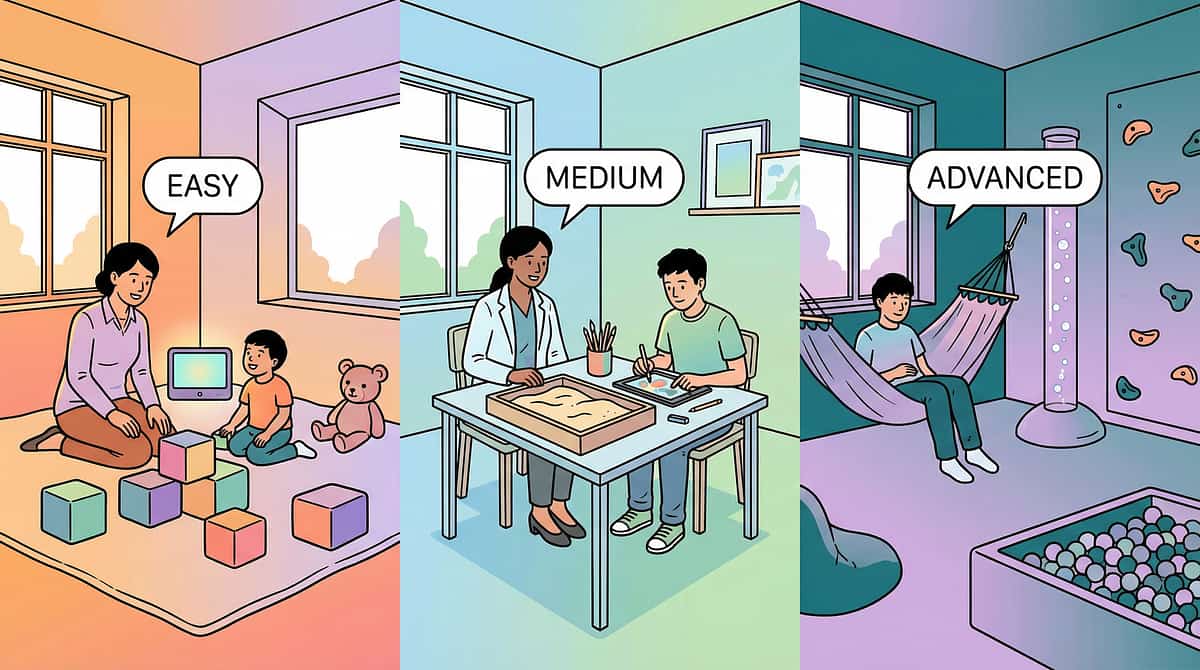
Make It Yours — Adapt to Your Child
No two children are the same, and no protocol should be rigid. Use these adaptations to match the technique to your child's current stage, age, and sensory profile.
← EASIER (Early Stages / Hard Days)
- Use only 1 material per session
- Accept any reaching as success
- 2–3 minutes maximum
- High animation, low demand
- Your modeling only — no expectation on child
→ HARDER (Progressing / Breakthroughs)
- Combine 2–3 materials in sequence
- Require pointing before providing item
- 10–15 minute sessions
- Delay your response to encourage pointing
- Add verbal prompts: "Can you POINT to it?"
Age Adjustments
- 9–12 months: Focus on bubbles, finger puppets, cause-effect toys. Accept reaching. Model constantly.
- 12–18 months: Add choice boards and books. Begin shaping reaches into points. Expect proto-imperative pointing.
- 18–24 months: Focus on proto-declarative pointing. Joint attention games become primary. Pointing to share is the goal.
Sensory Profile Adjustments
- Sensory Seeker: Use flashlights, light-up toys, and bubbles — high sensory input motivates engagement
- Sensory Avoider: Use books and choice boards — lower sensory input, structured, predictable

Weeks 1–2: The Foundation Phase
Progress Arc
Week 1–2
✅ What You May See
- Child tolerates materials for longer periods
- Child looks at where you point (even briefly)
- Child reaches toward pointed objects more frequently
- Child may begin pressing buttons with index finger
- Increased interest in bubble play and book time
❌ What You Won't See Yet
- Consistent independent pointing (this is weeks away)
- Proto-declarative pointing (pointing to share) — the last to develop
- Spontaneous pointing in new contexts
"If your child follows your point for even 1 second longer than last week — that's real, measurable neural progress." You're building a new daily routine. That consistency IS the intervention.

Weeks 3–4: Neural Pathways Forming
Progress Arc
Week 3–4
40%
Progress Milestone
Consolidation phase — pathways forming, index finger emerging
3-5×
Daily Practice
Sessions integrated into routines showing cumulative effect
7-14
Days of Repetition
Before anticipation behaviors and generalization seeds appear
✅ Consolidation Indicators
- Child anticipates pointing activities (shows excitement when materials appear)
- Index finger extends more readily during button play, stickers, and puppets
- Child follows your point across greater distances
- Emerging proto-imperative pointing — may point to request during mealtimes or play
- Child looks back at you during shared attention moments
🌱 Generalization Seeds
Watch for pointing appearing OUTSIDE structured practice: pointing at the TV, at food, at family members. These spontaneous moments are gold — they represent true generalization, not just trained responses.
"You may notice you're more confident too — you're reading your child's cues with new eyes."

Weeks 5–8: The Pointing Finger Awakens
Progress Arc
Week 5–8
✅ Proto-Imperative Mastery
Child points to request desired items without prompting — "I want THAT." Index finger isolation is consistent across contexts.
✅ Proto-Declarative Emerges
Child begins pointing to SHARE discoveries — "Look! A dog!" The most developmentally significant milestone on this journey.
✅ Gaze Coordination
Pointing is accompanied by the full sequence: look at object → look at you → look back. This triangular gaze is the hallmark of true communicative pointing.
✅ Generalization
Pointing appears in new settings — the park, grandparent's house, the car. The skill has moved from trained behavior to genuine communication.
🏅Mastery Unlocked When: Child points independently 5+ times per day across at least 2 different settings. At least some pointing is proto-declarative (to share, not just to request). Pointing persists even without structured practice sessions.

You Did This.
You sat on the floor. You blew the bubbles. You opened the books. You held up the choice boards. You modeled the point a hundred times when nothing happened — and then a thousand times more.
And then one day, your child's index finger extended toward a butterfly, and they looked back at you as if to say: "Do you see what I see?"
That moment — that first shared point — is the beginning of conversation. Of language. Of your child saying, with their finger, what their mouth hasn't learned to say yet. Your child grew because of your commitment.
📸 Capture It
Take a photo of that pointing finger. Save it. This is a milestone.
📝 Write It Down
Note the first thing your child pointed at. You'll want to remember it forever.
🎉 Tell Someone
Share this win. You and your child earned every bit of this celebration.
When to Pause and Seek Professional Guidance
Safety Alert
These materials are powerful tools — and they work best within a context of professional awareness. Trust your instincts. If something feels wrong, it deserves professional attention. Early intervention is always preferable to waiting.
🚩 No reaching toward objects by 9 months
May indicate motor or social-communicative delay requiring assessment.
🚩 No following of others' points by 10–12 months
Suggests joint attention difficulty — evaluation recommended.
🚩 No pointing of any kind by 14–16 months
Significant developmental marker warranting comprehensive assessment.
🚩 Only requesting pointing, never sharing, by 18 months
Absence of proto-declarative pointing is a key autism indicator.
🚩 Using your hand as a tool (hand-leading) without pointing at 18+ months
Warrants professional evaluation — communicative intent present but gesture absent.
🚩 REGRESSION — loss of previously present pointing
Any skill regression requires IMMEDIATE professional assessment.
Reference: WHO NCF Progress Report 2018–2023 | Pinnacle clinical escalation protocols
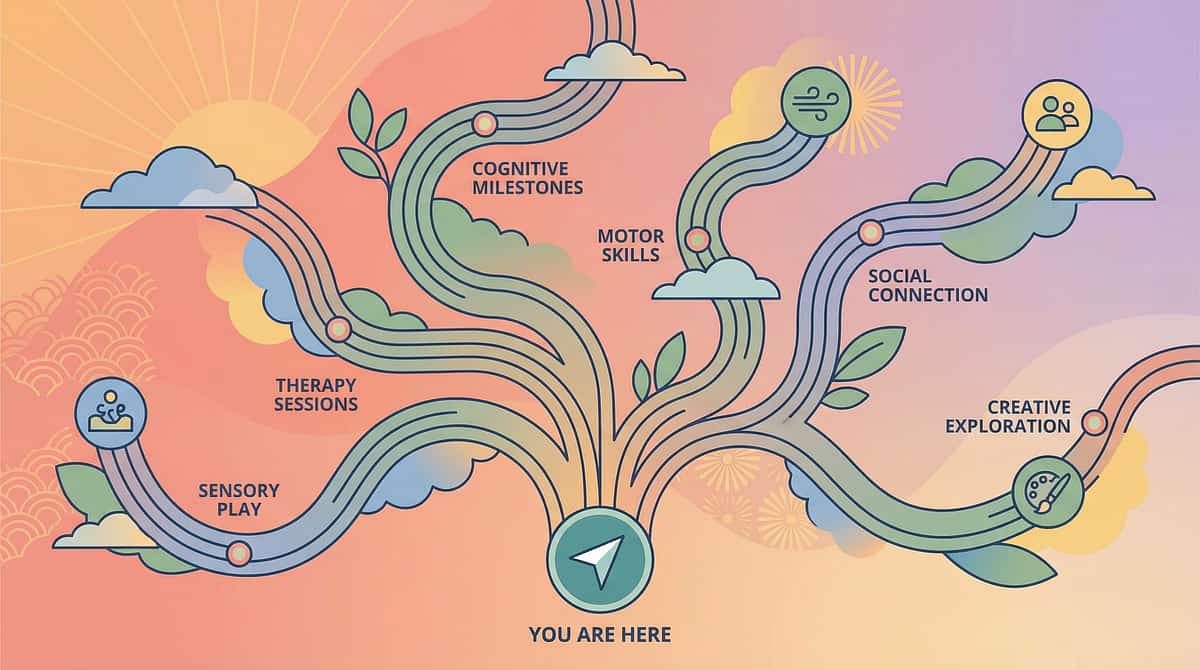
Your Child's Journey Map — Pointing Is the Beginning
Pointing does not exist in isolation. It is one milestone in a rich developmental pathway — the bridge between pre-verbal reaching and expressive language. Here is where you are, where you came from, and where you're heading.
🔵 Path A
Typical Progression: Pointing → First words → Phrase speech → Conversation
🔵 Path B
Pointing + AAC support → Multi-modal communication → Verbal emergence
🔵 Path C
Comprehensive assessment → Individualized therapy plan → Targeted intervention via FusionModule™
Reference: WHO Developmental Milestones Framework
Related Techniques in Social Communication
The 9 materials you've assembled for this technique overlap with the next steps in your child's communication journey. You already own the building blocks for what comes next.
Technique | Focus | Difficulty | Materials You Own | |
B-121 | 9 Materials When Child Doesn't Respond to Name | Intro | Joint Attention Games, Books | |
B-122 | 9 Materials When Child Doesn't Babble | Intro | ✅ Bubbles, Finger Puppets | |
B-124 | 9 Materials for Eye Contact Development | Core | ✅ Flashlights, Puppets, Bubbles | |
B-125 | 9 Materials for Building Gestures | Core | ✅ Choice Boards, Wands, Books | |
B-126 | 9 Materials for Joint Attention | Core | ✅ All 9 materials from this page | |
K-967 | Understanding Communication Milestones | Parent Guide | — |
✅ You Already Own Materials for B-122, B-124, B-125, B-126
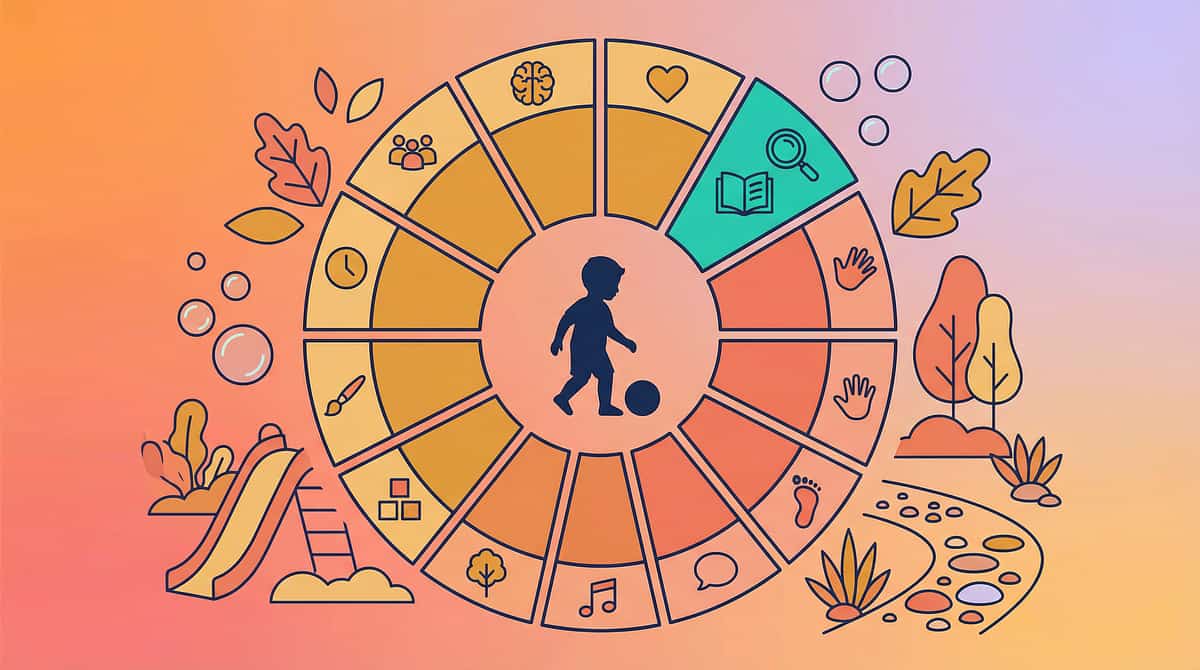
Pointing in the Bigger Picture — Your Child's 12-Domain Map
Pointing is one milestone within a 12-domain developmental framework. Understanding where social communication sits relative to your child's full profile helps you prioritize and contextualize your intervention work.
Current Position
Domain C — Social Communication — Gesture Development — POINTING
This Technique Feeds Into:
- Language readiness (Domain D) — pointed objects get named
- Social interaction (Domain H) — shared attention builds relationships
- Cognitive development (Domain E) — shared attention precedes symbolic thinking
GPT-OS® Integration
Your pointing practice data contributes to the Social Participation Index, which combines gesture development, joint attention, social referencing, and early communication measures into a unified developmental score.
This score informs personalized recommendations, therapist alerts, and population-level insights across 21M+ sessions.
From Other Parents Who Walked This Path
A Parent, Pinnacle Blooms Network
"She finally pointed at a bird in the sky and looked back at me to share it. That moment of connection was everything."
Outcome: Proto-declarative pointing emerged at 20 months after 6 weeks of structured material-based intervention.
A Father, EverydayTherapyProgramme™
"We started with bubbles. Just bubbles. Every evening. After three weeks, he started extending his finger toward the bubbles. Then one morning, he pointed at his cereal and looked at me. I cried."
A Caregiver, Pinnacle Blooms Hyderabad
"The choice board changed everything. When she realized that pointing at the picture of juice actually GOT her juice, she started pointing at everything. It was like a light switch."
Note: These are illustrative cases; outcomes vary by child profile. Individual results depend on multiple factors including age, developmental profile, and consistency of intervention.

Your Community Is Here
You don't have to figure this out alone. Pinnacle Blooms has built a network of families, professionals, and peer mentors walking the same path — across India and around the world.
🟢 WhatsApp Community
Connect with parents working on gesture development and pointing — ask questions, share progress, and feel less alone in the hard moments.
💬 Online Forum
Ask questions, share wins, troubleshoot challenges with a moderated community of caregivers and clinicians.
🤝 Local Parent Meetups
Connect with families at your nearest Pinnacle center — in-person connection reduces caregiver isolation and builds consistent support networks.
👩🤝👩 Peer Mentoring
Connect with an experienced parent who has walked this path. Nothing replaces the wisdom of someone who has already seen the first point.
"Your experience helps others — consider sharing your pointing development journey."

Home + Clinic = Maximum Impact
Home practice and clinical support work best together — not as alternatives. Your daily consistency at home multiplies the impact of every professional session. Pinnacle Blooms Network operates 70+ centers across India to support your family's specific needs.
🗣️ Speech Therapy
Pre-linguistic communication assessment and intervention — building the communicative intent behind pointing.
🤲 Occupational Therapy
Fine motor and index finger isolation — building the physical foundation for pointing.
📊 ABA Therapy
Functional communication training and gesture teaching — ensuring pointing becomes a motivated, functional behavior.
📚 Special Education
Generalization across learning contexts — ensuring pointing transfers from therapy to real life.
🩺 Developmental Pediatrics
Comprehensive developmental evaluation — AbilityScore® assessment establishing baseline across all 12 domains.
📱 Teleconsultation
For families outside center reach — video-guided intervention support bringing clinical expertise to your home.
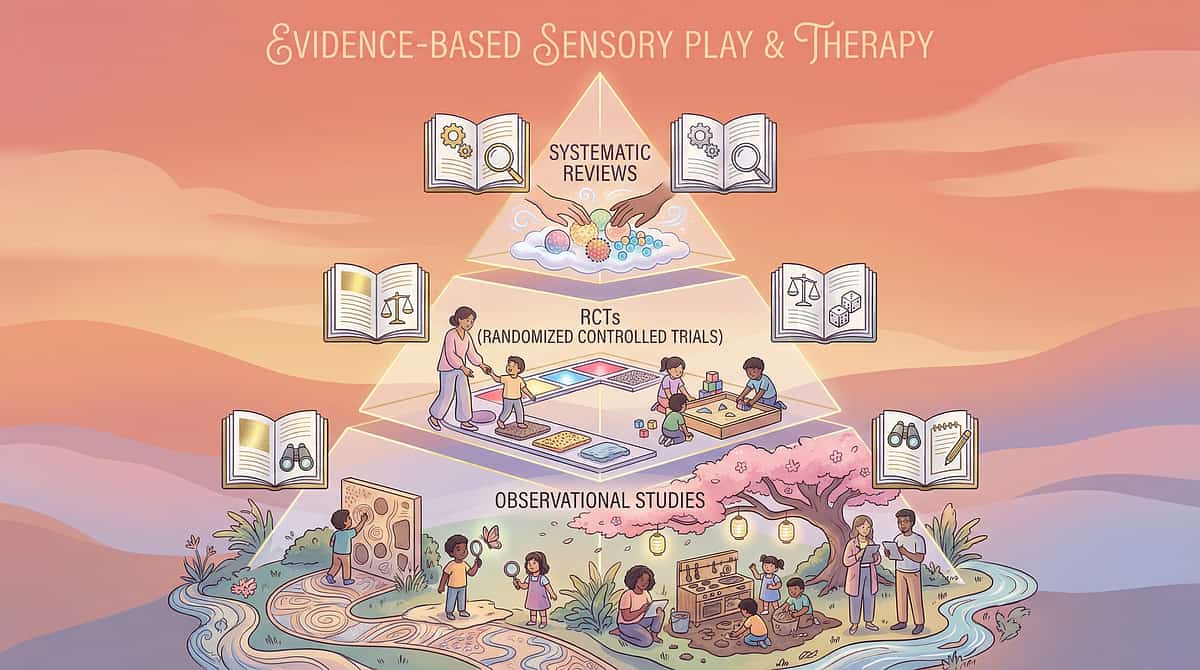
The Science Behind Every Recommendation on This Page
Evidence Grade: Level II
Every technique, protocol, and recommendation on this page traces directly to peer-reviewed research. Here is the complete evidence architecture.
🔺 Systematic Reviews / Meta-Analyses
- PMC11506176 — PRISMA systematic review (2024): 16 studies confirm evidence-based practice status for sensory integration and early communication interventions in ASD
- PMC10955541 — Meta-analysis (2024): 24 studies on social communication intervention efficacy confirm structured interventions promote social skills, adaptive behavior, and motor skills
🔹 Controlled Studies
- DOI: 10.1007/s12098-018-2747-4 — Indian RCT on home-based early intervention (Padmanabha et al., Indian J Pediatr, 2019)
- DOI: 10.3389/fnint.2020.556660 — Neurological framework for sensory/communication interventions in ASD
🔸 Foundational Research
- Bates, Camaioni & Volterra (1975) — The acquisition of performatives prior to speech
- Baron-Cohen (1989) — Protodeclarative pointing in autism
- Tomasello (2007) — Origins of human communication
🔹 Framework Documents
- WHO Nurturing Care Framework (2018)
- PMC9978394 — WHO CCD Package implementation across 54 LMICs
- DOI: 10.1080/17549507.2022.2141327 — Adapted UNICEF/WHO NCF for SLPs (2022)
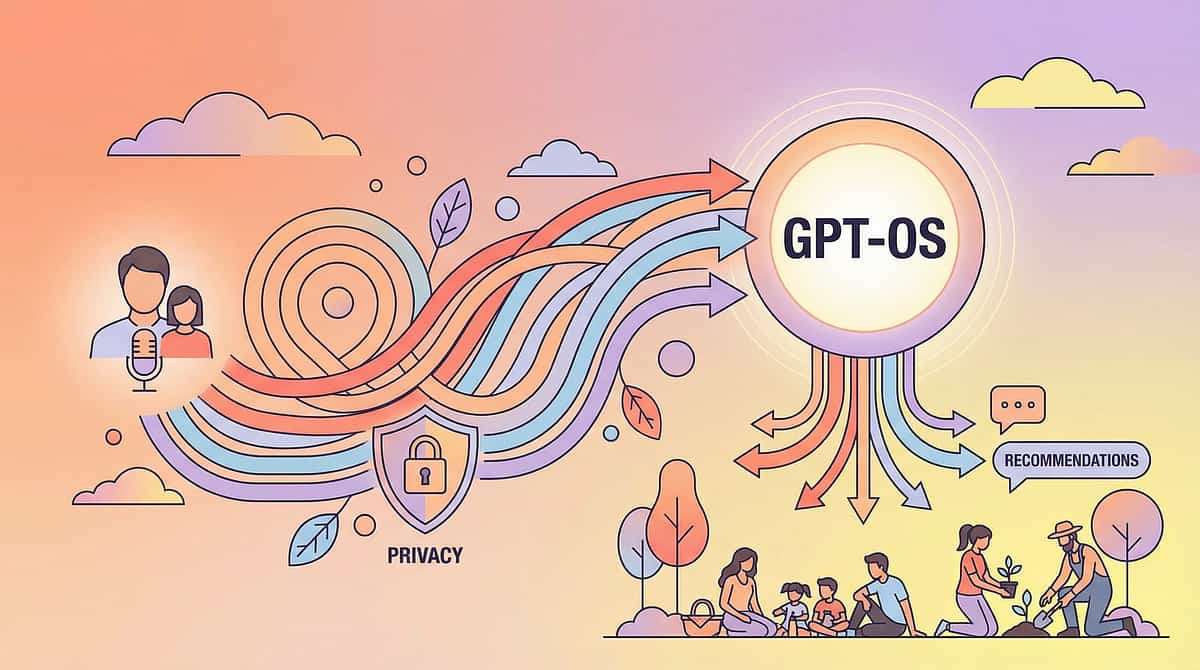
Powered by GPT-OS® — Therapeutic Intelligence at Scale
What GPT-OS® Learns From Your Data
- Which materials produce the fastest response for your child's profile
- Optimal session duration and frequency for your child
- When to progress from proto-imperative to proto-declarative targets
- Alerting your therapist if progress stalls beyond expected timelines
GPT-OS® Core Stack
Diagnostic Intelligence Layer → AbilityScore® → Prognosis Engine → TherapeuticAI® → EverydayTherapyProgramme™ → FusionModule™ → Closed-Loop Therapeutic Control
🔒 Privacy Assurance
Your child's data is encrypted, anonymized for population-level analysis, and governed by India's IT Act and DPDPA standards. You own your data. You control access.
Population-Level Impact
"Your data helps every child like yours. Across 21M+ sessions, GPT-OS® continuously refines what works, for whom, and when — making recommendations more precise for every family that follows."
"This is not software. This is therapeutic infrastructure."
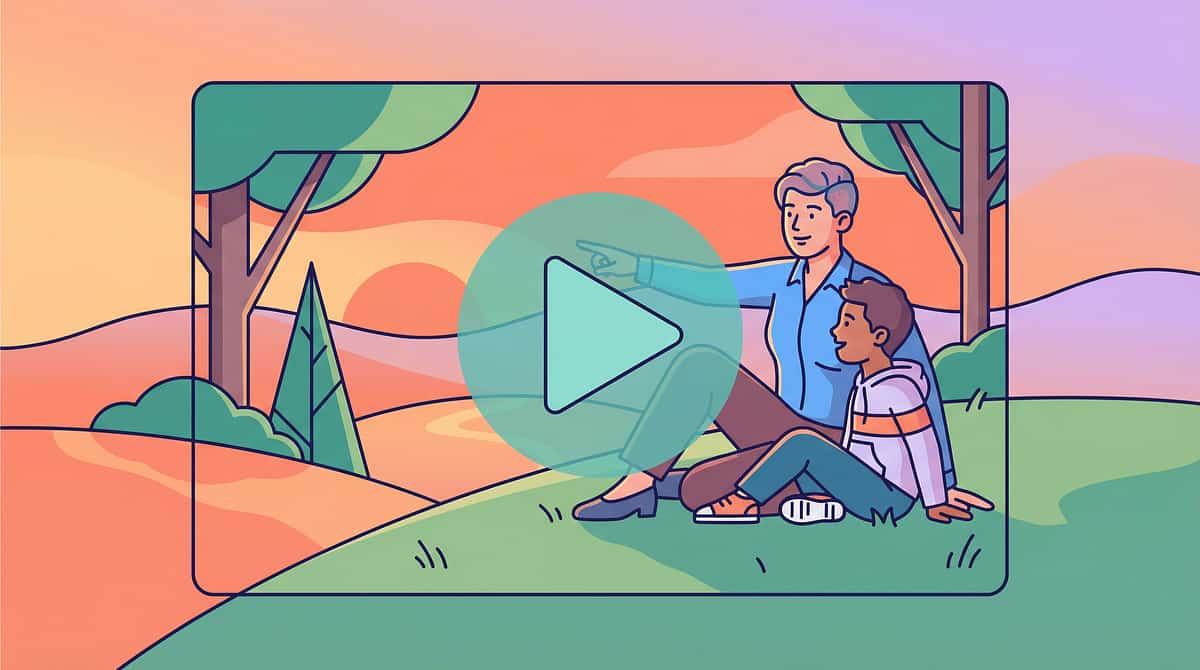
Watch: 9 Materials That Help When Child Doesn't Point
Reel ID: B-123
Pre-Linguistic Communication Series — Episode 123
75 seconds
📹 Video Overview
Watch the Pinnacle Blooms Clinical Consortium — Speech-Language Pathologists, Occupational Therapists, BCBAs, and Developmental Pediatricians — demonstrating each of the 9 materials and the pointing protocol in action.
Domain: Social Communication — Gesture Development & Joint Attention
Duration: 75 seconds
Duration: 75 seconds
"Video modeling is classified as an evidence-based practice for autism (NCAEP, 2020). Multi-modal learning improves parent skill acquisition." Watching a therapist model the technique before attempting it at home significantly improves fidelity.


Consistency Across Caregivers Multiplies Impact
"If only one person practices pointing with your child, the skill stays fragile. When grandparents, siblings, and teachers also model and reinforce pointing — it generalizes into real life."
Share This Page
📄 Downloadable Resources
- Family Guide (1-Page PDF): Simplified summary of all 9 materials and the pointing protocol for spouses, grandparents, and babysitters
- "Explain to Grandparents" Version: Plain-language, large-text summary with do's and don'ts
- Teacher Communication Template: Letter to school/daycare explaining pointing practice integration
The more caregivers who understand and consistently model pointing, the faster your child's skill will consolidate and generalize into spontaneous, real-world communication.
Reference: PMC9978394 — WHO CCD Package emphasizes multi-caregiver training
Your Questions, Answered
Q: At what age should my child be pointing?
Proto-imperative pointing (to request) typically emerges between 9–12 months. Proto-declarative pointing (to share interest) typically emerges between 12–14 months. Absence of any pointing by 14–16 months warrants developmental evaluation.
Q: Is not pointing always a sign of autism?
No. Delayed pointing can be associated with autism, global developmental delay, motor delays, hearing or visual impairment, or environmental factors. However, absence of proto-declarative pointing by 18 months is one of the most reliable early indicators of autism. Comprehensive assessment is recommended.
Q: Can I teach pointing at home, or does it require a therapist?
The materials and protocols on this page are designed for home implementation. Many families achieve significant progress with consistent home practice. However, professional guidance ensures the approach is tailored to your child and monitors for underlying conditions.
Q: My child is 2 years old and still doesn't point. Is it too late?
It is not too late. Neuroplasticity — the brain's ability to form new connections — is highly active in the first 3–5 years. Start these materials NOW and seek professional evaluation to rule out underlying conditions and create a comprehensive plan.
Q: How long until I see results?
Most families see early indicators (increased looking, reaching, brief index finger extension) within 2–4 weeks of consistent daily practice. Proto-imperative pointing may emerge in 4–8 weeks. Proto-declarative pointing may take 8–12+ weeks. Individual variation is significant.
Q: What's the difference between proto-imperative and proto-declarative pointing?
Proto-imperative: pointing to REQUEST — "I want that cookie." It serves the child's own needs. Proto-declarative: pointing to SHARE — "Look at that dog!" It serves a social purpose and its absence is a more significant clinical marker.
Q: Should I be worried about hand-leading?
Hand-leading (taking your hand and placing it on desired objects) indicates communicative intent but an absence of conventional gesture use. If hand-leading is the child's primary communication strategy beyond 18 months, professional evaluation is recommended.
Q: Are these materials safe for children who mouth everything?
Supervise all material use closely. Avoid small finger puppets, small stickers, and bubble solution ingestion. Choose age-appropriate, non-toxic versions of all materials. See Card 11 for detailed safety protocols.
Your Child's Pointing Finger Is Waiting to Discover Its Power
You now have 9 evidence-based materials, a research-backed step-by-step protocol, a weekly progress map, safety guidelines, and a community of millions walking the same path. Everything you need to begin is already within reach.
🟢 Start This Technique Today
Begin with bubbles. 5 minutes. Today. No special setup required. Your child's first point may be closer than you think.
📞 Book a Consultation
Speak with a Pinnacle developmental specialist who can tailor this protocol to your child's specific profile.
🔄 Explore Next Technique
Continue your child's Social Communication journey with B-124: 9 Materials for Eye Contact Development.
✅ Validated by the Pinnacle Blooms Clinical Consortium
OT • SLP • ABA • SpEd • NeuroDev
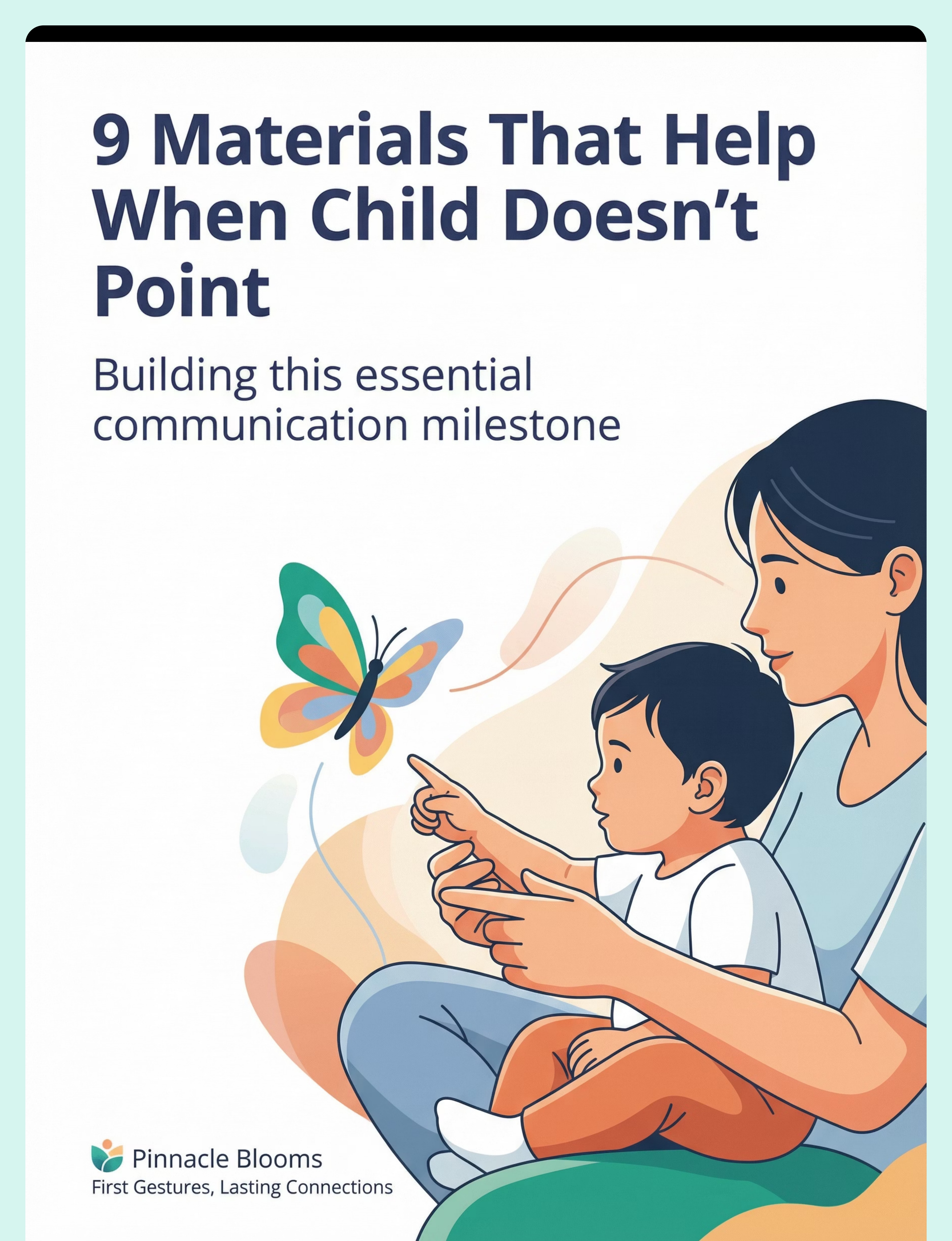
Preview of 9 materials that help when child doesnt point Therapy Material
Below is a visual preview of 9 materials that help when child doesnt point therapy material. The pages shown help educators, therapists, and caregivers understand the structure and content of the resource before use. Materials should be used under appropriate professional guidance.




Link copied!
The Pinnacle Promise
Pinnacle Blooms Network®
NeuroDev • SLP • OT • ABA • SpEd
"From fear to mastery. One technique at a time."
You arrived on this page worried about a finger that wouldn't extend. You leave with 9 materials, a research-backed protocol, a weekly progress map, and a community of millions walking the same path.
Your child's first point will be a conversation. It will say: "Look at what I see. I want to share this world with you."
And when that moment comes — and it will — you'll know that your commitment, your patience, and your pointing finger made it possible.
📞 FREE Helpline
9100 181 181 | 24x7 | 16+ Languages
21M+ Sessions
Therapy sessions delivered across 70+ centers. 97%+ measured improvement.
160+ Countries
GPT-OS® patents filed. Global reach, local heart.
Medical Disclaimer: This content is for educational and informational purposes only. It does not constitute medical advice, diagnosis, or treatment. Absence of pointing by 14–16 months, particularly proto-declarative pointing, is a significant developmental marker that may be associated with autism spectrum disorder or other conditions requiring comprehensive assessment. Please consult with qualified healthcare professionals for proper evaluation and individualized recommendations. Materials shown are examples and should be used under professional guidance as part of a comprehensive intervention plan. Individual results may vary.
© 2026 Pinnacle Blooms Network®, unit of Bharath Healthcare Laboratories Pvt. Ltd. All rights reserved. CIN: U74999TG2016PTC113063 | DPIIT: DIPP8651 (Govt. of India) | MSME: Udyog Aadhaar TS20F0009606 | GSTIN: 36AAGCB9722P1Z2 | Powered by GPT-OS®