
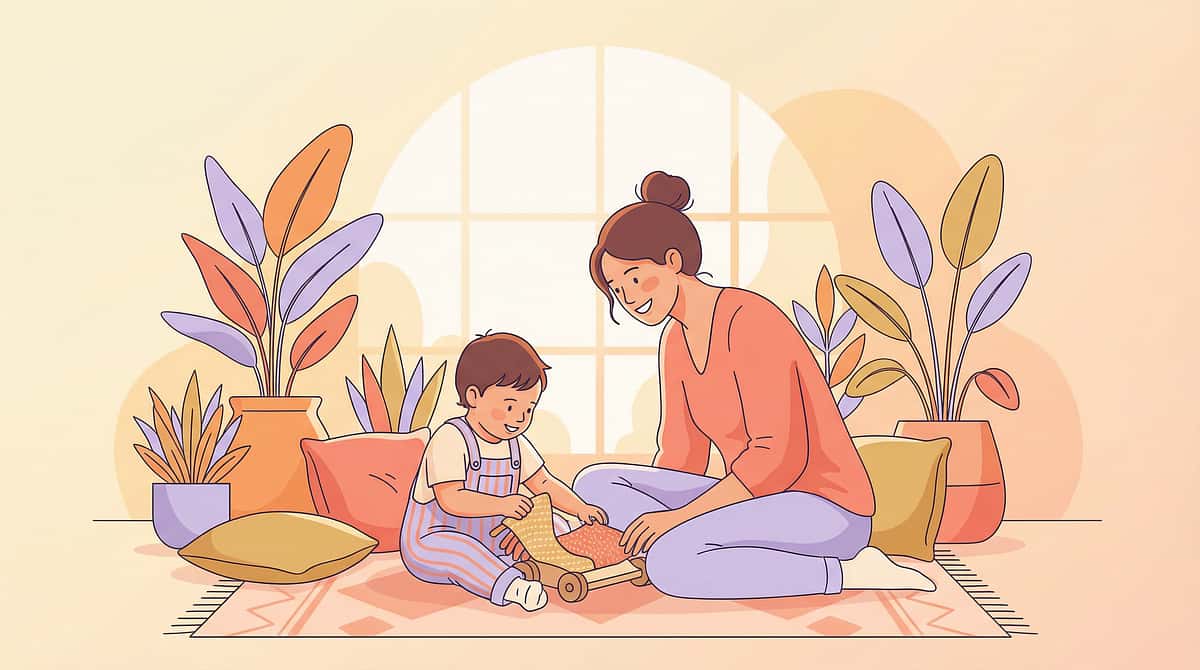
"I Wave. She Stares."
You wave — she doesn't wave back. You clap — nothing. You make silly sounds — silence. You watch other toddlers at the park copy everything their parents do, and you feel the weight of a question you can't shake: Why doesn't my child learn by watching?
This isn't defiance. This isn't laziness. This isn't because you're not trying hard enough. Your child's brain processes observed actions differently. And imitation — the most powerful learning mechanism in early childhood — needs to be deliberately built.
You are not failing. Your child's neurology is speaking. And the Pinnacle Blooms Consortium of 1,000+ clinical experts across 5 therapy disciplines is here to help you decode the message — and respond.
Pinnacle Blooms Network®
Validated by 1,000+ Clinicians
You Are Among Millions
Imitation deficits are among the most common — and most treatable — aspects of developmental difference. The families who came before you built pathways. Now it's your turn.
40-50%
Imitation Deficit Rate
of children with autism show significant imitation deficits in the first two years of life — one of the earliest and most reliable indicators of developmental difference.
1 in 36
ASD Prevalence (CDC 2024)
children in the United States are diagnosed with ASD. Globally, approximately 1.8 million children under age 5 navigate imitation challenges right now.
10,000+
Missed Daily Opportunities
incidental learning opportunities are missed daily by a child who does not imitate. Every gesture uncaught, every sound uncopied, every action unmirrored represents a lost learning event.
"You are among millions of families navigating this exact challenge. Imitation deficits are among the most common — and most treatable — aspects of developmental difference."
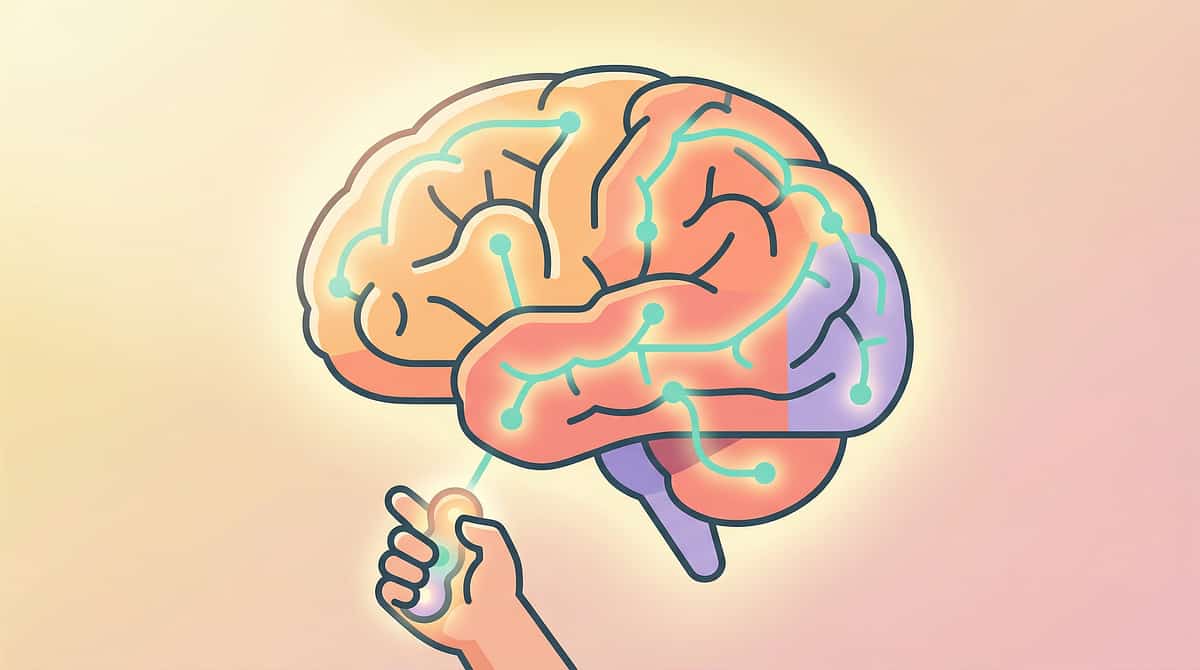
The Mirror Neuron System — Your Child's Imitation Wiring
When you wave at a friend and they wave back, something extraordinary happens in the brain. The mirror neuron system fires — the same neurons that activate when a person performs an action also activate when they watch someone else perform that action. This is the neurological foundation of imitation.
Three Key Brain Regions
Mirror Neuron System
The "see-do" bridge in the premotor cortex — fires both when performing AND watching an action.
Superior Temporal Sulcus
Where observed actions are perceived and decoded as "an action I can reproduce."
Motor Planning Areas
Where the brain organizes the "how to copy" — translating observation into movement sequence.
Three Processing Gaps
The Perception Gap
Your child may SEE your wave, but the superior temporal sulcus doesn't fully decode it as "an action I can reproduce." The signal stays as visual information rather than becoming a motor plan.
The Motor Planning Gap
Even when the action is perceived, the premotor cortex may struggle to translate "I saw a wave" into coordinated movement. This is called motor praxis difficulty — a wiring difference, not a behavior choice.
The Motivation Gap
The natural social feedback loop (I copy, you smile, I copy again) is a built-in motivator for neurotypical children. Some children with developmental differences don't experience this reward circuit as strongly.
THIS IS NOT A BEHAVIOR PROBLEM. THIS IS A WIRING DIFFERENCE. AND WIRING CAN BE STRENGTHENED.
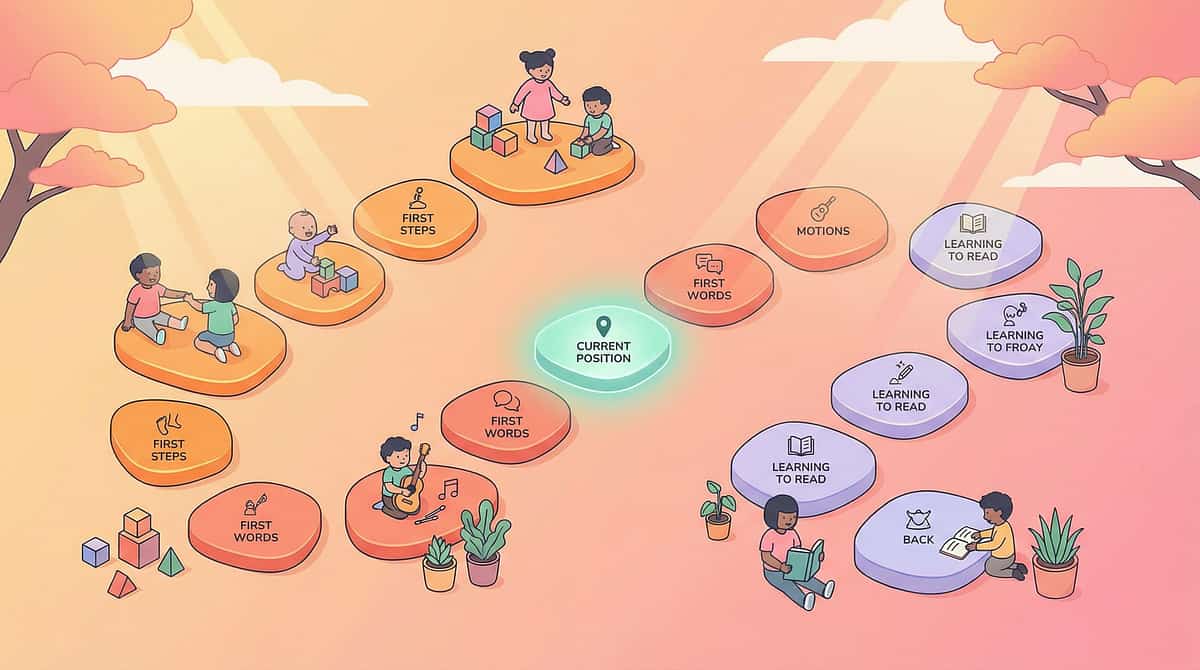
The Imitation Developmental Trajectory
Between 12 and 48 months, the brain is most responsive to structured imitation practice. This is when neural pathways for "watch and do" are being built, strengthened, or — without intervention — bypassed.
Birth–6 Months
Facial mimicry — social smiling, the first "imitation." Object imitation begins (banging cups).
9–12 Months
Motor imitation emerges — wave bye-bye, clapping. Spontaneous imitation begins appearing.
18–24 Months
Deferred imitation — copying from memory. Complex multi-step sequences. Critical intervention window.
36–48 Months
Pretend play imitation. Symbolic imitation. Peer copying. Imitation as a generalized learning tool.
The Imitation Hierarchy — Where Children Get Stuck
Level 1: Object Imitation
Copying actions WITH objects — bang a drum, stack a block. Typically emerges first. Easiest entry point.
Level 2: Gross Motor Imitation
Copying whole-body movements — jumping, clapping, stomping. Large, visible movements.
Level 3: Fine Motor Imitation
Copying small, precise movements — finger plays, pointing. Requires refined motor planning.
Level 4: Oral Motor Imitation
Copying mouth movements — blowing, lip sounds. Critical bridge to speech.
Level 5: Vocal Imitation
Copying sounds and words. The ultimate goal — builds on ALL previous levels.

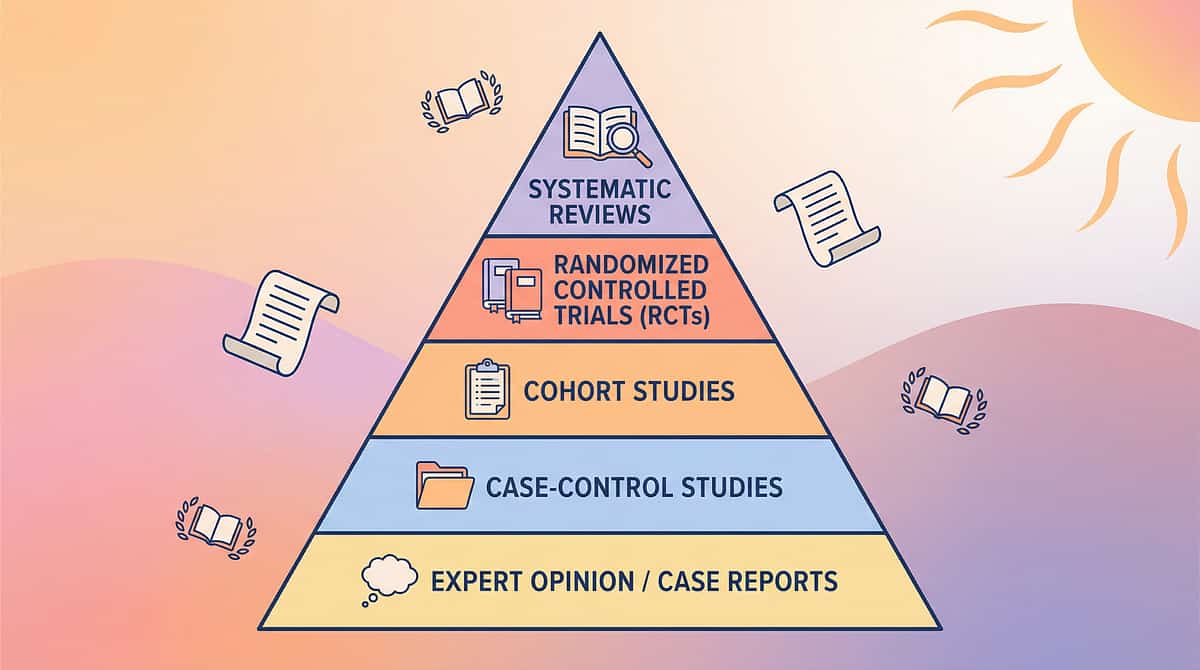
Evidence Grade: Level II — Supported by Multiple Controlled Studies
80%
Evidence Confidence
Multiple controlled studies supporting imitation-based intervention
100%
Teachable
Imitation CAN be explicitly taught — demonstrated across all key studies
97%
Measured Improvement
Across 20M+ Pinnacle Blooms therapy sessions with imitation-building protocols
Ingersoll (2008)
RCT demonstrating Reciprocal Imitation Training significantly increased spontaneous imitation in children with ASD, with gains generalizing to untrained actions.
Cardon & Wilcox (2011)
Comparison of reciprocal imitation training and video modeling — both produced significant gains. Video modeling showed particular promise for children who responded poorly to live modeling.
Rogers & Williams (2006)
Comprehensive analysis establishing imitation deficits as hallmark of ASD and proving imitation skills can be systematically taught. Gains in imitation predict gains across ALL developmental domains.
NCAEP (2020)
Video modeling classified as an evidence-based practice for autism. Imitation-based interventions meet criteria for emerging evidence-based practices.
The Bottom Line: Imitation can be taught. Children who learn to imitate show accelerated development in language, social skills, play, and self-care. The materials on this page are clinically validated tools mapped to a structured intervention protocol. Clinically validated. Home-applicable. Parent-proven.
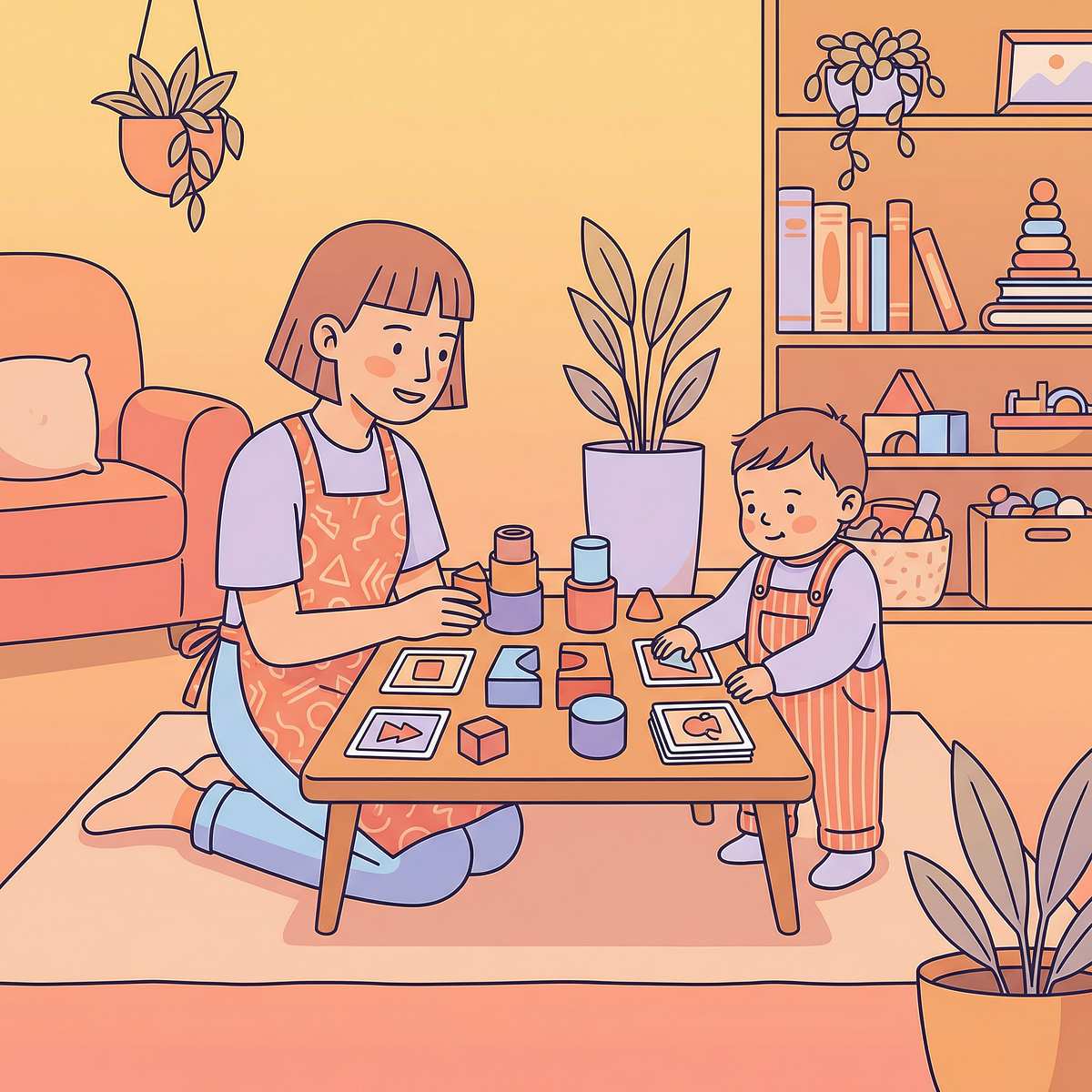
Structured Imitation Building Through Material Pairing
The "Watch-and-Do Programme"
Structured Imitation Building is a multi-material intervention that systematically develops a child's ability to copy actions, movements, sounds, and behaviors by using specifically designed therapeutic materials. Rather than simply asking a child to "do what I do," this technique creates environments where imitation is made concrete, visible, motivating, and achievable — using matching materials, mirror feedback, cause-effect motivation, and predictable patterns.
This is not one activity. It is a system of 9 material categories that together build the full imitation hierarchy — from object imitation through motor imitation to oral-motor and vocal imitation. Each material targets a specific pathway in the imitation chain.
Domain Badges
🧠 Behavioral/Developmental
Imitation Skills Development (BEH-IMI-DEV)
🗣️ Speech-Language
Vocal Imitation Pathway
🤸 Occupational Therapy
Motor Imitation & Body Awareness
📊 ABA
Structured Imitation Programming
Session Parameters
👶 Age
12–48 months
⏱️ Duration
10–20 minutes per session
📅 Frequency
3–5 times per week
📍 Setting
Home & Therapy clinic
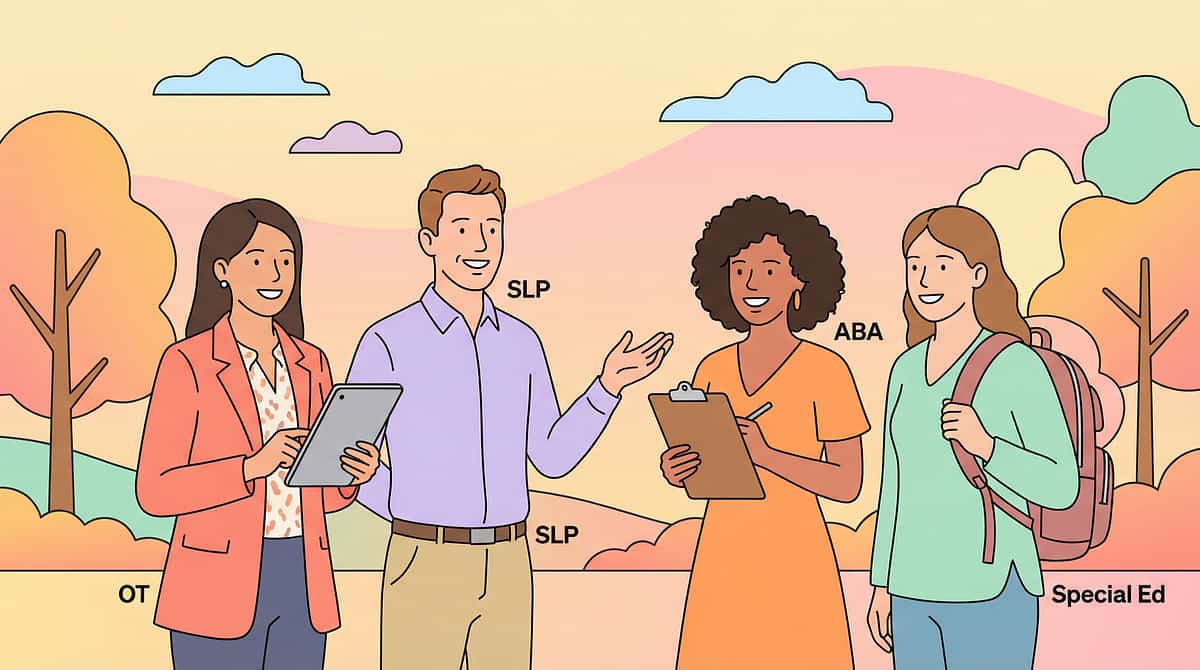
Five Disciplines. One Imitation Goal.
This technique crosses therapy boundaries because the brain doesn't organize by therapy type. Five disciplines converge to build imitation from every angle.
Applied Behavior Analysis (ABA) — Lead Discipline
BCBAs/RBTs structure imitation as a discrete trial: present model → prompt imitation → reinforce approximation → fade prompt → generalize. ABA governs the programming: targets, baselines, mastery criteria, and generalization plans.
Occupational Therapy (OT) — Motor Imitation Lead
OTs develop the motor planning foundation. Before a child can copy your wave, their brain needs to know where their arm is and how to sequence the movement. OTs use gross motor equipment, mirror work, and proprioceptive activities to build body awareness.
Speech-Language Pathology (SLP) — Vocal Imitation Lead
SLPs bridge oral motor imitation to speech. Bubbles and blowing toys develop mouth movement patterns that precede vocal imitation. When a child copies blowing a bubble, they're building the same motor pathways needed to copy "ba-ba."
Special Education — Generalization Lead
Special educators embed imitation into learning contexts — songs, art activities, structured peer play — ensuring imitation moves from "therapy skill" to "learning tool."
NeuroDevelopmental Medicine — Diagnostic Lead
NeuroDevelopmental pediatricians assess the neurological underpinnings — motor praxis disorders, apraxia, mirror neuron system differences — and determine whether medical co-interventions are needed.
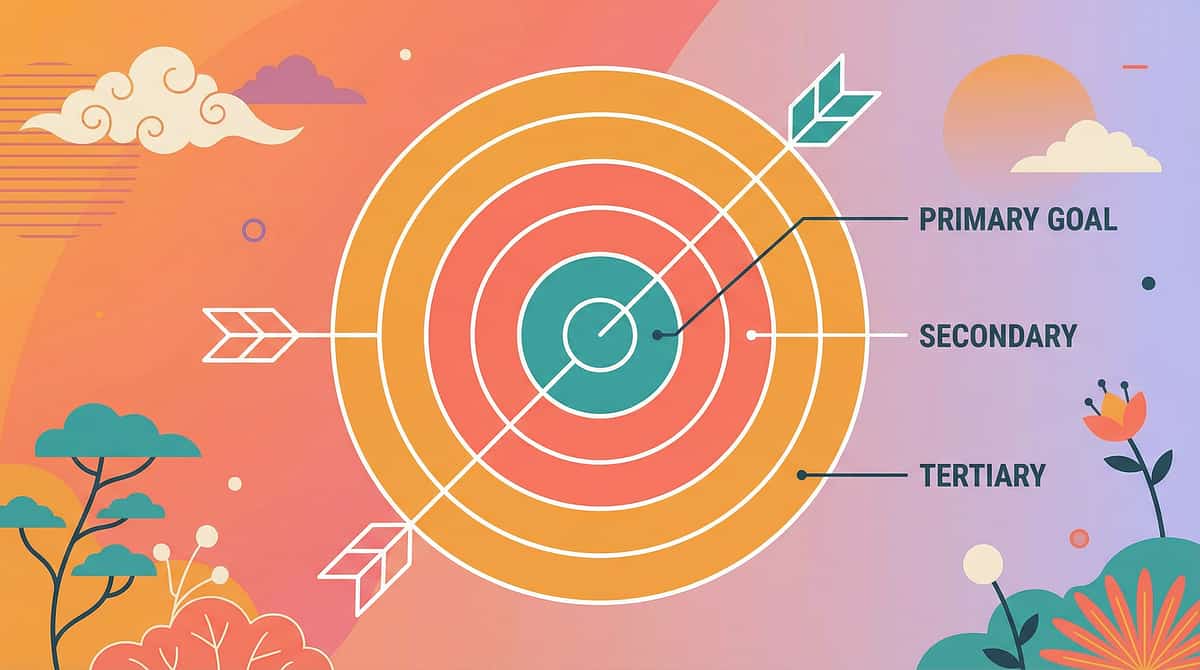
Precision Targets — This Isn't a Random Activity
🎯 Primary Target
Imitation as a functional learning mechanism. The child learns to watch, process, and reproduce observed actions — transforming observation into a reliable learning channel.
- Copies single-step actions with objects
- Mirrors gross motor movements with prompting
- Begins to copy without prompting in familiar contexts
- Shows anticipation of "your turn" in imitation games
🎯 Secondary Targets
Related skills that build alongside imitation.
- Motor planning & body awareness
- Joint attention — looking at the demonstrator, then the object
- Social referencing — checking "did I do it right?"
- Increased eye contact during demonstrations
🎯 Tertiary Targets
Long-term developmental domains unlocked.
- Language development — vocal imitation is the direct pathway to speech
- Play skills — imitation of sequences builds functional play
- Self-care independence — copying tooth-brushing, dressing, feeding
- Social skills — imitating peer behaviors in group settings
Gains in imitation predict gains across language, play, social skills, and adaptive behavior. Imitation is the "multiplier skill" — improving it accelerates development in every other domain. — Rogers & Williams (2006)
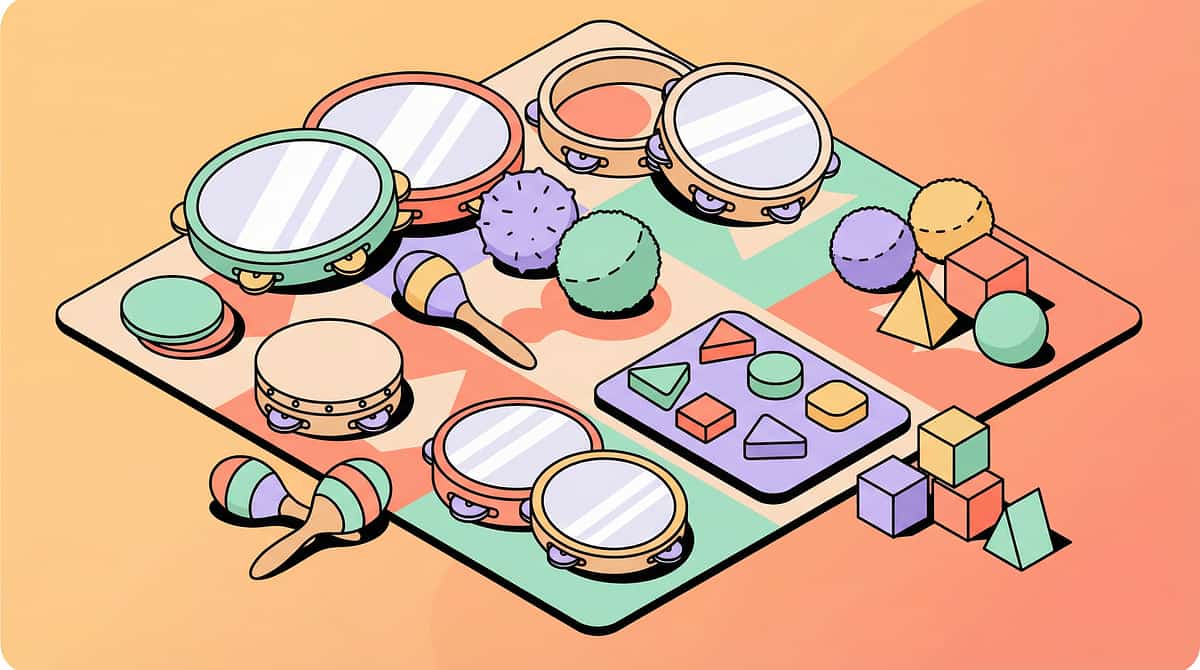
The 9 Materials — Everything You Need
Nine material categories together build the full imitation hierarchy. You don't need everything at once. Start with the Essential Starters and build from there.
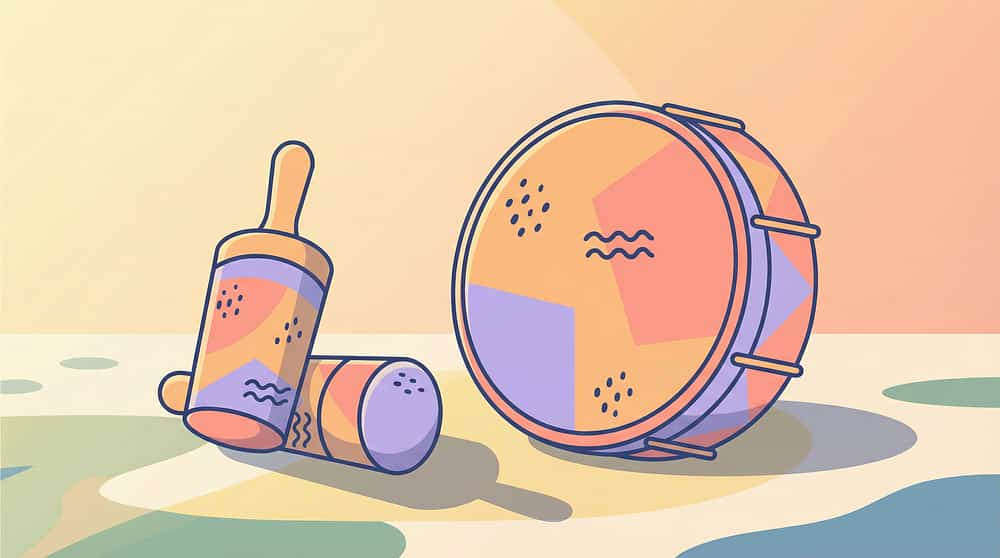
Material 1: Musical Instruments (Matching Pairs)
Why it works: Matching instruments make "I do, you do" immediate, auditory, and joyful. Music is naturally motivating — children WANT to make the sound happen.
- Matching drums (pair)
- Egg shaker sets
- Tambourine pairs
- Rhythm sticks
⭐ Essential Starter
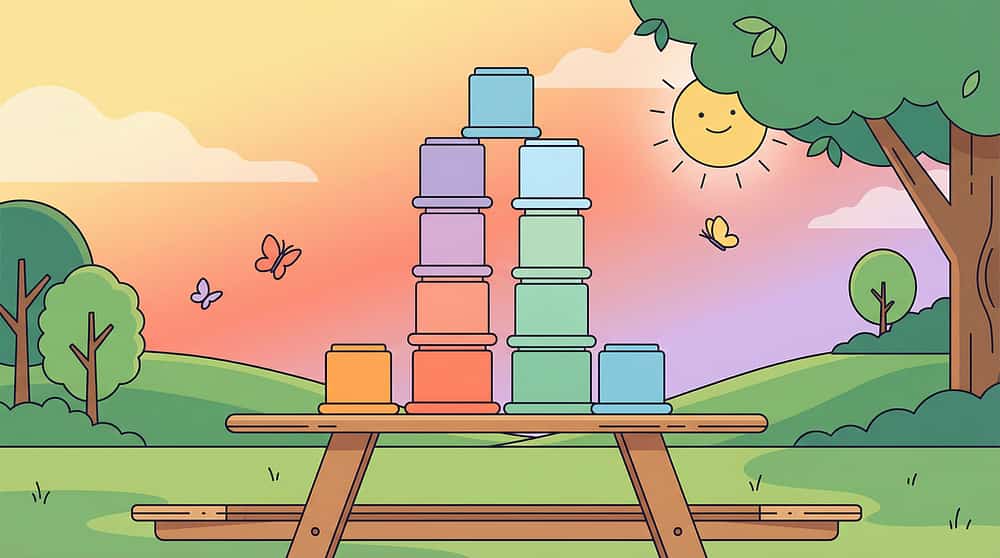
Material 2: Identical Object Sets
Why it works: Two of everything makes copying concrete and visual. Same blocks, same cups, same cars — "do what I do" becomes tangible and achievable.
- Duplicate block sets
- Matching stacking cups
- Identical toy cars
- Same Duplo sets
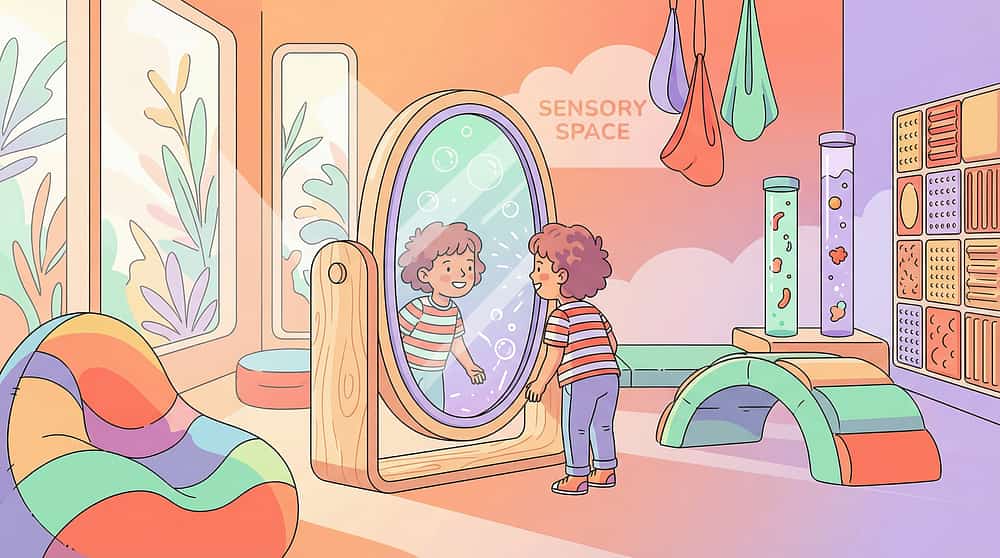
Material 3: Large Mirror (Shatterproof)
Why it works: Mirrors build body awareness — the child sees their own body moving, which is the foundation for motor imitation. Must be shatterproof for safety.
- Floor-length safety mirror
- Wall-mounted child-safe mirror
- Safety acrylic mirror panel
⭐ Essential Starter
The 9 Materials — Continued
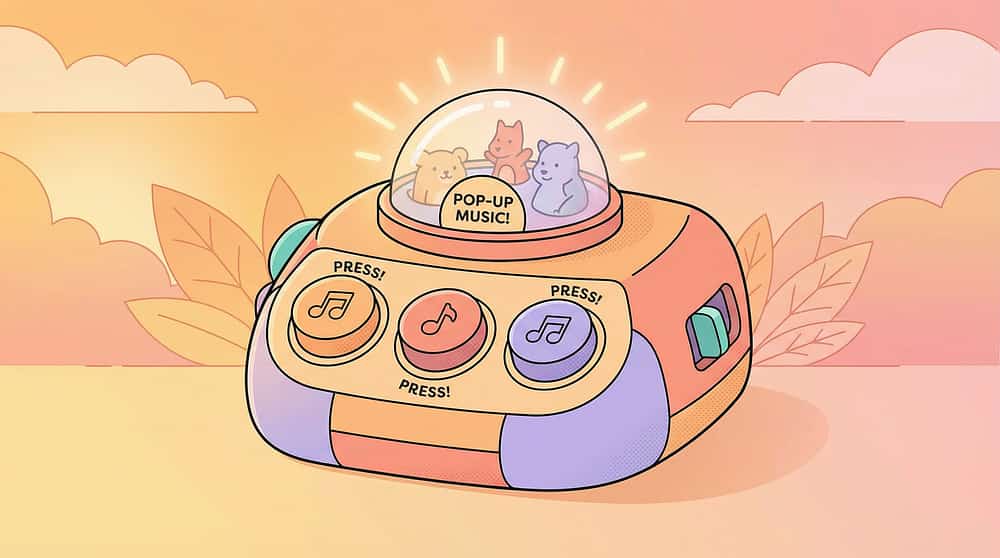
Material 4: Cause-Effect Imitation Toys
Why it works: When copying an action produces an exciting result (push button → music plays), the child is motivated to imitate to GET the reward. The copy IS the reinforcer.
- Musical push-button toys
- Pop-up toys with levers
- Ball drop towers
- Light-up action toys
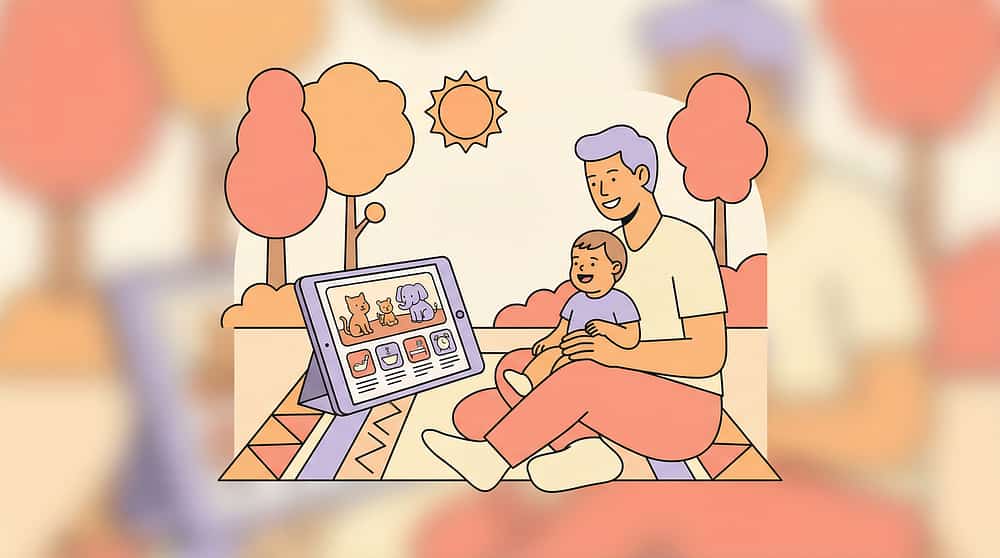
Material 5: Video Modeling Tools
Why it works: Some children learn better from video than live models. Consistent, repeatable demonstration they can watch at their own pace — pause, replay, process, and try.
- Tablet with video apps
- Custom 30-second videos on your phone
- Commercially available video modeling programs
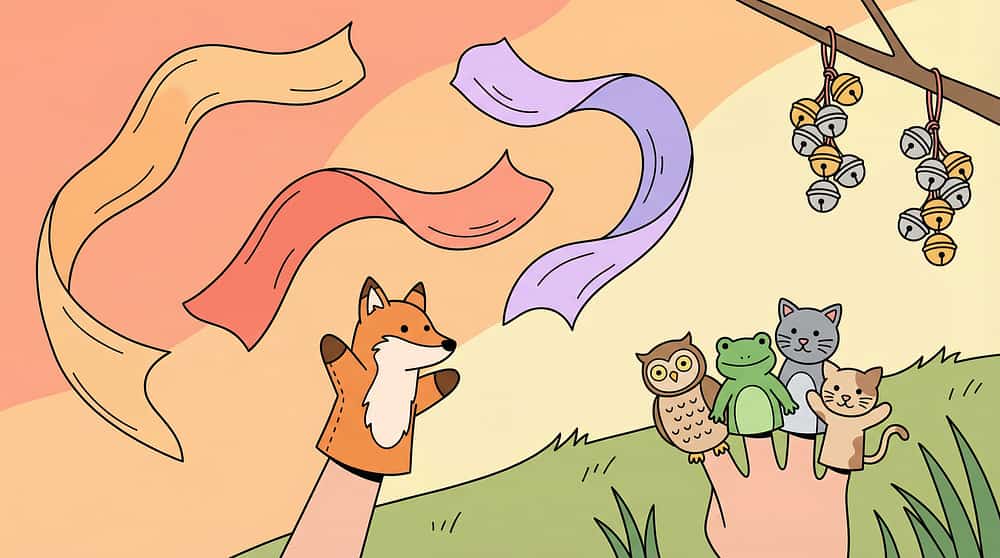
Material 6: Action Song Props
Why it works: Songs create predictable patterns where children KNOW what action comes next — predictability reduces the processing demand of imitation dramatically.
- Rhythm scarves
- Jingle bells / wrist bells
- Hand puppets & finger puppets
- Bean bags
The 9 Materials — Completed
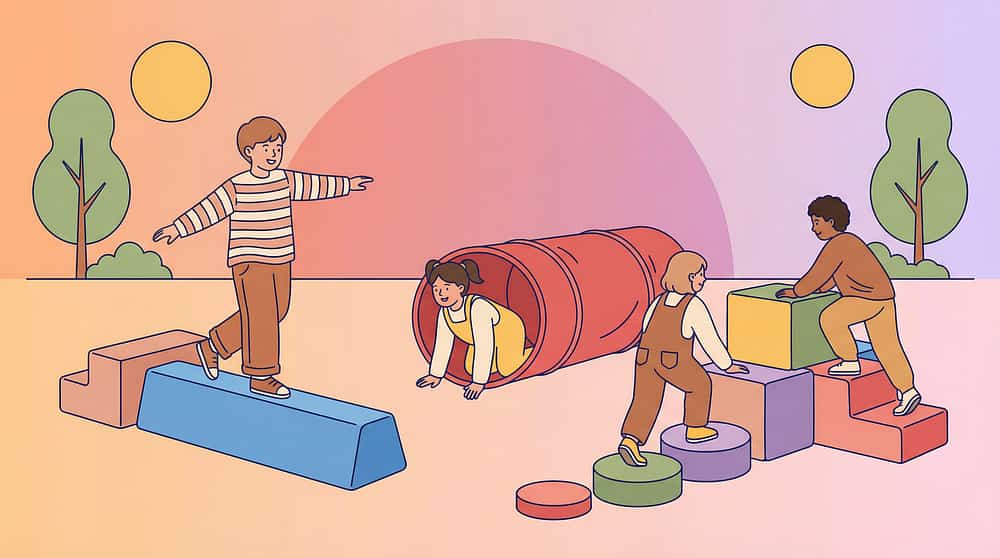
Material 7: Gross Motor Equipment
Why it works: Big body movements are easier to imitate than small ones. Start with jumping, crawling, balancing — then build to finer imitation. Large movements are highly visible and satisfying.
- Play tunnel
- Low balance beam
- Stepping stones & hula hoops
- Foam climbing shapes
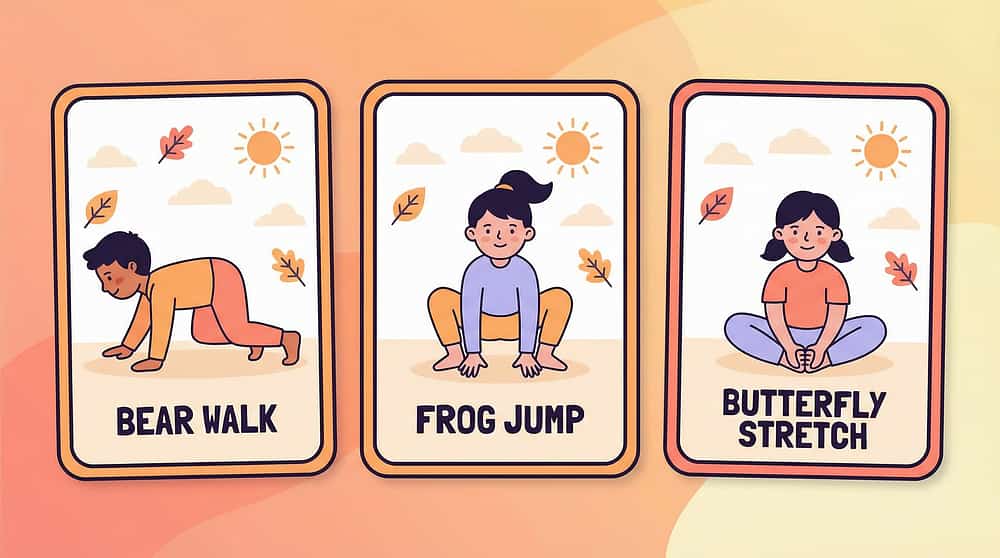
Material 8: Imitation Card Games
Why it works: Visual supports + game format = structured, fun imitation practice. Draw a card, see the action, copy it, celebrate. Adds novelty and structure simultaneously.
- Gross motor action cards
- Yoga pose cards for kids
- Animal movement cards
- Action dice
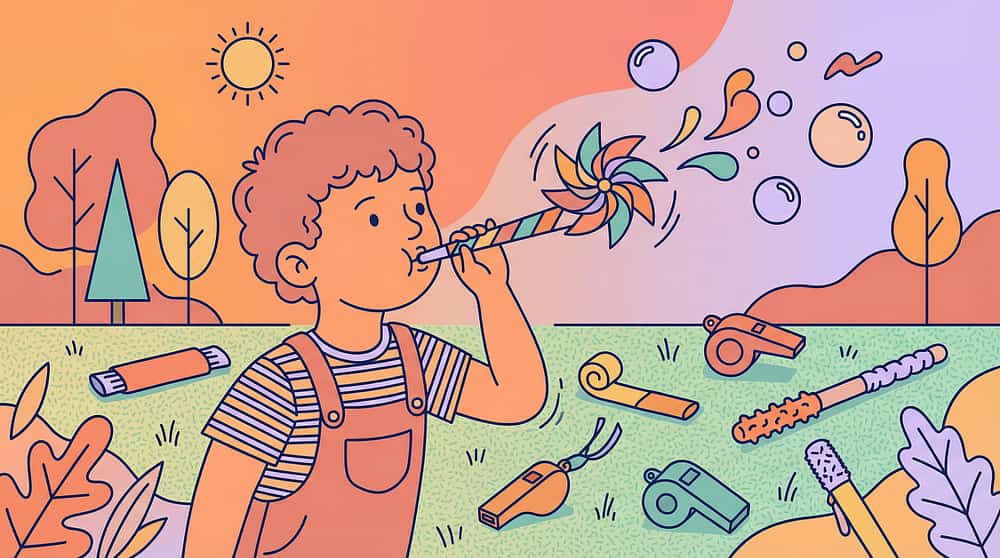
Material 9: Bubbles & Blowing Toys
Why it works: Oral motor imitation is the bridge to vocal imitation. Copying mouth movements leads to copying sounds — and eventually, words. Start blowing to start talking.
- Bubble wands and solution
- Pinwheels
- Child-safe harmonicas & party blowers
- Slide whistles
⭐ Essential Starter
Essential Starters (Begin Here)
Matching drums/shakers + Bubbles + Large mirror
Total Investment
$30–$150 for comprehensive setup. You can start today for under $10.
Zero-Cost Version
Two matching kitchen cups, your phone camera, your bathroom mirror, and any song with actions.
Every Family Can Do This — Regardless of Budget
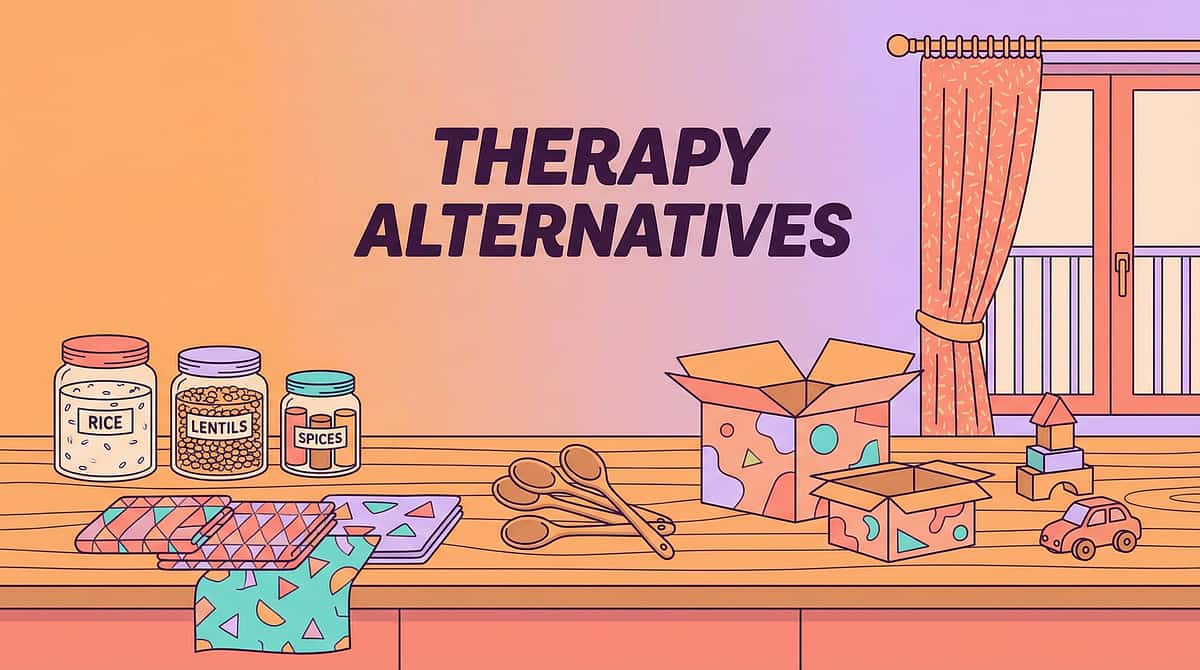
The WHO Nurturing Care Framework emphasizes context-specific, equity-focused interventions. The Pinnacle Blooms Consortium ensures no family is excluded by economics. Every material has a free or low-cost alternative that preserves the therapeutic principle.
Buy This | Make This (Free/Low-Cost) | |
Matching drums (pair) | Two identical pots or containers + wooden spoons. Tape matching colored paper on each for visual pairing. Same auditory feedback, same imitation structure. | |
Identical block sets | Two identical plastic cups from the same shop. Same color, same size. Stack, knock down, rebuild. | |
Large mirror | Mirrored closet door at child's eye level. Or position child in front of a bathroom mirror on a stable stool. | |
Cause-effect toys | Light switches, push-button lamps, doorbell — any household item where pressing/pulling creates an immediate visible or audible result. | |
Video modeling tools | Your phone. Record 30-second videos of simple actions. Show video → pause → "You try!" Zero cost, fully personalized. | |
Action song props | Fabric scraps as scarves. Jingle bells tied to ribbon. Sock puppets with button eyes. | |
Gross motor equipment | Cardboard boxes as tunnels. Masking tape lines as balance beams. Couch cushions as stepping stones. | |
Imitation card games | Draw or print pictures of simple actions (clap, jump, touch nose) on index cards. Make your own deck. | |
Bubbles & blowing toys | Dish soap + water = bubbles. Paper pinwheels. Blow cotton balls across the table with straws. |
The principle matters more than the product. You can start building imitation TODAY with no purchases. Clinical-grade materials matter most when: the mirror must be shatterproof for children with behavioral challenges, or when blowing toys must be sized to prevent choking.
🚦 Safety Gate — Read Before Starting
Before beginning any imitation session, review this traffic-light safety system. Your child's safety and comfort are the foundation of effective practice.
🔴 DO NOT PROCEED IF:
- Child is in active meltdown, severe distress, or post-seizure state
- Child has unmanaged sensory hypersensitivity to sound — start with visual materials instead
- Child has oral motor safety concerns (aspiration risk) — do NOT use blowing toys without SLP clearance
- Mirror causes severe distress or self-injurious behavior in response to reflection
- Child has active ear infection — avoid loud instruments
🟡 PROCEED WITH MODIFICATION IF:
- Child is tired or slightly dysregulated → use only 1-2 materials, 5-minute session
- Child is fixated on one material → allow fixation briefly, then redirect gently
- Child shows auditory sensitivity → start with quieter instruments (egg shakers, not drums)
- Child has never used a mirror → introduce gradually, starting at a distance
🟢 PROCEED IF:
- Child is alert, fed, rested, in a calm-alert state
- Environment is set up with distractions removed
- You have at least 10 uninterrupted minutes
- All materials are age-appropriate and checked for small parts
- You've reviewed the session plan at least once
RED LINE — STOP IMMEDIATELY IF YOU SEE:
Child becomes severely distressed and cannot be calmed within 2 minutes
Child engages in self-injurious behavior during imitation tasks
Child shows signs of pain or physical discomfort
Child develops a rash or allergic reaction to any material
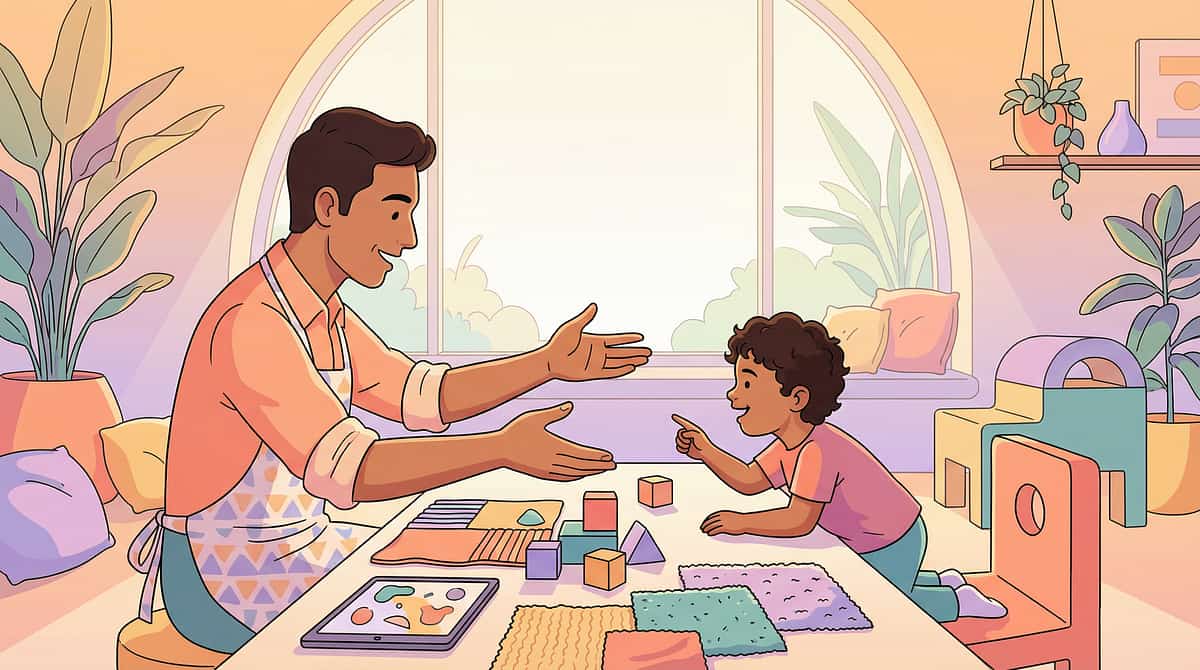
Set Up Your Imitation Station
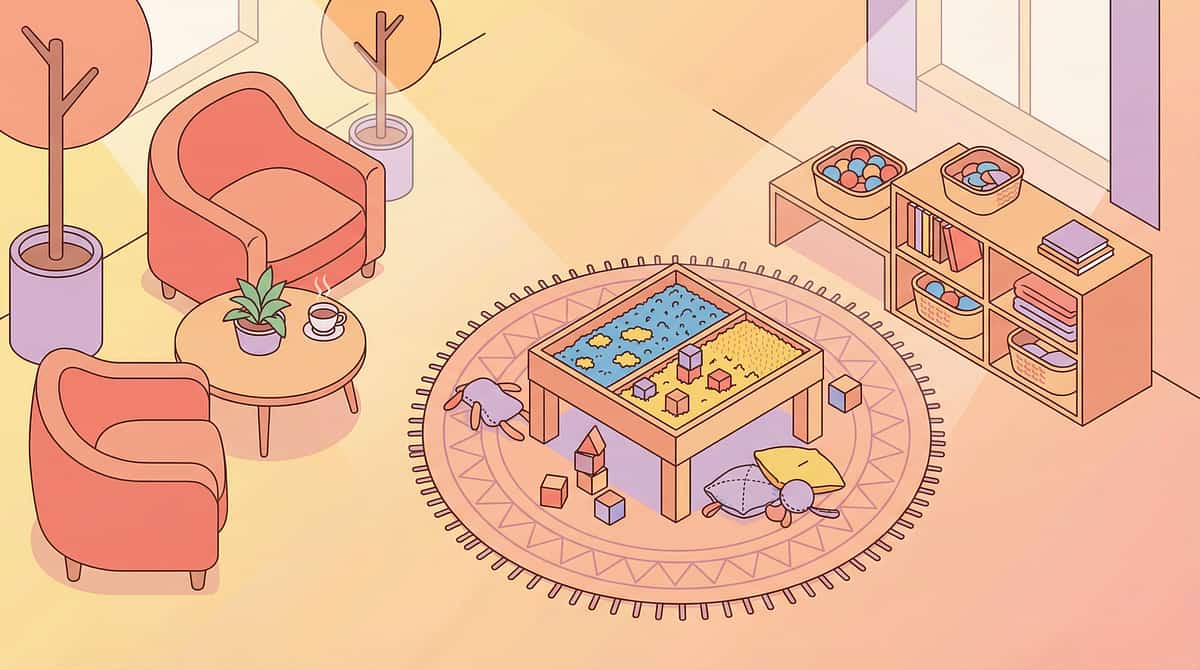
Room Layout
Mirror on wall at child's eye level
Mat in center — soft surface for both of you
Materials basket beside you, out of child's direct reach — YOU control the materials
Parent & child face-to-face, 1 arm's length apart
Clear floor space around both of you (2m × 2m minimum)
✗ No TV ✗ No other toys ✗ No phone
Setup Checklist
- Clear floor area — remove all distractions from visible space
- Mirror positioned at child's eye level if using mirror activities
- Materials basket nearby but out of child's direct reach
- Good lighting — child can clearly see your face, hands, and body
- Quiet environment — TV off, phone on silent, siblings occupied
- Soft surface (mat or carpet) for gross motor activities
- Visual timer set if child responds to time boundaries
Parent Positioning
Sit or kneel at child's eye level. Face-to-face. Close enough that you can physically guide their hands if needed (1 arm's length). Your face and hands should be clearly visible at all times.
Material Staging
Keep today's session materials in a basket beside you. Present ONE material at a time. Each material gets its own mini-session. Don't overwhelm with choices.
ACT III: THE EXECUTION
Pre-Flight Checklist — 60 Seconds Before You Begin
A good session starts with a good readiness check. This takes 60 seconds and dramatically increases your chances of success. Run through these indicators before you present a single material.
☑️ Fed?
Last meal or snack within 1–2 hours. Hungry children cannot focus on imitation.
☑️ Rested?
Not overtired or just woken up. Aim for alert, calm windows in your child's day.
☑️ Calm-Alert State?
Not mid-meltdown, not post-crying, not hyperaroused. Look for relaxed body and open posture.
☑️ No Recent Distress?
At least 15 minutes since last crying episode or sensory overload event.
☑️ Available for Interaction?
Child is not deeply engaged in a preferred activity — pulling them away creates negative associations with therapy.
☑️ Medical Okay?
No active fever, ear infection, or illness symptoms.
All Green ✅ → GO
Full session, all planned materials
1-2 Amber ⚠️ → MODIFY
5-min session, 1-2 easiest materials only, lower demand
Any Red ❌ → POSTPONE
Try calming activities instead. Return in 30–60 minutes or try tomorrow.
If you postpone: This is not failure. This is clinical judgment. The best session is one that starts right. A 3-minute joyful session beats a 20-minute forced one every time.
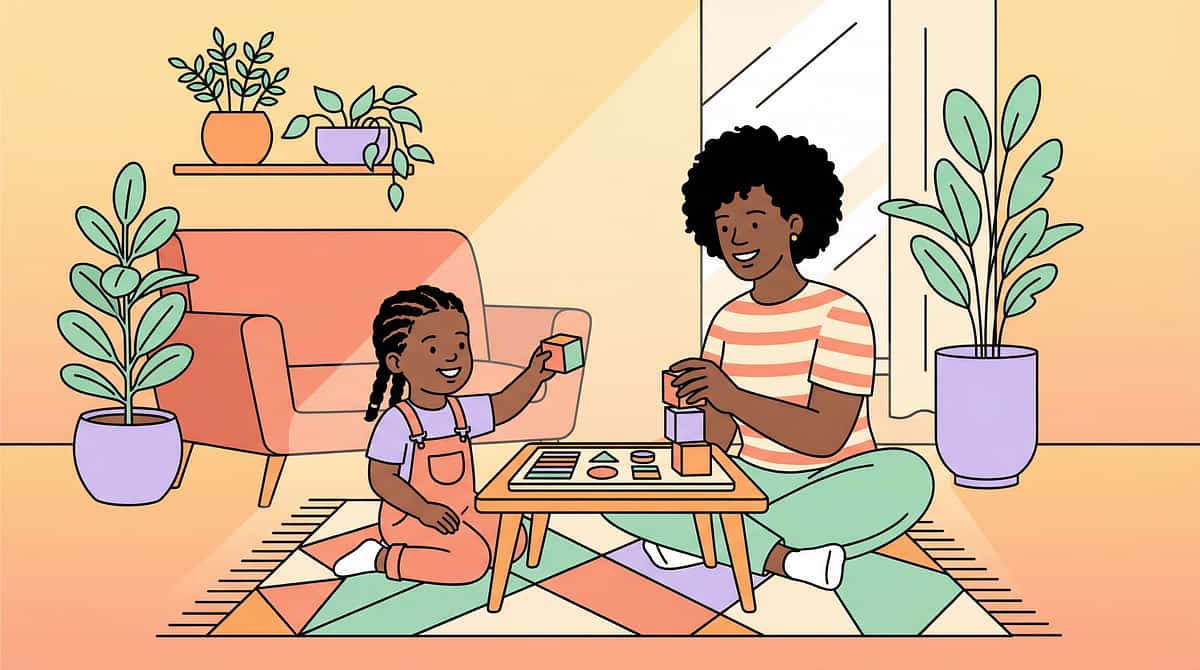
Step 1 of 6
Step 1: "Come Play With Me" — The Invitation
30–60 seconds
The Script
"Hey [child's name]! Look what I have! [hold up first material — e.g., matching drums]. Want to play? Let's make some noise together!"
Body Language
- Animated face — wide eyes, big smile
- Hold the material at child's eye level
- Lean forward slightly — show you're excited
- DO NOT grab the child's hands or force contact
- Wait — give the child 5–10 seconds to show interest
What Acceptance Looks Like
✅ Child looks at the material
✅ Child reaches for it or moves toward you
✅ Child makes any vocalization
What Resistance Looks Like
❌ Child turns away or pushes material away
❌ Child cries or protests
❌ Child doesn't look at you at all
If There's Resistance
Don't push. Put the material down where the child can see it. Start playing WITH it yourself — tap the drum casually, make it fun for YOU. Often, the child will come to investigate once the pressure is removed. If after 2–3 materials there's no engagement, postpone the session.
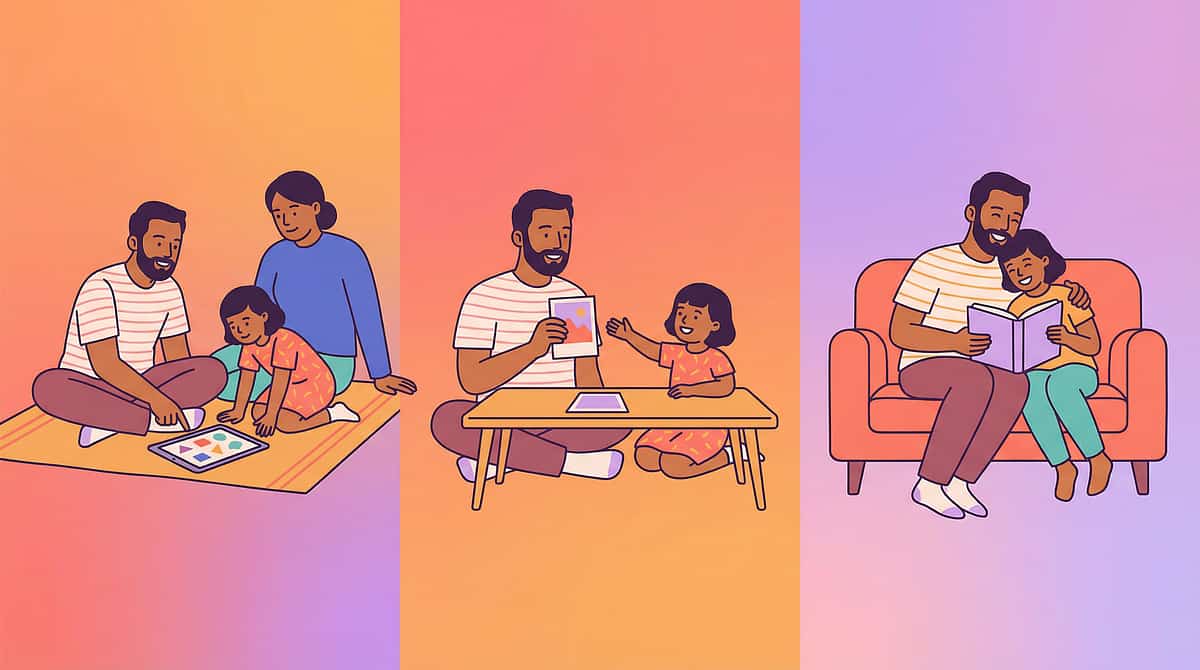
Step 2 of 6
Step 2: "My Turn, Your Turn" — The Engagement
1–3 minutes
This three-phase structure creates the scaffolding for safe, low-pressure imitation. The key is presenting YOUR version first, always — modeling before demanding.
Child's Response | What You Do | |
Child copies the action (even approximately) | Celebrate immediately! "You did it! You copied me!" → Move to Step 3 | |
Child holds the material but doesn't copy | Model again, slower. Exaggerate the action. Say "Like this — boom boom boom!" Wait again. | |
Child does a different action with the material | Mirror THEIR action first! Then re-model yours. "You went bang! Now watch me — boom boom boom." | |
Child doesn't interact with the material | Gently guide their hand to tap the drum ONCE with hand-over-hand support. Immediately celebrate. |
Reinforcement cue: Any attempt to copy — even a partial attempt, even a wrong attempt — gets immediate, enthusiastic, specific praise: "You hit the drum! You copied me! That was AMAZING!"
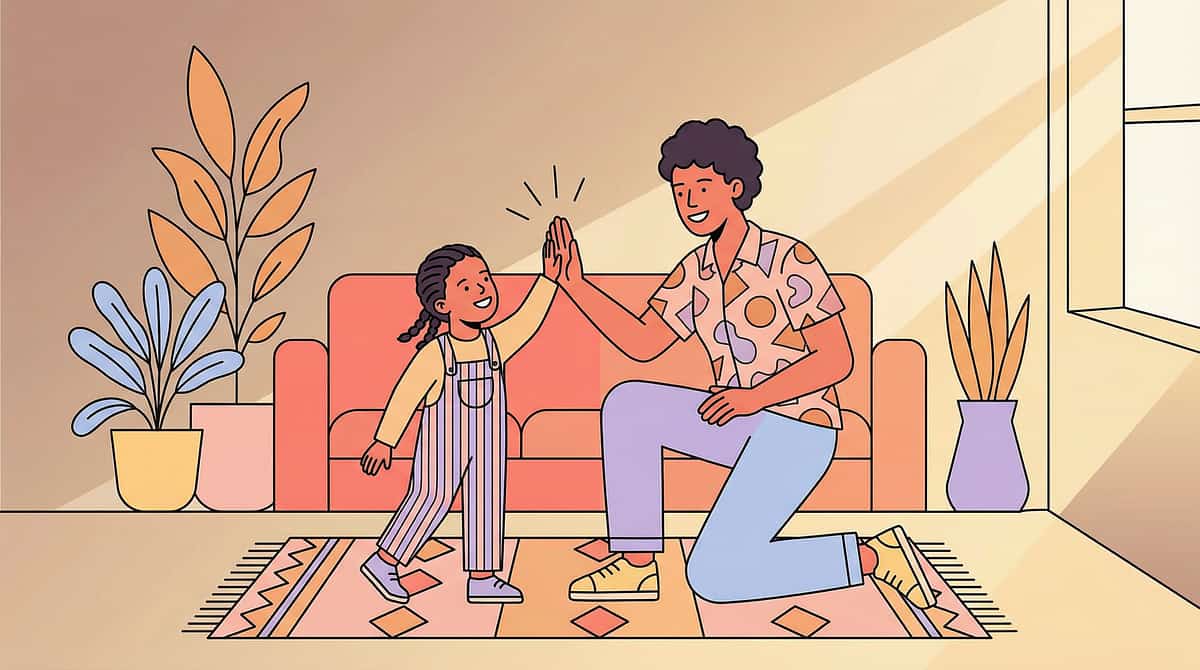
Step 3 of 6
Step 3: The Core Imitation Practice — "Watch. Copy. Celebrate."
5–10 minutes — the active ingredient
YOU MODEL
Clear, big, obvious action. Say "Watch me!" Face the child. One action at a time.
CHILD WATCHES
Give 5–10 seconds processing time. Wait. Do not fill the silence with words.
CHILD COPIES
Accept approximations. A child who waves their hand near the drum is TRYING to copy.
YOU CELEBRATE
Within 3 seconds. Specific, enthusiastic, immediate. Then repeat with variation.
Progression Within a Single Session
Same action, same material
You tap drum three times. Child taps drum. Repeat 2–3 times to build confidence.
Vary the action, same material
Tap FAST. Tap SLOW. Tap SOFTLY. Same drum, different movements — introduces flexibility.
Add a body movement
Tap drum AND stomp your foot. Two-element imitation challenges the brain to hold and copy more.
Switch materials
Put drums away. Bring out bubbles. You blow. Child copies blowing action. Generalization begins.
Common execution errors to avoid: Modeling too fast • Using verbal instructions instead of demonstration • Moving on before the child has succeeded • Making it feel like a test rather than play.
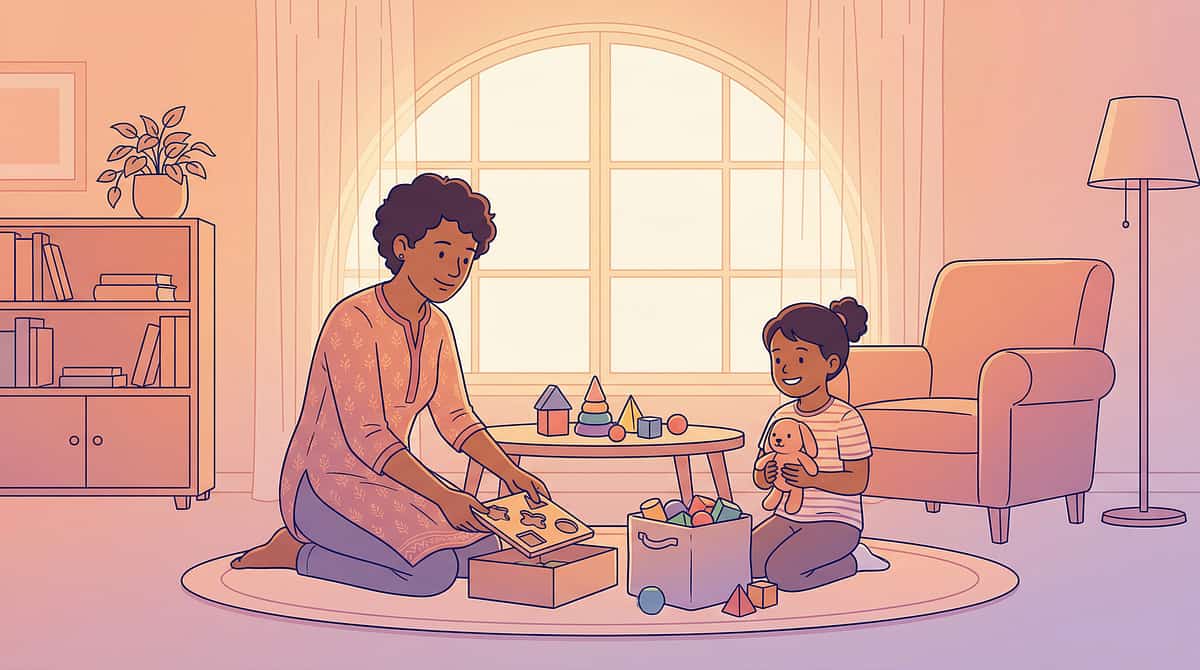
Step 4 of 6
Step 4: Repeat & Vary — Building the Imitation Muscle
3–5 minutes
Target: 5–10 successful imitations per session across all materials used. Quality over quantity, always.
Sample Session Map
3 drum imitations (same action) ✓ ✓ ✓
2 drum imitations (fast/slow variation) ✓ ✓
2 bubble-blowing imitations ✓ ✓
1 gross motor imitation (clap hands) ✓
1 mirror imitation (touch nose) ✓
- Total: 9 successful imitations = excellent session
Satiation Indicators — When Your Child Has Had Enough
Pushing materials away
Looking away consistently
Yawning, rubbing eyes
Starting to fuss or protest
Getting up and walking away
Becoming silly/hyper (overstimulation)
3 good, joyful imitations are worth more than 10 forced, crying imitations. Stop while it's still fun. The child should WANT to play this game again tomorrow.
Step 5 of 6
Step 5: "YOU DID IT!" — The Celebration That Builds the Habit
⏱️ Timing
Within 3 seconds of the child's imitation attempt. Not after. Not later. NOW. The brain links the reward to the behavior only when it arrives immediately.
🎯 Specificity
Not just "good job" — tell them WHAT they did: "You hit the drum just like me!" "You clapped your hands! You copied me!" "You blew the bubbles! Just like mama!"
🎉 Enthusiasm
Match or exceed the child's energy. A quiet tap earns a warm "Yes! You did it!" A big stomp earns a full-body celebration: arms up, cheering, clapping.
Reinforcement Menu
Social
Praise, high-fives, hugs, tickles, funny faces — free and always available.
Natural Consequence
The instrument makes noise — the copy IS the reward. Maximally motivating.
Tangible
Brief access to a preferred item for children who need stronger reinforcers initially.
Token System
Stickers, stamps, tokens toward a preferred activity for children 3+ who understand token systems.
The Key Insight: Celebrate the ATTEMPT, not just the success. A child who raises their hand when you wave is TRYING to imitate. That's the neural pathway forming. Celebrate it like the miracle it is.
Step 6 of 6
Step 6: "Almost Done" — The Gentle Landing
1–2 minutes
The Cool-Down Script
"2 more! Then all done!" → Model 2 more imitations → "1 more!" → Last one → "All done! You were amazing! Let's put the [drums] to sleep."
Transition Ritual
Signal closure
Say "All done" with a clear finisher signal — visual timer beep, hands together. Use the SAME gesture every time.
Pack up together
Put materials back in the basket — child participates if able. This is a shared ritual, not a unilateral end.
Transition activity
Something calming the child enjoys — a favorite song, a hug, a snack.
Verbal summary
"You played drums with Mama. You copied so well. We'll play again tomorrow."
If Child Resists Ending
- Offer "one more" (final one only) — then firm finish
- Don't re-open the session after closing it
- If meltdown occurs, use calm presence — don't associate ending with punishment
- Next session, use a visual timer from the START to build ending predictability
Why This Matters
Predictable endings build trust in the structure. When children know when things end, they can relax into the beginning. The cool-down is not optional — it's therapeutic.
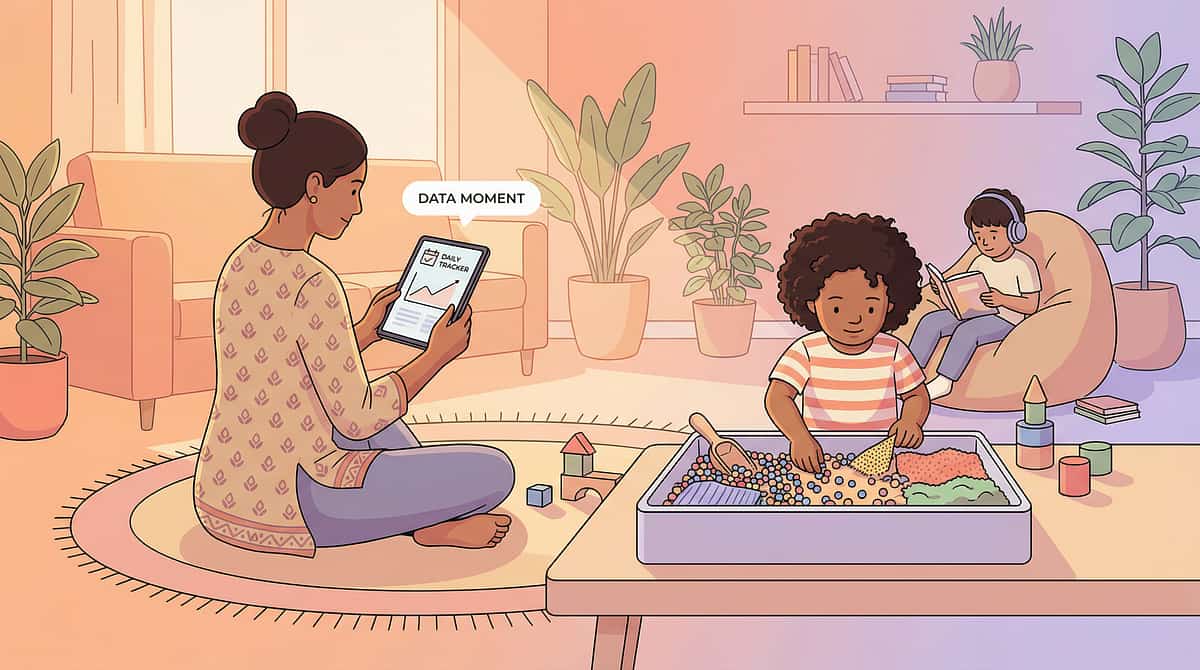
60 Seconds. 3 Data Points. Don't Wait.
Capture data within 60 seconds of session end. Your memory fades fast — your notes are your clinical record and your child's story over time.
1
Imitation Attempts Count
How many times did your child TRY to copy? Count ALL attempts — successful or not. Every attempt is data.
2
Successful Imitations Count
How many were recognizable copies? Even approximate counts. Accuracy improves over time — count the tries.
3
Session Quality Rating
⭐ Difficult — lots of resistance | ⭐⭐⭐ Good — mostly engaged | ⭐⭐⭐⭐⭐ Excellent — child initiated imitation without prompting
Optional Data Points
Which materials worked best today?
Any new imitation behaviors observed outside the session?
Notes or adjustments for next session?
"60 seconds of data now saves hours of guessing later."
It Didn't Go as Planned? That's Data, Not Failure.
Session challenges are among the richest sources of clinical insight. Every problem has a functional explanation — and a specific fix.
Problem 1: "My child wouldn't look at me at all"
Why: Joint attention deficit — the child hasn't yet learned that watching YOU is important.
Fix: Start by imitating THEM. Copy what they do. They bang a toy — you bang a toy. When they notice you copying them, you've opened the attention door.
Fix: Start by imitating THEM. Copy what they do. They bang a toy — you bang a toy. When they notice you copying them, you've opened the attention door.
Problem 2: "My child grabbed both sets of materials"
Why: Possessiveness or need for control — common in autism.
Fix: Use cause-effect toys instead (there's only one button to push). Or hold your material out of reach and model while they watch, then hand it to them.
Fix: Use cause-effect toys instead (there's only one button to push). Or hold your material out of reach and model while they watch, then hand it to them.
Problem 3: "My child copied once but then lost interest"
Why: One successful imitation IS progress! Satiation is fast at first.
Fix: End on that win. One successful imitation today, two tomorrow, three next week. This is the trajectory.
Fix: End on that win. One successful imitation today, two tomorrow, three next week. This is the trajectory.
Problem 4: "My child got upset when I tried to get them to copy"
Why: The demand may be too high for current level, or materials weren't motivating.
Fix: Drop all demands. Just play with matching materials side by side. Imitation will emerge from exposure.
Fix: Drop all demands. Just play with matching materials side by side. Imitation will emerge from exposure.
Problem 5: "My child does the action but it looks nothing like mine"
Why: Motor planning difficulty — the brain knows WHAT to do but can't coordinate the movement precisely.
Fix: CELEBRATE IT ANYWAY. Any attempt is the neural pathway forming. Precision comes with practice.
Fix: CELEBRATE IT ANYWAY. Any attempt is the neural pathway forming. Precision comes with practice.
Problem 6: "The session lasted only 2 minutes before meltdown"
Why: Readiness check may have missed signs, or the environment had triggers.
Fix: 2 minutes is a valid session. Next time: quieter materials, shorter target, lower demand.
Fix: 2 minutes is a valid session. Next time: quieter materials, shorter target, lower demand.
Session abandonment is not failure — it's data. Document what happened, adjust, and try again. Consistency across days matters far more than perfection within a single session.

No Two Children Are Identical — Customize the Protocol
The structured protocol is a scaffold, not a script. Adapt intensity, materials, and session parameters to your child's profile and current state.
← Easier
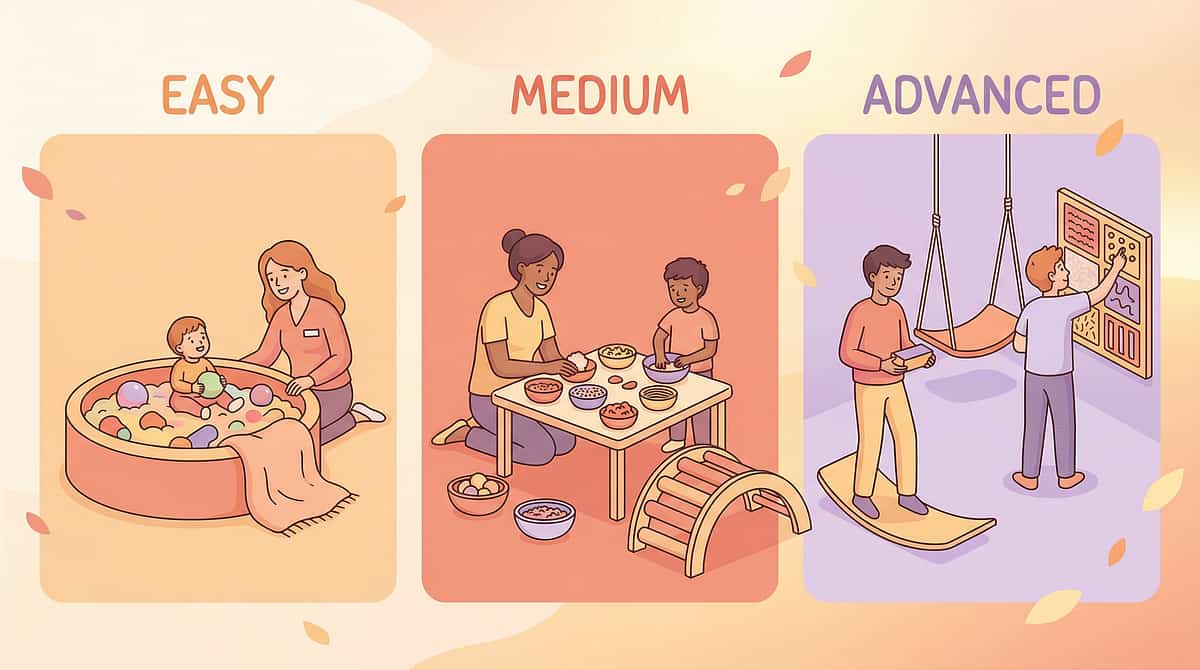
For bad days, early stages, younger children
- Use only 1 material per session
- Accept ANY interaction as "imitation"
- Hand-over-hand support for every action
- 5-minute sessions maximum
- Parent models, no demand for copying
→ Harder
For breakthroughs, advancing children
- Multiple materials per session
- Expect independent imitation (no prompts)
- Two-step sequences (clap then stomp)
- 15–20 minute sessions
- Deferred imitation: "Remember what we did? Do it now"
Profile-Based Variations
🔊 Sensory Seeker
Craves intense input. Use LOUD drums, BIG movement equipment, FAST action songs. High sensory payoff = high imitation motivation.
🤫 Sensory Avoider
Easily overwhelmed. Use quiet instruments (egg shakers), gentle bubbles, slow songs. Keep sessions short and calm. Introduce mirror gradually.
🧩 Dyspraxia Profile
Knows WHAT to do but struggles with HOW. Use hand-over-hand more liberally. Focus on gross motor before fine motor. Video modeling may be especially effective.
👁️ Visually Strong Learner
Processes visual information well. Lean into video modeling, imitation cards, and mirror work. Visual supports will accelerate learning.
Age-Based Modifications
1
12–18 Months
Object imitation only. Matching toys. Very short sessions (3–5 min).
2
18–24 Months
Add gross motor. Mirror work. Action songs introduced.
3
24–36 Months
Add fine motor, oral motor, video modeling.
4
36–48 Months
Multi-step sequences, peer modeling, deferred imitation.

ACT IV: THE PROGRESS ARC
Weeks 1–2: Tolerance, Not Mastery
15%
Progress at Week 2
The neural pathway is beginning to form. Tolerance and participation are the milestones now — not independent copying.
What "Progress" Looks Like at This Stage
✅ Child tolerates sitting near matching materials — even if they don't use them
✅ Child looks at you briefly when you model an action — even for 2 seconds
✅ Child allows hand-over-hand support without pulling away
✅ Child shows preference for one material over others
✅ Child makes ANY movement after watching you — even if it's not a copy
"If your child looks at the drum for 3 seconds longer than last week — that's real progress. The neural pathway is forming."
Parent emotional preparation: Weeks 1–2 feel slow. You may feel like "nothing is happening." But beneath the surface, the brain is building new connections. Trust the process. Document everything — you'll look back and see the trajectory.
Weeks 3–4: The Neural Pathways Are Forming
40%
Progress at Week 4
Consolidation is visible. Spontaneous imitation is beginning to emerge outside the structured session.
Consolidation Indicators
Anticipation
Child anticipates the imitation game — reaches for materials or moves to the imitation space when they see the basket.
Independent Copying
Copies 1–2 actions consistently without physical prompting. The neural pathway is now strong enough to function without scaffolding.
Reciprocal Imitation
Shows excitement when YOU copy THEM. This is the social circuit activating — imitation is becoming a two-way game.
Spontaneous Generalization
Begins to imitate OUTSIDE the structured session — you clap during a song at dinner, and the child claps too. This is the breakthrough signal.
"You may notice you're more confident too. That's not incidental — parental self-efficacy is the strongest predictor of continued success."
When to increase difficulty: If you're seeing 3+ consolidation indicators consistently across 4–5 sessions, add a new material, increase session length by 5 minutes, or introduce the next level of complexity.
Weeks 5–8: Imitation Becomes a Learning Tool
75%
Progress at Week 8
Mastery is within reach. Imitation is generalizing beyond the therapy context.
Mastery Criteria
🏆 Novel Actions
Child spontaneously imitates actions never explicitly taught — the learning channel is open.
🏆 Generalization
Imitation occurs in new settings — home, playground, grandparents' house — without prompting.
🏆 Peer Copying
Child copies peers, not just adults — social learning is expanding.
🏆 Vocal Imitation
Emerging copying of sounds, syllables, or words — the direct pathway to language is opening.
The shift from "I must be taught everything" to "I can learn by watching" is one of the most profound developmental transitions your child will make. When imitation becomes a reliable learning channel, development across EVERY domain accelerates.
What Comes Next
Multi-Step Sequences
Expand to complex imitation with 3+ element chains.
Deferred Imitation
Copy from memory — hours or days after observation.
Peer Imitation
Copying other children in group settings and play.
Vocal/Verbal Imitation
Progress to sounds and words if not yet established.

🎉 You Did This. Your Commitment Changed Your Child's Brain.
"Five to eight weeks ago, you read Card 1 with a knot in your stomach. Your child didn't wave back. Didn't copy your silly faces. Didn't learn by watching. Today, your child watches and copies. They bang the drum when you bang the drum. They clap when you clap. They might even blow bubbles after watching you blow."
This didn't happen because of expensive toys or miracle cures. It happened because YOU showed up. Every day. With matching drums and patience and celebration and love. You literally rewired your child's brain.
📸 Photo Moment
Capture your child's imitation milestone. Print it. Put it on the fridge. This moment deserves to be seen every day.
📝 Journal Prompt
Write down the moment your child first copied without prompting. When was it? What did they copy? How did you feel?
👨👩👧 Family Share
Tell your partner, your parents, your child's therapist. Share the video. This is a real clinical achievement — celebrate it as such.
🚩 Pause and Consult If You See These Signs
Progress is not always linear. Trust your instincts — if something feels wrong, pause and ask. These red flags warrant professional consultation before continuing.
🚩 Regression
Child was imitating successfully but has STOPPED — and the regression persists for 2+ weeks. This warrants professional evaluation as regression can indicate various medical or developmental concerns.
🚩 Echopraxia Without Understanding
Child copies EVERY movement robotically without apparent comprehension or social connection. Differs from functional imitation — it's mechanical, not communicative.
🚩 Extreme Distress During Imitation
Structured practice consistently causes severe distress (not mild frustration but significant meltdown behavior). The approach needs professional modification.
🚩 No Progress After 8 Weeks
If you've been consistent (3–5 sessions/week) for 8 weeks and see ZERO indicators from Weeks 1–2 progress, comprehensive developmental evaluation is recommended.
🚩 Self-Injurious Behavior
Hitting self, head banging, or biting when asked to copy. Stop immediately and consult a behavioral specialist before resuming any imitation sessions.
🚩 Loss of Previously Acquired Skills
If other skills are declining while focusing on imitation, this needs clinical assessment. Skill regression is never expected or acceptable.
Escalation Pathway: (1) Revisit troubleshooting guide → modify approach. (2) Book a free teleconsultation with Pinnacle. (3) In-person assessment at nearest center. (4) Full developmental assessment with AbilityScore® baseline.
Your Child's Imitation Journey — The Full Pathway Map
Prerequisites
- B-132: Limited Eye Contact
- B-107: Limited Turn-Taking
- Basic attention and engagement skills
▶ YOU ARE HERE: B-130
9 Materials for Imitation — the technique you're building right now.
Next-Level Options
- Video Modeling Deep-Dive
- Musical Imitation Games
- Vocal Imitation Programme
- Peer Imitation Programme
More Techniques in Social & Communication Foundations
The materials you've already gathered for B-130 cross-apply to many related techniques. Musical instruments, mirrors, and matching toys serve multiple intervention goals simultaneously.
Technique | Level | Key Material | Shared B-130 Materials | |
B-128: No Words by 18 Months | Introductory | Language stimulation toys | Musical instruments, bubbles | |
B-129: Language Regression | Core | Communication boards | Action song props, mirrors | |
B-131: Doesn't Respond to Name | Introductory | Attention-getting materials | Cause-effect toys, shakers | |
B-132: Limited Eye Contact | Introductory | Social engagement toys | Mirror, matching objects | |
B-107: Limited Turn-Taking | Core | Turn-taking games | Drum pairs, identical sets | |
K-935: Imitation Games for Home | Core | Musical instruments, mirrors | All 9 B-130 materials |
"You already own materials for these." Musical instruments (B-130) cross-apply to B-128 (language stimulation), B-107 (turn-taking), and K-935 (home imitation games). Your investment compounds across techniques.
This Technique Is One Piece of a Larger Plan
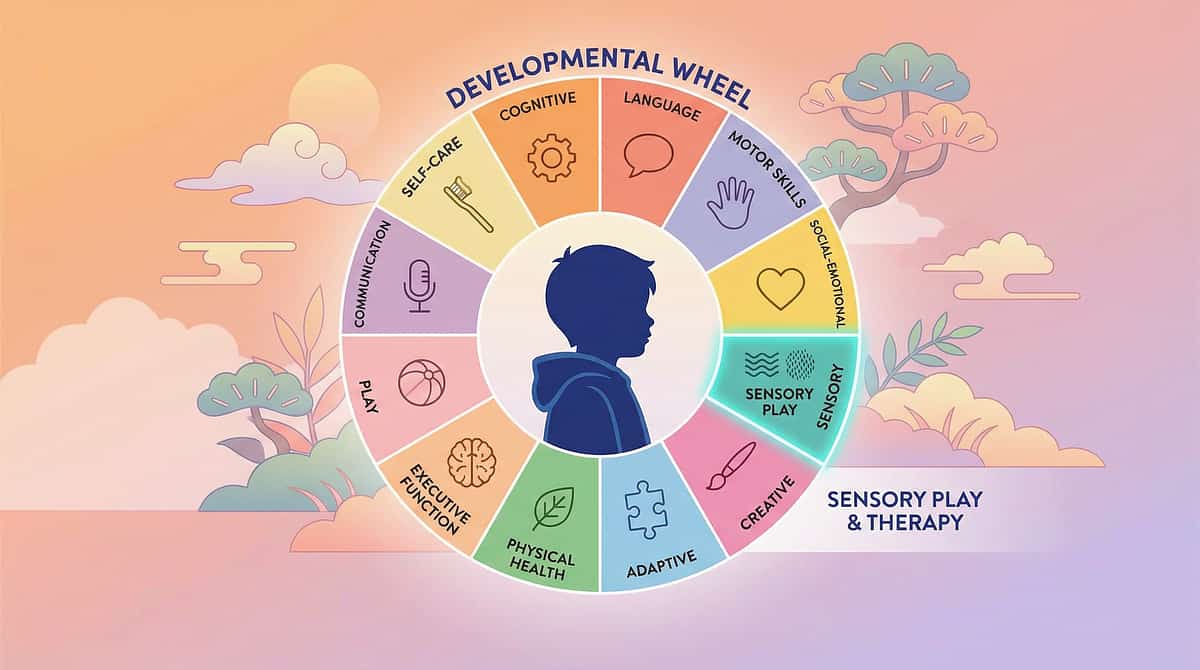
Imitation connects to almost every developmental domain because it IS the mechanism through which children learn everything else. Building imitation doesn't just address imitation — it accelerates the entire developmental map.
Imitation is the highlighted domain — but notice how it radiates into Communication, Play Skills, Motor Development, and Pre-Academic learning. Strengthening imitation creates a ripple effect across the entire wheel.
ACT V: COMMUNITY & ECOSYSTEM
They Started Where You Are
"My daughter wouldn't copy anything — not waving, not clapping, nothing. I felt like I was performing for an audience of one who wasn't watching. After three months of targeted imitation therapy with matching musical instruments and mirror work, she started copying songs. Then words. Now she learns by watching like other kids do. The day she waved goodbye to her grandmother — without being asked — I cried in the car for twenty minutes."
— Parent, Pinnacle Blooms Network | Age at start: 22 months | Duration: 12 weeks
"We started with two identical sets of blocks from the dollar store. He wouldn't even look at them at first. By week three, he was stacking when I stacked. By week six, he was copying actions without the blocks — clapping, stomping, touching his head. Video modeling on my phone was the breakthrough. Letting him process at his speed — that patience — changed everything."
— Parent, Pinnacle Blooms Network | Age at start: 30 months | Duration: 8 weeks
"Imitation deficits are among the most frustrating for parents because they feel like a fundamental disconnect. But they're also among the most responsive to structured intervention. When we give children the RIGHT materials in the RIGHT context with the RIGHT motivation, imitation emerges. It's not about forcing copying — it's about making copying irresistible." — Pinnacle Blooms Clinical Consortium
Illustrative cases; individual outcomes vary.
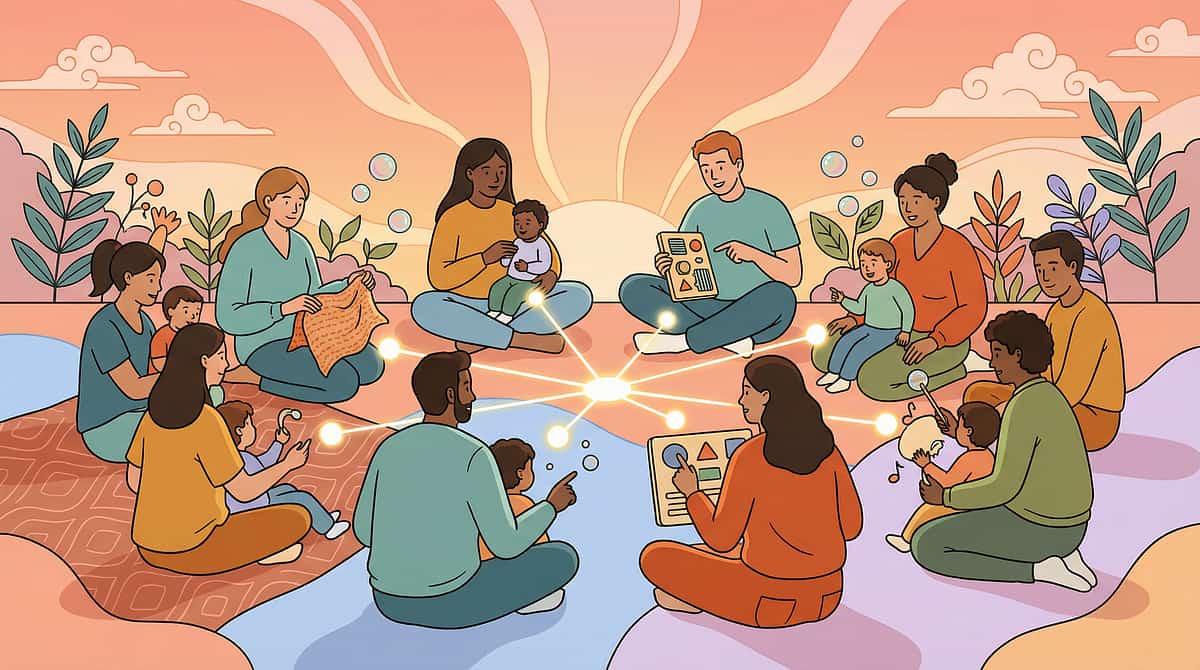
You Are Not Alone in This Journey
Community accelerates healing — for parents and children. Connect with families who understand exactly what you’re navigating, supported and moderated by Pinnacle clinical professionals.
Imitation Skills Parent Support Group
Connect with other families navigating imitation challenges. Share wins, ask questions, find solidarity with people who truly understand. Moderated and safe.
Pinnacle Blooms Parent Forum
Online community moderated by Pinnacle therapists. Post questions, share progress videos, get professional input from clinicians who know this journey.
Peer Mentoring Programme
Connect with an experienced Pinnacle parent who has navigated this same challenge. One-to-one support from someone who has been exactly where you are.
Local Parent Meetups
Pinnacle centers organize monthly parent meetups by challenge area. Meet families in your city navigating similar journeys, and share real strategies that work.
"Your experience helps others — consider sharing your journey." Every story shared builds the collective wisdom of the community.
Home + Clinic = Maximum Impact
Home practice and clinic sessions multiply each other's effectiveness. What you build at home, therapists deepen in clinic. What therapists teach in clinic, you reinforce at home every day.
🧠 Developmental Assessment
Comprehensive imitation skills evaluation across motor, vocal, and object domains — with a personalized intervention plan.
📊 ABA Therapy
Structured imitation programming with discrete trial training, data collection, and systematic generalization planning.
🗣️ Speech Therapy
Vocal imitation pathway — oral motor to speech sounds. The bridge from blowing bubbles to saying "mama."
🤸 Occupational Therapy
Motor imitation and body awareness development. Building the proprioceptive foundation for accurate movement copying.
👶 Early Intervention
Intensive multi-disciplinary imitation building for children under 3 — the highest-impact intervention window.
👨👩👧 Parent Training
Learn to execute imitation protocols with clinical precision at home. You are the most important therapist in your child's life.
The Research Behind Imitation-Based Intervention
This technique is grounded in decades of peer-reviewed research. Here is the evidence base — from foundational neuroscience to randomized controlled trials.
Rogers & Williams (2006)
Imitation and the Social Mind: Autism and Typical Development. Comprehensive analysis establishing imitation as a core developmental mechanism. Demonstrated that imitation skills can be systematically taught and that gains predict gains across every developmental domain.
Ingersoll (2008)
The effect of context on imitation skills in children with autism. RCT demonstrating Reciprocal Imitation Training effectiveness. Children who received structured training showed gains that generalized to untrained actions.
Cardon & Wilcox (2011)
Promoting imitation in children with autism: A comparison of reciprocal imitation training and video modeling. Both methods produced significant gains. Video modeling showed particular promise for children who responded poorly to live modeling.
NCAEP Evidence-Based Practices Report (2020)
Video modeling classified as an evidence-based practice for autism. Imitation-based interventions meet criteria for emerging evidence-based practices across the spectrum.
Rizzolatti & Craighero (2004)
The Mirror-Neuron System. Annual Review of Neuroscience. Foundational neuroscience establishing the neurological basis of imitation — the "see-do" bridge that structured material pairing is designed to activate.
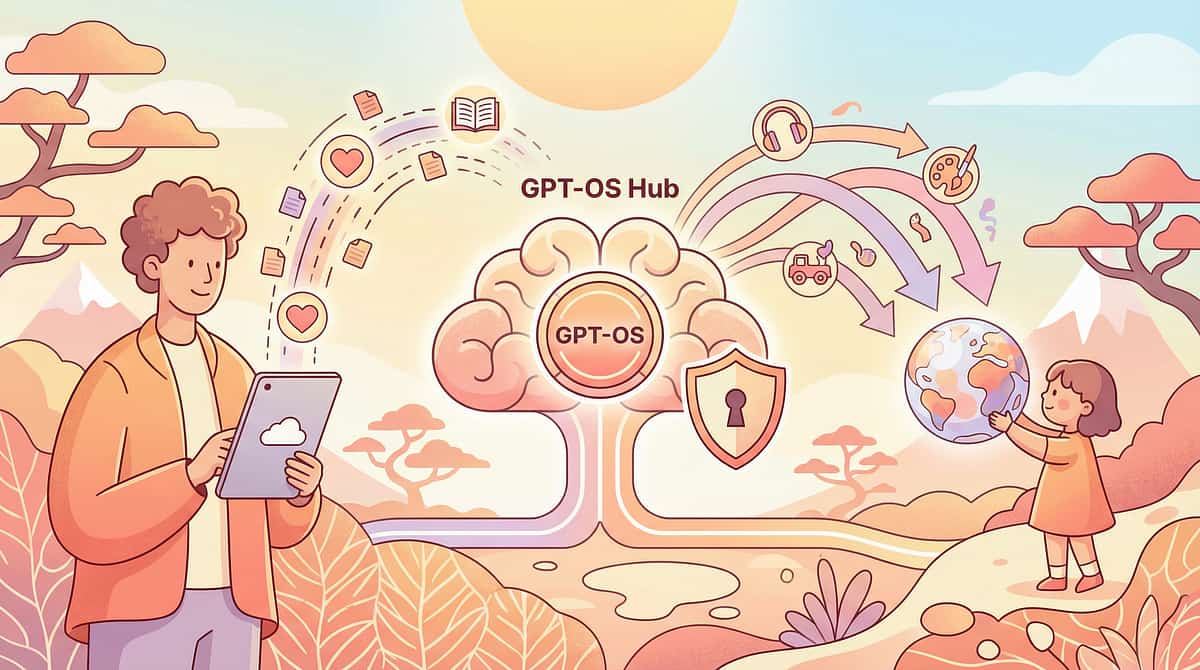
GPT-OS® — Your Child's Data Powering Personalized Therapy
What GPT-OS® Learns From This Technique
Which of the 9 materials produce the strongest imitation responses for YOUR child specifically
Your child's imitation hierarchy level and individual progression speed
Optimal session duration and frequency for your child's unique profile
When to introduce the next level of complexity — before plateaus occur
How your child's trajectory compares to 20M+ real-world therapy sessions of data
🔒 Privacy & Data Protection
- All data encrypted in transit and at rest
- Your child's data is never shared or sold
- You control what data is captured and can delete at any time
- Compliant with India's IT Act and DPDP Act provisions
Collective Intelligence
"Your data helps every child like yours. The more families contribute, the smarter GPT-OS® becomes for everyone."
Every session you log adds to a growing body of real-world evidence that benefits children across 70+ countries. Your contribution matters beyond your family.
🎬 Watch: "9 Materials That Help When Child Doesn't Imitate"
Reel B-130
Social and Communication Foundations Series — Episode 130
Domain
Behavioral / Developmental — Imitation Skills Development
Duration
75 seconds — every second is a technique demonstration
What you'll see: A Pinnacle Blooms therapist demonstrates each of the 9 materials with a parent-child pair. Watch matching musical instruments in action, see mirror work building body awareness, observe cause-effect motivation in real time, and hear the specific scripts for "watch me, your turn." In 75 seconds, you'll see the entire technique come alive — and you'll be ready to start today.
"9 Materials That Help When Child Doesn't Imitate — from the Pinnacle Blooms Consortium" | Reel B-130 | Social and Communication Foundations Series
Everyone Who Touches Your Child's Life Needs This
Consistency across caregivers multiplies impact. When grandparents, teachers, and daycare providers all understand the imitation goal and the simple response — celebrate any attempt — your child gets 24/7 reinforcement instead of 20 minutes a day.
"Your grandchild is learning to copy — to wave, to clap, to do what you do. Right now, this doesn't come naturally for them. You can help by doing simple actions and waiting for them to copy. When they try — even a tiny try — get excited! Say 'you did it!' This is building their brain's ability to learn by watching."
Share This Page
📄 1-Page Family Guide (PDF)
Simplified version for all caregivers — grandparents, daycare, extended family. Everything they need on one page.
📋 Grandparent Version
Simplified 1-page explanation in larger font and simpler language. Designed so grandparents can participate confidently.
📝 School Communication Template
Letter template informing teachers and school staff about imitation goals and how they can support in classroom settings.
Preview of 9 materials that help when child doesnt imitate Therapy Material
Below is a visual preview of 9 materials that help when child doesnt imitate therapy material. The pages shown help educators, therapists, and caregivers understand the structure and content of the resource before use. Materials should be used under appropriate professional guidance.


Link copied!
ACT VI: THE CLOSE
Your Questions, Answered
The most common questions from families navigating imitation challenges — answered with clinical precision and parental warmth.
Q: At what age should I be concerned about imitation delays?
Most children show some imitation by 9–12 months (waving, clapping). By 18 months, functional imitation should be emerging. If your child shows minimal imitation by 18 months despite your attempts to encourage it, a developmental evaluation is recommended. Early intervention during the 12–48 month window produces the best outcomes.
Q: Can my child learn to imitate even with an autism diagnosis?
Yes. Imitation can be explicitly taught. Multiple controlled studies demonstrate that structured imitation intervention produces significant, lasting gains in children with ASD. The materials on this page are specifically designed for children who don't naturally imitate.
Q: How long does it take to see results?
Most families see initial tolerance and engagement changes in weeks 1–2, emerging spontaneous imitation in weeks 3–4, and functional imitation as a learning tool by weeks 5–8. Consistency matters more than intensity — 10 minutes daily beats 60 minutes once a week.
Q: Can I do this without a therapist?
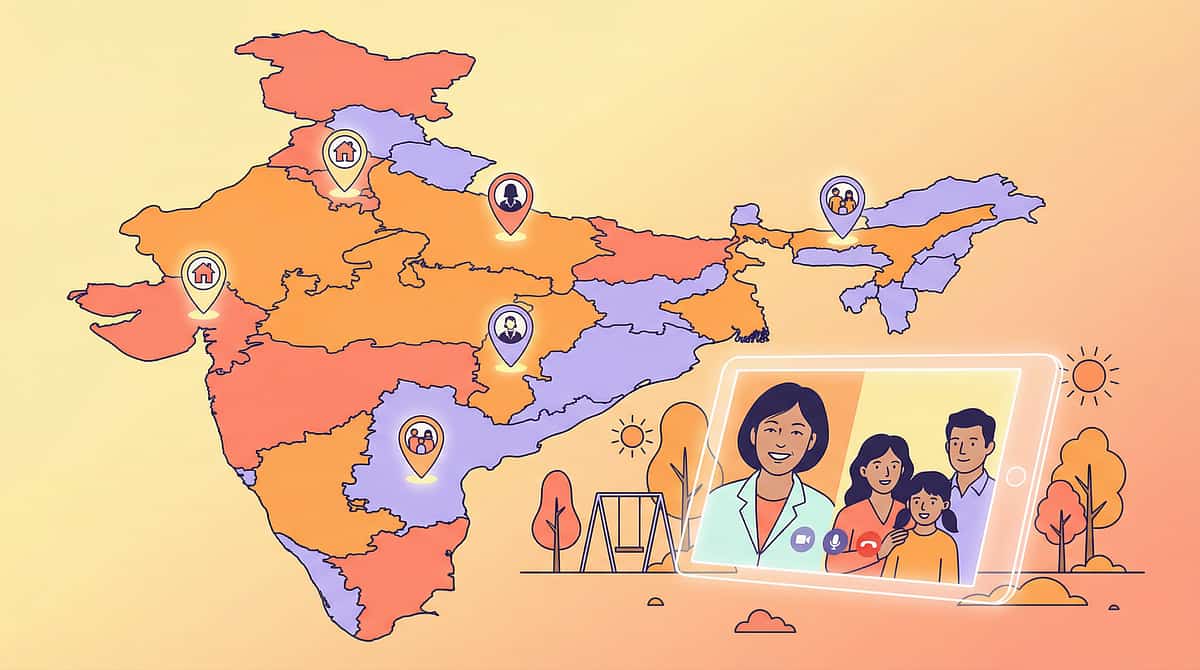
Yes — this page provides everything you need to start at home. However, professional guidance accelerates progress and helps navigate challenges. The ideal approach combines home practice with periodic professional consultation. Call 9100 181 181 for a free consultation.
Q: What if my child only imitates with one material but not others?
This is normal early progress! Start with the material that works and gradually expand. If drums produce imitation but blocks don't, use drums as the foundation and slowly introduce block-based imitation during drum sessions.
Q: My child copies TV but not people — is that imitation?
Echolalia and delayed video imitation involve different neural pathways than social imitation, but they show your child CAN process and reproduce — which is promising. The materials on this page help bridge from screen-based copying to person-based copying.
Q: Will my child grow out of imitation difficulties without intervention?
Some mild imitation delays resolve spontaneously. Significant imitation deficits — particularly when combined with other developmental differences — typically do not resolve without structured intervention. Early intervention produces substantially better outcomes than waiting.
Q: Is too much imitation practice harmful?
Forced, stressful imitation practice can create negative associations. Follow the "3 good reps > 10 forced reps" principle. If your child is having fun, keep going. If they're resisting, stop. Quality over quantity, always.
You've Read It All. Now Choose Your Path.
20M+
Therapy Sessions
Exclusive 1:1 sessions powering GPT-OS® recommendations
97%+
Measured Improvement
Across families who complete the full protocol
80+
Centers
Across India, serving families from 70+ countries
1,000+
Clinicians
Validating every technique across 5 therapy disciplines
"Every child deserves to learn by watching. Imitation is not a gift — it is a skill that can be built. The Pinnacle Blooms Consortium exists to ensure that every family, regardless of geography or economics, has access to the evidence, the tools, and the support to build this skill in their child." — The Pinnacle Blooms Consortium | Powered by GPT-OS® Therapeutic Intelligence
📞 FREE National Helpline: 9100 181 181 (16+ languages, 24×7) | 🌐www.pinnacleblooms.org | 📧care@pinnacleblooms.org
This content is for educational purposes only and does not replace professional evaluation or treatment. Imitation deficits can indicate various developmental differences including autism spectrum disorder, motor planning disorders, and other conditions requiring comprehensive assessment. Consult a developmental pediatrician, behavioral specialist, or other qualified professional for individualized guidance. Individual results vary.
© 2025 Pinnacle Blooms Network®, a unit of Bharath Healthcare Laboratories Pvt. Ltd. All rights reserved. GPT-OS®, AbilityScore®, TherapeuticAI®, EverydayTherapyProgramme™, and FusionModule™ are registered trademarks. CIN: U74999TG2016PTC113063 | DPIIT: DIPP8651 | MSME: TS20F0009606