

9 Materials That Help With Force Modulation
Practical, therapist-approved tools to help young children learn how hard — or how gently — to push, pull, squeeze, and touch.
Force modulation is a foundational sensory-motor skill. When children struggle to grade their grip, touch, or pressure, it often impacts their play, academic exploration, and daily social relationships. This guide is designed to bridge the gap between clinical intervention and everyday home activity.
9 Evidence-Backed Materials
Ages 2–6 Focus
Home + Clinic Ready
Pinnacle Therapy Series
Ages 2–6
OT Resource

Why It Matters
What Is Force Modulation — and Why Does It Matter?
The Clinical Picture
Force modulation is the nervous system's ability to grade the amount of force applied during a motor task — from cracking an egg without crushing it, to hugging a friend without knocking them over. For children ages 2–6, this skill is foundational to safe play, self-care, and social connection.
When force modulation is underdeveloped, children may break toys, hurt peers unintentionally, struggle with handwriting grip, or avoid tactile tasks altogether.
What Caregivers Notice
- Pressing crayons so hard they snap
- Hugging or touching others "too rough"
- Difficulty with gentle tasks like turning pages
- Avoiding messy or resistive textures
- Dropping items or gripping too loosely

How These 9 Materials Were Selected
Every material in this guide was chosen using Pinnacle's Canon criteria: evidence-informed therapeutic value, accessibility for home and clinic settings, safety across the 2–6 age range, and real-world caregiver feasibility. Each one targets force modulation through a distinct sensory pathway — proprioceptive, tactile, or kinesthetic.
Evidence-Informed
Grounded in occupational therapy and sensory integration research
Age-Appropriate
Each material includes adaptations for 2–3 and 4–6 age bands
Home + Clinic Ready
Usable in both clinical sessions and everyday caregiver routines
Safety Screened
Safety notes included for every material and activity
Your At-a-Glance Guide to All 9 Materials
# | Material | Primary Benefit | Best For | |
1 | Playdough / Therapy Putty | Graded resistance for hand strength | Squeezing, pressing, pinching | |
2 | Sponges & Squeezable Toys | Tactile feedback with variable give | Bath, sensory bins, play | |
3 | Balloon Activities | Visual + proprioceptive biofeedback | Breath & blow force control | |
4 | Weighted Utensils & Tools | Proprioceptive anchoring | Mealtime, drawing, writing | |
5 | Resistance Bands | Whole-body force grading | Gross motor & regulation | |
6 | Foam & Soft Blocks | Safe "crash & build" proprioception | Heavy work, social play | |
7 | Sensory Bins with Kinetic Sand | Tactile discrimination + modulation | Fine motor exploration | |
8 | Musical Instruments (drums/keys) | Auditory-motor feedback loop | Volume & beat control | |
9 | Water Play Tools | Dynamic resistance + flow control | Pouring, squirting, transferring |

Material 1 of 9
Playdough & Therapy Putty
Why It Works
Playdough and therapy putty provide graded proprioceptive resistance — the child's nervous system must continuously calibrate how much force to apply to achieve the desired outcome (flatten, poke, roll). This real-time feedback loop is one of the most direct ways to build force awareness in small hands.
Clinical Terms
Proprioceptive input, intrinsic hand strength, in-hand manipulation, bilateral coordination

Material 1 · Playdough & Therapy Putty
Activities, Age Adaptations & Pro Tips
Ages 2–3
- Poke with one finger — "make polka dots"
- Pat flat like a pancake
- Tear off small pieces and stick them together
Ages 4–6
- Roll snakes and coils with palms
- Hide small beads in putty and dig them out
- Build characters with pinch-and-pull shaping
Pro Tip
"Start with softer dough and grade up to firmer therapy putty as the child gains awareness. Resistance should be just right — not so easy the child zones out, not so hard they avoid it."
Safety Note
Always supervise with children under 3 for mouthing. Choose non-toxic, food-safe formulas for home use. Avoid slime-type products with high water content — they provide less graded resistance.
Parent Voice: "Once we switched to slightly firmer putty, my son stopped breaking every crayon. It was like his hands finally learned what 'medium' felt like."

Material 2 of 9
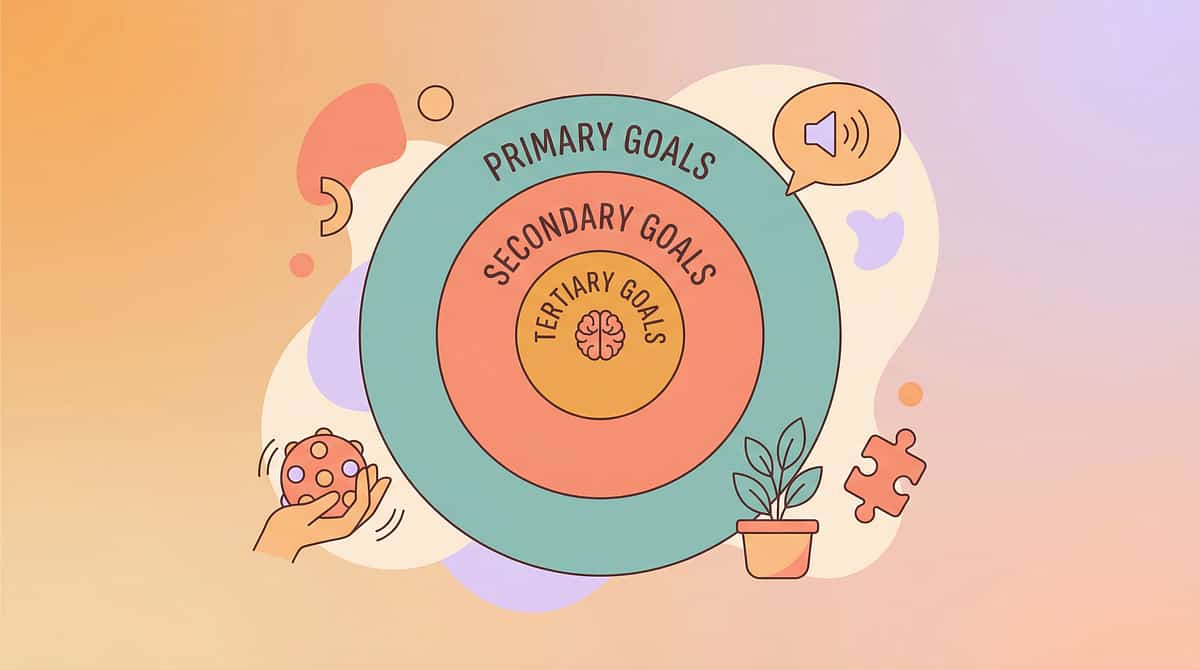
Sponges & Squeezable Toys
Why It Works
Sponges and squeezable toys offer variable resistance — they compress easily at first, then push back as more force is applied. This dynamic feedback teaches children to find a "middle ground" of grip force. Because the material visibly changes shape, the child gets immediate visual confirmation of how much force they used.
Squeezable toys also double as emotional regulation tools, making them especially versatile for children who are dysregulated before or during therapy tasks.
Clinical Terms
Tactile discrimination, grip force calibration, visual-proprioceptive feedback, emotional co-regulation
Material 2 · Sponges & Squeezable Toys
Activities, Age Adaptations & Pro Tips
Ages 2–3
- Squeeze sponge in a bowl of water — make it "rain"
- Hold a soft animal gently vs. "give it a big hug"
- Compare squeezing a soft sponge vs. a firm ball
Ages 4–6
- Transfer water from one bowl to another using only sponge squeezes
- "Soft hands, medium hands, strong hands" grading game
- Art: dab sponge with paint using different force levels
Pro Tip
"Use a clear measuring cup as the 'catch' container. Children love seeing how much water they squeezed — it makes an invisible skill visible and motivating."
Safety Note
Avoid latex sponges for children with latex sensitivities. Squeezable toys with small detachable parts are not appropriate for children still mouthing objects. Dry thoroughly after water play to prevent mold.
Parent Voice: "We keep a squeeze toy in the car. When my daughter gets overstimulated, squeezing it helps her come back down before we get to school."
Material 3 of 9
Balloon Activities
Why It Works
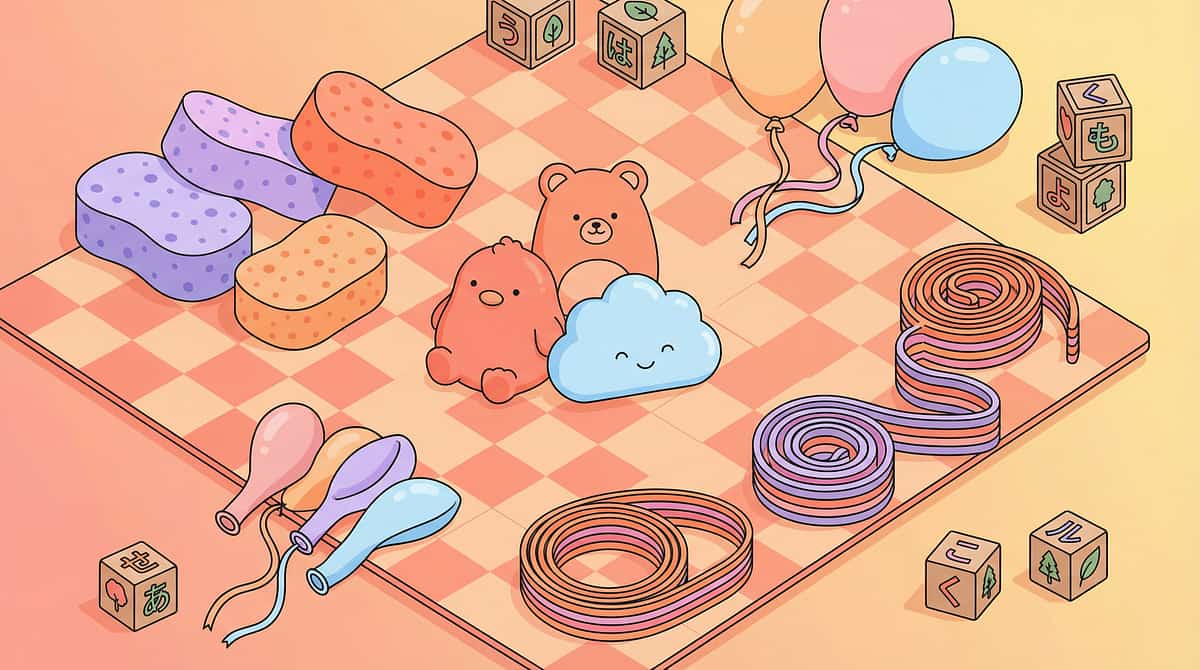
Balloons create a direct, visual biofeedback loop for force modulation. When a child blows — or bats, taps, or squeezes — a balloon, they see exactly how much force they applied. Too much breath and it flies away. Too little and it doesn't rise. This real-time consequence makes abstract force awareness concrete and playful.
Balloon activities also recruit oral-motor force control and breath regulation, which are closely tied to the arousal and attention systems in the developing brain.
Clinical Terms
Oral-motor force grading, proprioceptive biofeedback, breath regulation, arousal modulation

Material 3 · Balloon Activities
Activities, Age Adaptations & Pro Tips
Ages 2–3
- Bat an inflated balloon with open palms — "keep it up!"
- Touch balloon gently vs. hit hard — notice the difference
- Adult blows up, child controls release speed with fingers
Ages 4–6
- Blow balloon to a target size using counted breaths
- Balloon volleyball — use "feather hands" only
- Partner pass — keep it in the air using only fingertips
Pro Tip
"Draw a face on the balloon before inflating. As the child blows, the face 'grows.' This adds narrative and helps children stay engaged through the full breath, improving oral-motor endurance."
Safety Note
Uninflated or popped balloon pieces are a choking hazard — never leave them with unsupervised children under 8. Latex-free mylar alternatives are safer for children with latex allergies. Always supervise inflation activities.
Parent Voice: "Balloon volleyball became our secret bedtime wind-down. The gentle tapping calms my son in a way that nothing else does."
Material 4 of 9
Weighted Utensils & Tools
Why It Works
Weighted utensils and tools provide continuous proprioceptive input to the joints and muscles of the hand, wrist, and arm. This deep pressure anchors the child's proprioceptive system, helping them regulate how much force they apply — particularly during precision tasks like eating, drawing, and early writing.
Children who grip too tightly (breaking crayons, smashing food) or too loosely (dropping utensils, poor pencil control) often respond well to even slight additional weight, which makes the limb's position in space easier to sense.
Clinical Terms
Proprioceptive anchoring, joint compression, pencil pressure regulation, kinesthesia
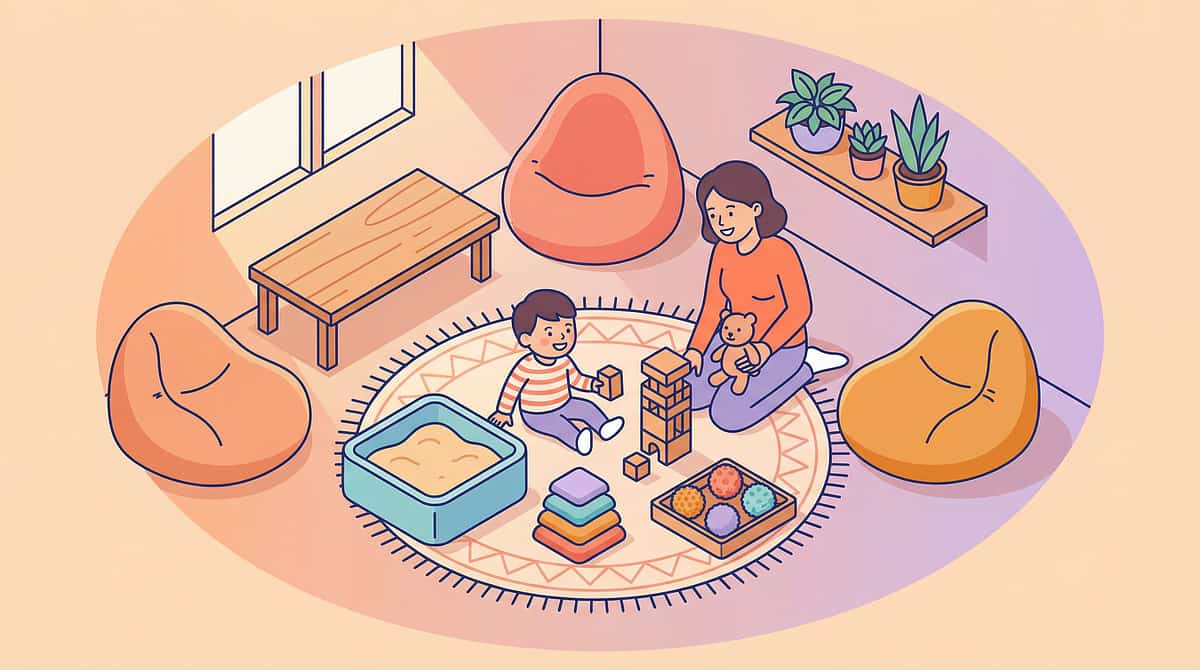
Material 4 · Weighted Utensils & Tools
Activities, Age Adaptations & Pro Tips
Ages 2–3
- Introduce a slightly weighted spoon at mealtimes
- Use a weighted crayon holder for first mark-making
- Carry a small weighted pouch during transitions
Ages 4–6
- Weighted pencil grip for pre-writing strokes
- Use a weighted rolling pin for playdough — doubles the benefit
- Weighted paint brushes for art projects requiring fine control
Pro Tip
"Introduce weighted tools gradually and for short durations — 20 minutes maximum per session. Always check with your occupational therapist for appropriate weight levels. The goal is enhanced awareness, not fatigue."
Safety Note
Weighted tools should be prescribed or approved by an OT for children with hypotonia, joint instability, or motor delays. Do not use without professional guidance for children with these diagnoses. Weight should never exceed 5–10% of the child's body weight for wearable tools.
Parent Voice: "We tried three different pencil grips. The weighted one was the only thing that got my daughter to stop pushing so hard her paper would tear."

Material 5 of 9
Resistance Bands
Why It Works
Resistance bands engage large muscle groups and joints throughout the whole body, delivering sustained proprioceptive input that helps children regulate their overall arousal level. Because the band pushes back proportionally to the force applied, children learn — kinesthetically — what "medium effort" feels like in their whole body, not just their hands.
This full-body force calibration often generalizes to finer motor tasks: a child who has just done resistance band work frequently shows improved pressure regulation during writing or play immediately afterward.
Clinical Terms
Whole-body proprioception, heavy work, arousal regulation, force-effort relationship

Material 5 · Resistance Bands
Activities, Age Adaptations & Pro Tips
Ages 2–3
- Pull band like a "tug of war" with a caregiver
- Step on band and do gentle arm pulls upward
- Wrap loosely around chair legs to push feet against
Ages 4–6
- Structured "pull to your nose, release slowly" repetitions
- Band walks — step side to side with band around ankles
- "How many colors of effort?" — match pull force to a color code
Pro Tip
"Resistance bands are excellent pre-activity primers. Use 5 minutes of band work before handwriting or fine motor tasks. The proprioceptive 'wake-up' lasts 1–2 hours and measurably improves pencil pressure control."
Safety Note
Always supervise band use — snapping can cause eye injury. Tie or secure ends so band cannot recoil. Choose bands with loop handles for young children. Inspect for tears before each use and replace frayed bands immediately.
Parent Voice: "We do resistance band stretches every morning before school. My son's teacher says she can tell on the days we skipped it."

Material 6 of 9
Foam & Soft Blocks
Why It Works
Foam and soft blocks invite children into "heavy work" play — stacking, crashing, carrying, and building — in a format that is physically safe and emotionally satisfying. The compressibility of foam teaches force gradation naturally: press too hard and the block squishes; carry too loosely and it slips. Children intuitively self-correct.
Crashing into foam block piles is one of the most powerful forms of proprioceptive input available for young children. It delivers deep joint compression throughout the body and provides a safe, socially acceptable outlet for children who need intense sensory input to regulate.
Clinical Terms
Heavy work, deep pressure proprioception, joint compression, sensory seeking, arousal modulation

Material 6 · Foam & Soft Blocks
Activities, Age Adaptations & Pro Tips
Ages 2–3
- Carry a foam block from one spot to another — "delivery job"
- Stack high and knock down with a gentle push
- Sit or lie in a pile of blocks for deep pressure input
Ages 4–6
- Build a tower as tall as you — use "careful hands" to not squish blocks
- "Crash zone" — run and dive into a designated foam pile safely
- Obstacle course: carry foam block on head or balanced on arm
Pro Tip
"Designate a specific 'crash zone' — a corner with foam mats and soft blocks. Having a sanctioned space for high-input play reduces unsafe crashing elsewhere in the home or classroom. Predictable structure = more regulation."
Safety Note
Ensure crash zones are away from hard furniture, corners, and walls. Supervise all crashing activities. Check foam blocks for compressed or hardened areas that reduce safety padding. Age-appropriate supervision is required at all times.
Parent Voice: "We built a foam block corner in our living room. It's the first place my son goes when he gets home from school — it's like he knows he needs it."

Material 7 of 9
Sensory Bins with Kinetic Sand
Why It Works
Kinetic sand occupies a unique sensory niche: it flows like sand but holds its shape like wet clay. This means children must continuously adjust their force to achieve different outcomes — scoop gently and it crumbles, press firmly and it holds a mold. The unpredictability demands active proprioceptive and tactile monitoring.
Sensory bins with kinetic sand also support tactile defensiveness — children who over-respond to touch learn to tolerate graded tactile input in a low-stakes, self-directed play context.
Clinical Terms
Tactile discrimination, tactile defensiveness, proprioceptive-tactile integration, force grading in fine motor tasks

Material 7 · Sensory Bins with Kinetic Sand
Activities, Age Adaptations & Pro Tips
Ages 2–3
- Free exploration — poke, pat, and scoop with hands only
- Bury a small toy and dig it out with fingers
- Make handprints — press "soft" vs. "medium" vs. "strong"
Ages 4–6
- Mold animals or food shapes using cookie cutters and tools
- "Can you make a tower that doesn't fall?" — requires careful compression
- Graded tool use: spoon, fork, small trowel — different force requirements
Pro Tip
"For tactile-defensive children, start with a tool (spoon or fork) and grade toward hand contact over multiple sessions. Forcing direct contact backfires — slow, child-led desensitization is the goal."
Safety Note
Kinetic sand is not edible — supervise children who mouth objects. Keep bin contained to prevent floor slip hazards. Non-toxic formulas only. Check for allergies to any binding agents. Wash hands after play.
Parent Voice: "My daughter used to scream if sand touched her hands. After six weeks with kinetic sand at home, she walked barefoot on a real beach for the first time."

Material 8 of 9
Musical Instruments: Drums & Keys
Why It Works
Musical instruments create an immediate, unambiguous auditory-motor feedback loop: hit a drum harder, the sound is louder. Press a key gently, the note is softer. This cause-and-effect relationship is one of the clearest force-feedback systems available to young children — and it is intrinsically motivating.
Drums specifically provide bilateral proprioceptive input and engage the rhythmic timing systems of the brain, which are closely connected to motor planning and self-regulation. Keyboard play adds fine motor precision and sequential finger force grading.
Clinical Terms
Auditory-motor feedback loop, bilateral coordination, rhythmic entrainment, force-to-volume calibration, motor planning

Material 8 · Musical Instruments
Activities, Age Adaptations & Pro Tips
Ages 2–3
- Bang drum "loud like thunder" — then "soft like rain"
- Follow leader: match therapist's volume level
- Simple call-and-response: loud hit = your turn, soft hit = my turn
Ages 4–6
- Play a song using only "whisper hands" — challenge level
- Use a numbered force scale (1–5) matched to volume levels
- Keyboard: play individual notes — "one finger, press just enough to hear it"
Pro Tip
"A simple color-coded force chart posted near the instruments helps children self-monitor. Green = soft, yellow = medium, red = loud. Children as young as 3.5 can learn to self-select their force level using this visual anchor."
Safety Note
Protect hearing — avoid sustained loud drumming in enclosed spaces. Instruments with small detachable parts (like xylophone mallets) require supervision. Ensure instruments are stable and won't tip during play.
Parent Voice: "My son's OT introduced a little drum kit and it changed everything. Now when he's getting too rough with his sister, I redirect him to the drums. He gets his big energy out safely."

Material 9 of 9
Water Play Tools
Why It Works
Water play tools — squeeze bottles, basters, small watering cans, syringes, and pour cups — require children to modulate force across a wide range of intensities to control how water flows. Squeeze too hard and water shoots out uncontrolled. Too soft and nothing happens. The resistance of water itself provides rich proprioceptive and tactile feedback.
Water is also inherently soothing and regulating for most children, making this material particularly effective for children who are dysregulated or resistant to more structured therapeutic tasks.
Clinical Terms
Dynamic resistance, fluid force modulation, proprioceptive-tactile feedback, bilateral coordination, arousal regulation
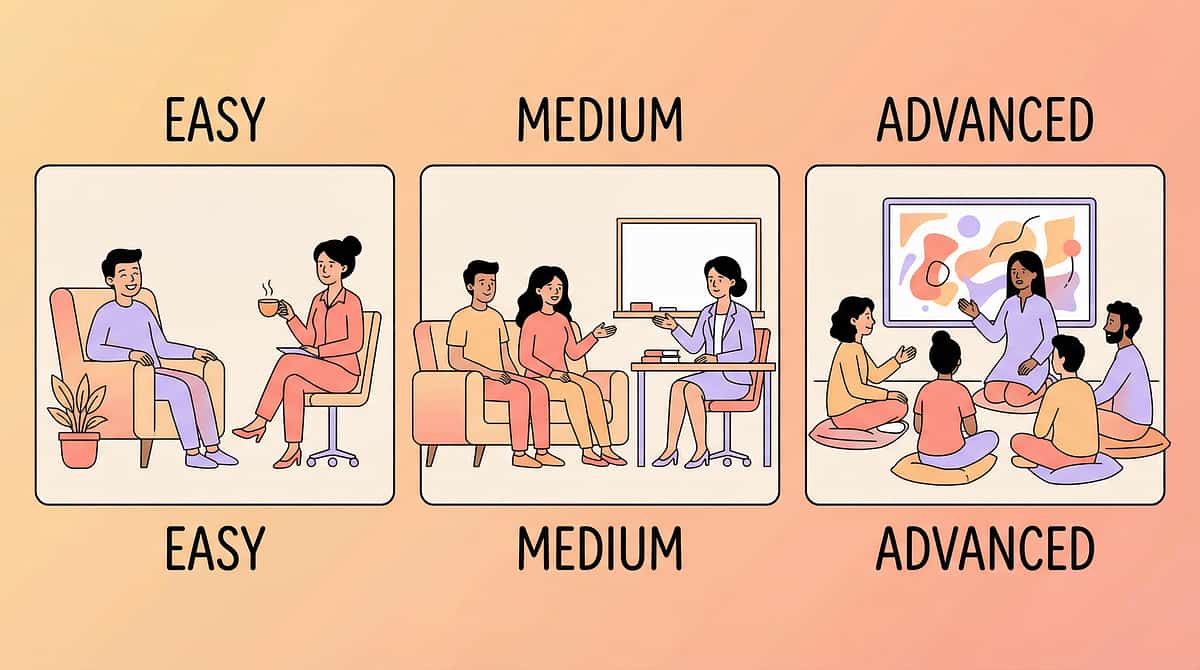
Material 9 · Water Play Tools
Activities, Age Adaptations & Pro Tips
Ages 2–3
- Pour water from one cup to another without spilling
- Squeeze a small bottle to squirt a target (sponge, cup)
- Use a turkey baster to move water between bowls
Ages 4–6
- Watering plants with a child-sized watering can — "just enough, not too much"
- Squirt bottle painting on paper — modulate force for different effects
- Water relay race: carry full cup across room without spilling
Pro Tip
"Add food coloring to the water so children can see exactly how much they transferred and where it went. Visibility transforms an abstract force task into a concrete, trackable achievement — and kids love watching the colors mix."
Safety Note
Always supervise near water — even shallow bins pose a drowning risk for toddlers. Non-slip mats are essential. Keep water at room temperature. Dry play areas promptly to prevent slipping. Clean and dry all tools after use to prevent mold.
Parent Voice: "Water play is the only time my hyperactive three-year-old is truly focused and calm. Twenty minutes at the water table and he's a different child."

How to Choose the Right Material for Your Child
Not every child will respond to every material — and that's exactly as expected. Force modulation challenges can present very differently: one child grips too hard from sensory seeking, while another grips too softly from low muscle tone or reduced proprioceptive awareness. Match the material to the profile, not just the problem.
1. Identify the Sensory Profile
Is the child sensory-seeking (grips too hard, crashes into things) or sensory-avoiding (grips too softly, withdraws from touch)? This determines whether you need resistive/heavy input materials or graded, gentle-feedback materials.
2. Consider the Therapeutic Goal
Are you targeting grip strength, in-hand manipulation, bilateral coordination, or tactile discrimination? Each goal maps to a different material category. Align the material to the specific skill being built.
3. Factor in Age & Tolerance
Younger children (2–4 yrs) need simpler, low-frustration materials like playdough or sponges. Older children (5–10 yrs) can engage with resistance bands, weighted tools, or kinetic sand. Always start one level below the child's perceived ability.
Quick Decision Rule
When in doubt, start with the material that offers the most sensory feedback with the least resistance — playdough or a soft sponge. Observe the child's response in the first 2 minutes. That reaction tells you more than any checklist.

Matching Materials to Sensory Profiles
These groupings are starting points, not rigid prescriptions. Children often present with mixed profiles, and materials may shift categories based on how they are introduced and graded by the therapist or caregiver.
Sensory Profile | Key Signs | Best-Fit Materials | Avoid or Use With Caution | |
Sensory Seeking (Over-responsive to proprioception) | Grips too hard, breaks objects, heavy-handed with pencils, seeks deep pressure | Therapy putty (firm), resistance bands, weighted utensils, foam blocks | Balloons (may pop), fragile squeezable toys | |
Sensory Avoiding (Tactile defensiveness) | Withdraws from touch, dislikes messy play, light grip, avoids new textures | Sponges, water play tools, smooth playdough, soft squeezable toys | Kinetic sand (initially), rough-textured putty | |
Low Muscle Tone (Hypotonia) | Grips too softly, tires quickly, poor endurance, drops objects | Resistance bands (light), therapy putty (soft), weighted utensils, balloon activities | Heavy resistance bands, prolonged fine motor tasks | |
Mixed Profile (Seeking + Avoiding) | Inconsistent grip, context-dependent responses, variable tolerance | Playdough, foam blocks, musical instruments (drums) | Introduce one material at a time; avoid multi-sensory overload | |
Proprioceptive Under-registration | Unaware of force applied, breaks crayons, unintentionally rough | Kinetic sand, therapy putty (medium), weighted tools, resistance bands | Balloons (poor force feedback), very soft materials |
Always reassess material fit every 4–6 sessions. A child's sensory profile can shift as regulation improves.

Clinical Reference
Matching Materials to Therapeutic Goals
Selecting the appropriate therapeutic material is a critical step in addressing specific occupational therapy goals. This table provides a quick reference for how each material can be strategically utilized to target primary and secondary objectives, alongside the profiles of children who may benefit most. Thoughtful material selection maximizes engagement and promotes meaningful progress.
Material | Primary Goal | Secondary Goal | Best For | |
Playdough/Therapy Putty | Fine Motor Strength & Grasp | Proprioceptive Input, Tactile Discrimination | Weak grasp, low muscle tone, intrinsic hand muscle development. | |
Sponges/Squeezable Toys | Graded Force Modulation | Sustained Squeeze, Hand Endurance | Improving pinch/grasp control, initiating gentle resistance. | |
Balloon Activities | Impulse Control, Light Graded Force | Visual Tracking, Bilateral Coordination | Dyspraxia, poor impulse control, tactile defensiveness to light touch. | |
Weighted Utensils | Enhanced Proprioceptive Feedback | Increased Body Awareness, Motor Control | Ataxia, tremors, sensory seeking (deep pressure), fine motor precision tasks. | |
Resistance Bands | Heavy Work & Muscle Strengthening | Self-Regulation, Calming Input | Sensory seekers, hyperactivity, gross motor planning, core stability. | |
Foam Blocks | Gross Motor Proprioceptive Input | Graded Push/Pull Force, Bilateral Coordination | Children needing large muscle input, gross motor planning, heavy work. | |
Kinetic Sand | Tactile Desensitization | Fine Motor Manipulation, Graded Pressure | Tactile defensive children, promoting sustained engagement, exploring varied textures. | |
Musical Instruments | Auditory-Motor Feedback Loop | Rhythmic Entrainment, Force-to-Volume Calibration | Children needing clear cause-effect, motor planning, emotional regulation. | |
Water Play Tools | Fluid Force Modulation | Proprioceptive-Tactile Feedback, Arousal Regulation | Children who are dysregulated, tactile seekers, improving fine motor control with resistance. |

Safety Guidelines & Contraindications
Ensuring a safe and effective therapeutic environment is paramount. This guide provides essential safety considerations for using force modulation materials, helping therapists and caregivers proactively identify risks and respond appropriately during play and intervention.
General Safety Rules
- Constant Supervision: Active supervision is non-negotiable, especially with young children or those prone to mouthing objects.
- Age-Appropriate Materials: Ensure all materials are suitable for the child's age and developmental stage, paying close attention to choking hazards for children under 3 years old.
- Stable Environment: Confirm instruments and play setups are stable to prevent tipping or falls.
- Hygiene: Regularly clean and sanitize materials to prevent germ transmission, especially after use by multiple children.
Material-Specific Contraindications
- Allergies: Check for latex allergies (e.g., balloons), skin sensitivities (e.g., putty, kinetic sand), or other material-specific reactions.
- Ingestion Risk: Highly supervise materials like kinetic sand, therapy putty, or playdough if there is a risk of ingestion.
- Water Safety: Water play always requires vigilant supervision due to drowning risks, even in shallow containers. Ensure non-slip surfaces.
- Noise Sensitivity: For musical instruments, be mindful of noise levels for children with auditory sensitivities; consider ear protection.
- Weight & Resistance: Ensure weighted items or resistance bands are appropriately selected to avoid strain or injury.
Red Flags to Watch For
- Signs of Distress: Crying, withdrawal, agitation, or resistance to engagement.
- Over-Stimulation: Hyperactivity, disorganized movements, excessive silliness, or aversion to further sensory input.
- Pain Responses: Grimacing, guarding, verbal complaints, or sudden cessation of activity.
- Skin Reactions: Redness, rash, or irritation indicating an allergic reaction or sensitivity.
- Fatigue: Decreased effort, poor posture, or lack of sustained engagement.
When to Modify or Stop
- Discomfort: If the child expresses or shows any signs of pain or discomfort.
- Dysregulation: When the activity leads to heightened arousal, anxiety, or emotional distress beyond therapeutic tolerance.
- Safety Compromised: If the child attempts unsafe use of materials (e.g., throwing heavy objects, ingesting non-food items).
- Lack of Engagement: Persistent refusal or inability to engage with the material after modifications.
- Achieved Goal: When the therapeutic objective for the session has been met.
Important Warning: Always prioritize the child's physical and emotional safety. Be prepared to adapt, modify, or cease an activity immediately based on the child's real-time responses and any emergent safety concerns. Each child is unique, and individual responses may vary.

Home Guide · Material 1
Caregiver Home Guide: Playdough & Therapy Putty
Empower your child's development at home with these simple, engaging activities using playdough and therapy putty. This guide helps you create a fun and therapeutic environment to support their growth.
What to Buy
Choose commercial playdough for convenience or make your own for unique textures. For therapy putty, your child's therapist can recommend the ideal resistance level (e.g., soft, medium, firm) to match their specific needs.
Setting Up at Home
Use a clean, flat surface like a table or placemat. Aim for short, frequent sessions (5-10 minutes) when your child is alert and calm, turning it into a relaxing, focused activity rather than a chore.
Simple Activities
- "Pancakes & Cookies": Flatten the material, then press with fingers or use cookie cutters.
- "Find the Treasure": Hide small objects inside and have your child dig them out.
- "Roll a Snake": Roll the putty between palms or on the table.
What to Watch For
Celebrate signs of progress like improved grasp, longer engagement, or new hand movements. Report any discomfort, skin irritation, or attempts to put the material in their mouth to your therapist immediately.
Remember, every small effort at home contributes to your child's progress. Celebrate their achievements, no matter how tiny!
Home Guide · Material 2
Caregiver Home Guide: Sponges & Squeezable Toys
Discover how simple household items like sponges and squeezable toys can be powerful tools for enhancing your child's hand strength, sensory processing, and fine motor skills in a playful home environment.
What to Buy
Look for various types: kitchen sponges (different densities), bath sponges, small stress balls, and gel-filled squeezable toys. Choose items with varied resistances and textures to provide diverse sensory and motor experiences.
Setting Up at Home
A waterproof surface like a kitchen counter or a plastic placemat is ideal. Fill a shallow basin with water if you're using sponges. Keep sessions brief (5-10 minutes) and fun, integrating them into daily routines.
Simple Activities
- Squeeze & Release: Fill a sponge with water and have your child squeeze it into another container.
- Target Squeeze: Place a stress ball in their hand and have them squeeze it to match a count or musical beat.
- Water Transfer: Use two bowls and a sponge to transfer water from one to the other, encouraging bilateral coordination.
What to Watch For
Observe increased hand endurance, improved control over squeezing force, or enhanced focus during play. Report any signs of pain, excessive frustration, or unusual hand postures to your child's therapist.
These simple activities can make a big difference. Celebrate every squeeze and splash as a step forward in your child's development!
Home Guide · Material 3
Caregiver Home Guide: Balloon Activities
Balloons are a fantastic, low-cost tool for encouraging movement, coordination, and focus. This guide offers simple, fun ways to incorporate balloon play into your child's routine, supporting their development in an engaging, joyful environment.
What to Buy
Choose a variety of balloon types and sizes (e.g., standard latex, foil balloons). Important Safety Note: Always supervise children closely, especially with latex balloons, due to choking hazards if they pop. Consider non-latex options for children with allergies.
Setting Up at Home
Clear an open space free of sharp objects and breakables. Balloon play is active, so ensure your child has room to move safely. Constant supervision is essential, particularly with younger children, to manage safety and guide engagement.
Simple Activities
- "Keep It Up": Encourage your child to bat the balloon in the air using hands, feet, or a soft paddle, preventing it from touching the ground.
- "Target Toss": Gently toss the balloon towards a soft target (e.g., a laundry basket, a blanket on the floor) to practice aim and control.
- "Balloon Soccer": Use the balloon indoors as a soft "ball" for kicking, promoting gross motor skills and coordination without damage.
What to Watch For
Celebrate improved eye-hand coordination, increased movement, sustained attention, and joyful engagement. Report any significant frustration, fear of the balloon, or signs of impulsively putting balloon pieces in their mouth to your child's therapist.
Every bounce and bat with a balloon builds vital skills. Enjoy these moments of playful learning with your child!
Home Guide · Material 4
Caregiver Home Guide: Weighted Utensils & Tools
Empower your child's independence and refine their fine motor skills with simple weighted utensils and tools. This guide provides practical tips for integrating these beneficial aids into daily routines, fostering greater stability and confidence.
What to Buy
Weighted spoons, forks, and pencils offer enhanced stability and proprioceptive feedback. Purchase them online or at specialty stores. Consult your therapist for recommendations on appropriate weights that provide gentle resistance without causing fatigue for young children.
Setting Up at Home
Introduce weighted tools seamlessly during mealtimes and drawing activities. Utilize short, focused sessions when your child is calm, making these tools a natural and positive part of their daily routine, promoting independence and skill acquisition.
Simple Activities
- Mealtime Mastery: Encourage controlled eating with weighted spoons and forks, reducing spills and increasing precision.
- Creative Control: Use weighted pencils for drawing or writing to improve grip, pressure, and line consistency.
- Sensory Scoop: Practice scooping dry beans or rice with weighted spoons to develop hand-eye coordination and sensory processing.
What to Watch For
Celebrate improved hand control, increased endurance during tasks, and enhanced focus. Report any signs of hand fatigue, discomfort, frustration, or a decrease in skill to your child's therapist to ensure optimal support.
Every small effort with these tools builds vital skills. Witness your child's growing confidence and ability with patience and practice!
Home Guide · Material 5
Caregiver Home Guide: Resistance Bands
Explore how child-safe resistance bands can be engaging tools to build strength, coordination, and body awareness. This guide offers fun activities to integrate into your child's playtime, supporting their physical development.
What to Buy
Look for child-friendly loop bands or flat bands with light resistance. Ensure they are latex-free if allergies are a concern. You can find them online or at most sporting goods stores. Choose bands that offer gentle resistance without being too stretchy or too stiff.
Setting Up at Home
Ensure an open, clutter-free space. Always supervise your child to prevent bands from snapping or tangling. Keep sessions short (5-10 minutes) and playful, demonstrating movements first. Safety and enjoyment are key!
Simple Activities
- Monster Walks: Place a loop band around ankles or knees. Have your child take small steps sideways, keeping tension on the band.
- Bicep Curls: Child stands on the middle of a flat band. They hold an end in each hand and gently pull upwards towards their shoulders.
- Rowing Game: Sitting on the floor, child loops the band around their feet. They pull the ends towards their body, squeezing their shoulder blades together.
What to Watch For
Observe improved muscle strength, better balance, and increased stamina during activities. Report any signs of discomfort, frustration, or incorrect form that could lead to injury to your child's therapist.
Each stretch and pull with a resistance band helps build a stronger foundation. Celebrate your child's growing strength and confidence!

Home Guide · Material 6
Caregiver Home Guide: Foam & Soft Blocks
Foam and soft blocks are fantastic tools for encouraging gross motor skills, creativity, and sensory exploration. This guide provides simple, engaging ways to incorporate these versatile toys into your child's routine, supporting their physical and cognitive development in a safe, fun environment.
What to Buy
Look for large, lightweight foam blocks or soft building sets in various shapes and sizes. These can be found at toy stores, online retailers, or educational supply shops. Choose non-toxic, durable, and easy-to-clean materials. Larger blocks are ideal for gross motor development and safer for younger children.
Setting Up at Home
Designate a spacious, clear area for block play, ensuring soft flooring like a rug or playmat for cushioning. Remove any sharp objects or potential hazards. Always maintain adult supervision, especially when your child is stacking, climbing, or engaging in active play, to ensure safety.
Simple Activities
- Build & Tumble: Encourage stacking blocks into tall towers, then playfully knocking them down to work on balance and cause-and-effect.
- Obstacle Course: Arrange blocks to create a simple course for your child to crawl over, step around, or push through, enhancing motor planning and coordination.
- Fort Fun: Work together to build a fort or den, fostering imaginative play, spatial reasoning, and cooperative skills.
What to Watch For
Celebrate improved balance, bilateral coordination, spatial awareness, and creative problem-solving. Note increased engagement in imaginative play and sustained attention. Report persistent frustration, unusual motor patterns, or fear of movement during play to your child's therapist.
Every block stacked and every fort built contributes to your child's growth. Embrace these moments of joyful construction and discovery!

Home Guide · Material 7
Caregiver Home Guide: Sensory Bins with Kinetic Sand
Dive into the captivating world of sensory bins with kinetic sand! This guide helps you create engaging play experiences that boost fine motor skills, sensory processing, and imaginative play, all from the comfort of your home.
What to Buy
Choose non-toxic, child-safe kinetic sand brands like Waba Fun or Spin Master. Select a shallow, wide bin (e.g., a plastic storage container) for easy access and containment. Add small scoops, cups, molds, cookie cutters, and miniature toys for varied play.
Setting Up at Home
Designate a specific play area, ideally with a washable mat or old sheet underneath to catch stray sand. Keep sessions focused and supervised. Kinetic sand is less messy than regular sand, making cleanup easier with a small brush or handheld vacuum.
Simple Activities
- Buried Treasure: Hide small toys or beads within the sand for your child to excavate using scoops and brushes.
- Construction Zone: Use molds to build castles or structures. Add small construction vehicles for pushing and hauling the sand.
- Sensory Shapes: Encourage pressing hands, feet, or various objects into the sand to create textures and patterns.
What to Watch For
Celebrate improved fine motor skills, bilateral coordination, increased imaginative play, and sustained attention. If you observe excessive oral exploration, frustration, avoidance, or unusual sensory reactions, report these to your child's therapist.
Every pinch, mold, and pour helps build essential skills. Watch your child's creativity and confidence flourish with kinetic sand play!

Home Guide · Material 8
Caregiver Home Guide: Musical Instruments
Unleash your child's inner musician! Musical instruments are not just fun; they're powerful tools for developing rhythm, coordination, and creative expression. This guide offers simple, joyful ways to explore music together, nurturing your child's development from the comfort of home.
What to Buy
Look for child-safe, durable toy instruments like small hand drums, colorful wooden xylophones, or basic electronic keyboards. Prioritize non-toxic materials and age-appropriate sizes. Many affordable options are available online or at toy stores, focusing on clear sounds rather than high-fidelity.
Setting Up at Home
Designate a 'music zone' with a soft rug to help absorb sound. Establish specific, short playtimes to manage noise levels for everyone. Ensure the area is clear of clutter, allowing your child to move freely and explore different instruments safely.
Simple Activities
- Rhythm Makers: Play a song and encourage your child to tap along on a drum or shake a maraca, matching the beat.
- Melody Mimic: Play simple two or three-note tunes on a xylophone or keyboard and have your child try to copy them.
- Sound Stories: Use different instruments to represent characters or actions in a simple story you narrate together.
What to Watch For
Celebrate improved coordination, listening skills, rhythm, and self-expression. Notice increased engagement and joy in musical exploration. Report any extreme noise sensitivity, aversion to musical sounds, or difficulty participating to your child's therapist.
Every note played and rhythm discovered helps your child grow. Embrace the beautiful symphony of their development!

Home Guide · Material 9
Caregiver Home Guide: Water Play Tools
Dive into the delightful world of water play! Using simple tools, you can create engaging sensory experiences that boost fine motor skills, hand-eye coordination, and cognitive development in a fun, splashy way.
1
What to Buy
Gather child-safe squirt toys, pouring cups, turkey basters, and water wheels. Look for durable, easy-to-grip items that encourage squeezing, scooping, and transferring water. These promote strengthening small hand muscles and bilateral coordination.
2
Setting Up at Home
Choose a safe area like a bathtub, water table, or an outdoor space with a shallow basin. Ensure constant supervision to prevent drowning, and maintain appropriate water temperature. Use non-slip mats and towels to minimize mess and ensure safety during play.
3
Simple Activities
- Target Practice: Fill squirt bottles and aim at floating toys or cups, enhancing visual tracking and hand strength.
- Pouring Station: Provide various sized cups and containers for scooping and pouring water, fostering understanding of volume and cause-and-effect.
- Rescue Mission: Use a turkey baster to "rescue" small floating toys, developing fine motor control and bilateral coordination.
4
What to Watch For
Celebrate improved fine motor precision, bilateral coordination, and increased engagement with sensory exploration. Note developing cause-and-effect understanding and imaginative play. Report any persistent water aversion, extreme frustration, or unusual sensory reactions to your child's therapist.
Every splash and pour contributes to your child's growth. Embrace these moments of joyful discovery and learning through water play!
Clinical Tools
Progress Monitoring & Data Collection for Force Modulation
Effective progress monitoring and data collection are foundational to evidence-based practice in occupational therapy. For force modulation goals, systematic tracking allows practitioners to objectively measure client progress, adapt interventions, and demonstrate the efficacy of treatment. It provides crucial insights into a child's evolving motor control and how they apply force in various functional contexts.
A simple yet robust data collection framework can streamline this process. It involves clearly defining observable behaviors, establishing measurable parameters, and determining appropriate observation frequencies. This ensures that data is consistent, reliable, and directly informs clinical decision-making.
Grasp Force Applies appropriate pressure to hold objects without crushing or dropping. Qualitative scale (1-5); count of dropped/crushed items per trial; force gauge if available. Daily observation; task-specific trials. Release Control Smoothly releases objects with precise timing and minimal overshooting/undershooting. Count of controlled vs. uncontrolled releases; accuracy of placement; time to release. Per task or activity. Sustained Pressure Maintains consistent force for functional tasks (e.g., writing, cutting, pushing toys). Duration of maintained pressure; quality of outcome (e.g., legible writing, clean cut). During extended fine motor tasks. Bilateral Coordination Coordinates both hands with appropriate, differential force (e.g., opening containers, cutting). Observation of hand roles; stability of non-dominant hand; efficiency of two-hand tasks. Throughout bilateral activities. Self-Regulation During Activity Adjusts force and effort in response to task demands or sensory feedback. Number of prompts needed to adjust force; observed emotional state/frustration; task completion. Per activity or session.
Collaborating with Caregivers: Regularly sharing data and progress with caregivers is vital for promoting generalization of skills and ensuring a collaborative approach to therapy. Translate clinical findings into functional, understandable language and provide strategies for home integration.

Home Guide · Material 10
Building a Home Sensory Kit
A home sensory kit is a carefully curated collection of items designed to stimulate your child's senses and support their developmental needs. It provides accessible tools for exploration, enhances fine motor skills, promotes self-regulation, and fosters cognitive growth in a fun, engaging environment. This kit empowers caregivers to reinforce therapeutic goals consistently at home.
1
Budget-Friendly
- Textured sponges, cotton balls
- Homemade shakers (rice in bottles)
- Playdough, bubbles, flashlight
- Feathers, ribbons, small textured balls
2
Mid-Range
- Kinetic sand with molds
- Fidget toys, stress balls
- Textured blocks or animal figures
- Simple musical instruments (e.g., xylophone)
3
Full Kit
- Weighted lap pad or blanket
- Sensory tunnel or pop-up tent
- Vibrating massager, liquid timers
- High-quality noise-canceling headphones
Storage & Organization
Utilize clear, labeled bins or baskets to keep items tidy and easily visible. Designate a specific "sensory corner" or shelf accessible to your child, ensuring small parts are stored safely away from very young children. Regular tidying prevents clutter and makes finding materials effortless.
Keeping Engagement High
Rotate items weekly or bi-weekly to maintain interest and introduce novelty. Observe your child's reactions to different materials and prioritize those that spark curiosity. Store unused items out of sight, creating an exciting "new" experience when they are reintroduced. This encourages continued exploration and prevents boredom.
Clinical Practice
Talking to Caregivers: Communication Tips for Therapists
Effective communication with caregivers is paramount for successful therapy outcomes. It's how we bridge the clinic to the home, ensuring that progress made in sessions generalizes into daily life. Clear, consistent dialogue fosters a shared understanding of goals and empowers families to reinforce strategies, amplifying the child's development.
Key Communication Strategies
Use Plain Language
Avoid clinical jargon. Explain concepts like "force modulation" in everyday terms, relating them to functional tasks like "how hard to push a toy car" or "how gently to hold a pet."
Demonstrate, Don't Just Explain
Show caregivers how to perform activities. Let them practice in session and provide immediate, constructive feedback. Hands-on learning is often more impactful than verbal instructions alone.
Leverage Video Modeling
Brief video clips of the child performing tasks or demonstrating specific techniques can be invaluable. This offers a clear reference for caregivers to review and emulate at home.
Celebrate Small Wins
Acknowledge and highlight the child's progress, no matter how small. This boosts caregiver confidence and motivates continued effort, reinforcing the value of their involvement.
Set Realistic Expectations
Discuss typical developmental timelines and potential challenges. Help caregivers understand that progress isn't always linear and that consistency is more important than speed.
Do's and Don'ts for Effective Dialogue
✅ Do This:
- Focus on one or two key home strategies per session.
- Empower caregivers as partners in therapy.
- Actively listen to their concerns and observations.
- Provide written or visual summaries of home activities.
🚫 Avoid This:
- Overwhelming them with too much information.
- Dismissing their insights or feelings.
- Using complex clinical terminology.
- Assuming they understand without checking.
Building a strong therapeutic alliance with caregivers is a cornerstone of pediatric occupational therapy. It's a collaborative journey where trust, respect, and clear communication pave the way for a child's optimal growth and functional independence.

Clinical Decision-Making
When to Refer or Escalate
Knowing when to refer or escalate is critical for optimal client outcomes. This card provides guidance for occupational therapy practitioners on when to consider interventions beyond standard force modulation.
Persistent Lack of Progress
No measurable functional gains after 8-12 weeks of consistent therapy. Action: Consider neurological consult or developmental pediatrician referral.
Suspected Neurological Issues
New or persistent neurological signs (e.g., tremors, ataxia, severe tone abnormalities). Action: Refer to a neurologist for further evaluation.
Pain or Injury
Client experiences pain or injury directly linked to dysregulated force. Action: Refer to a physician or orthopedic specialist.
Severe Sensory Processing Challenges
Force modulation difficulties are part of a broader, severe SPD impacting multiple daily contexts. Action: Refer for comprehensive sensory integration assessment by a specialist.
Significant Caregiver Strain
Family crisis or burnout prevents consistent home program implementation. Action: Refer to social worker, family therapist, or community support.
Important: Always document all interventions, observations, and discussions with caregivers before making a referral. This ensures comprehensive client care and supports clinical reasoning.
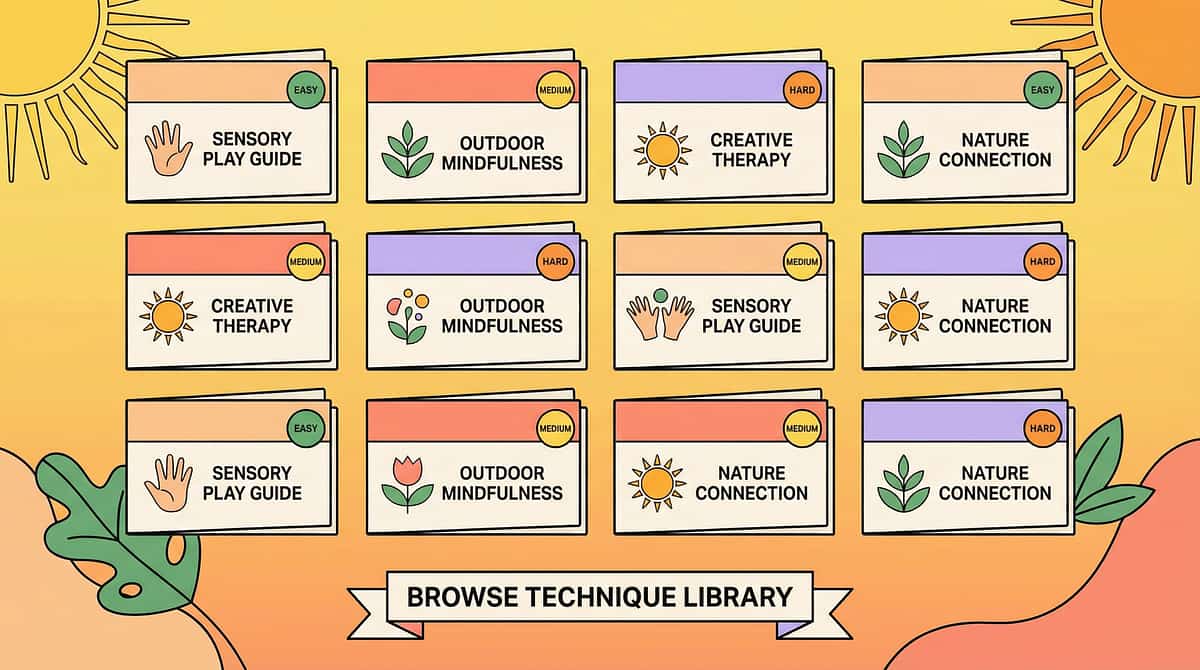
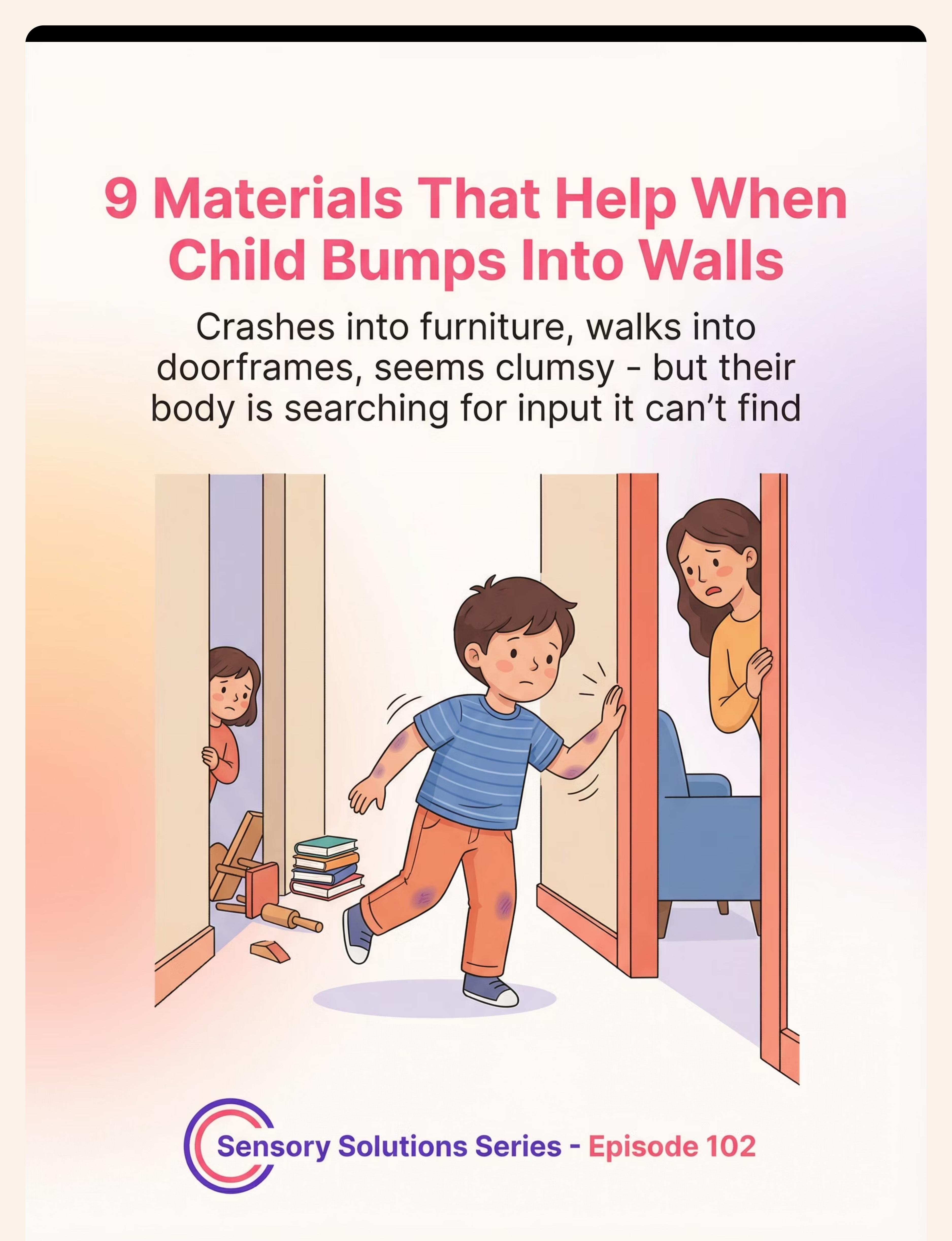
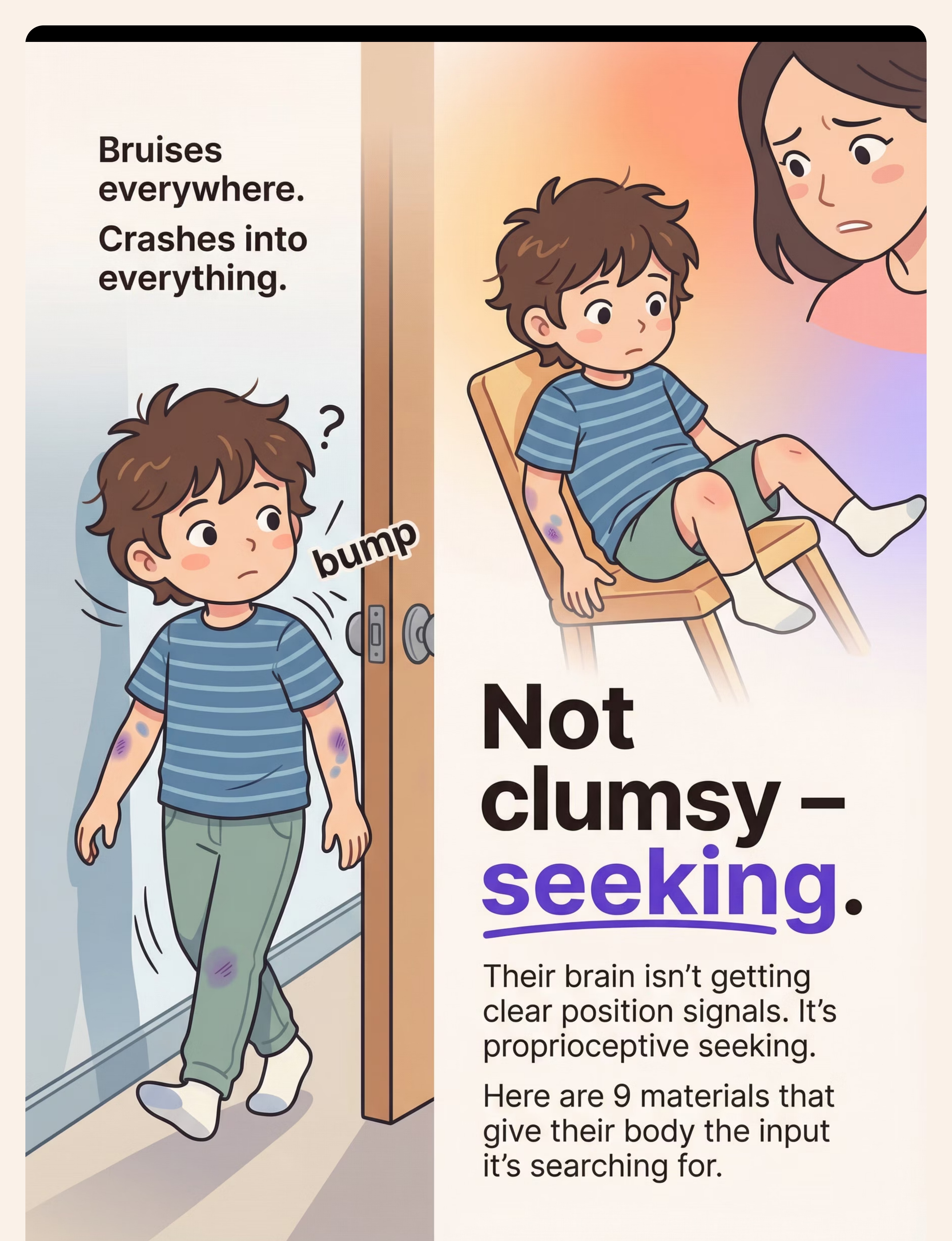
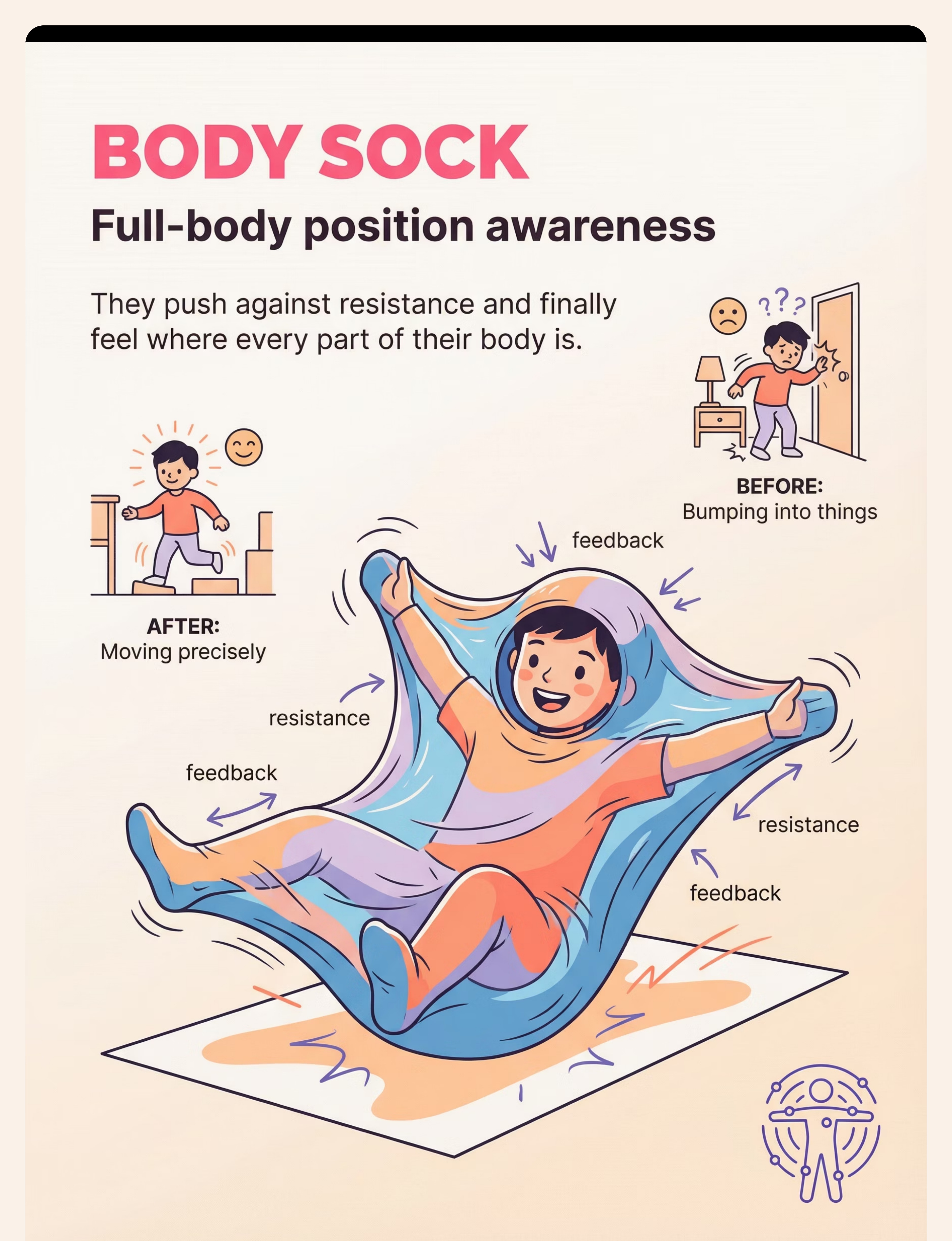
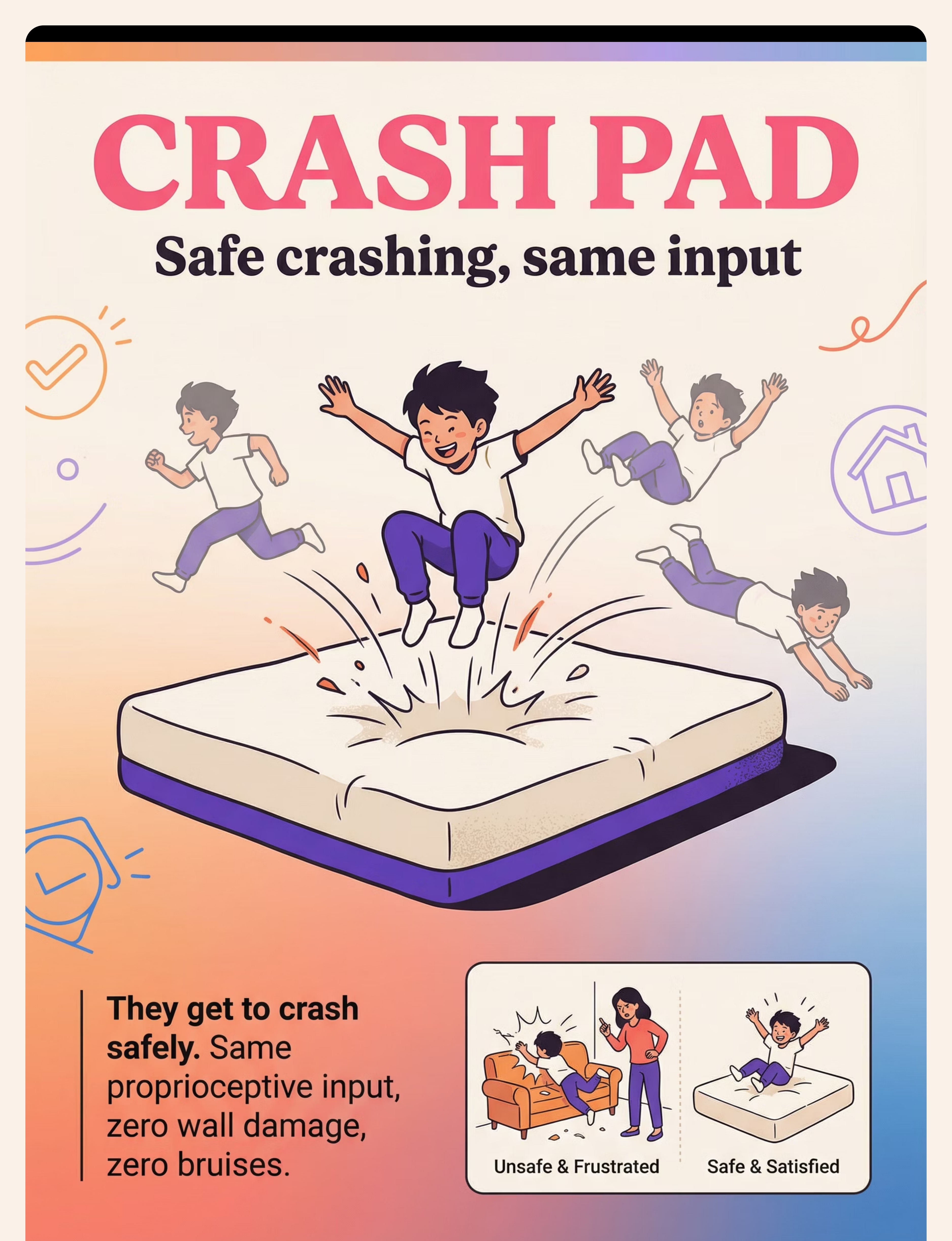
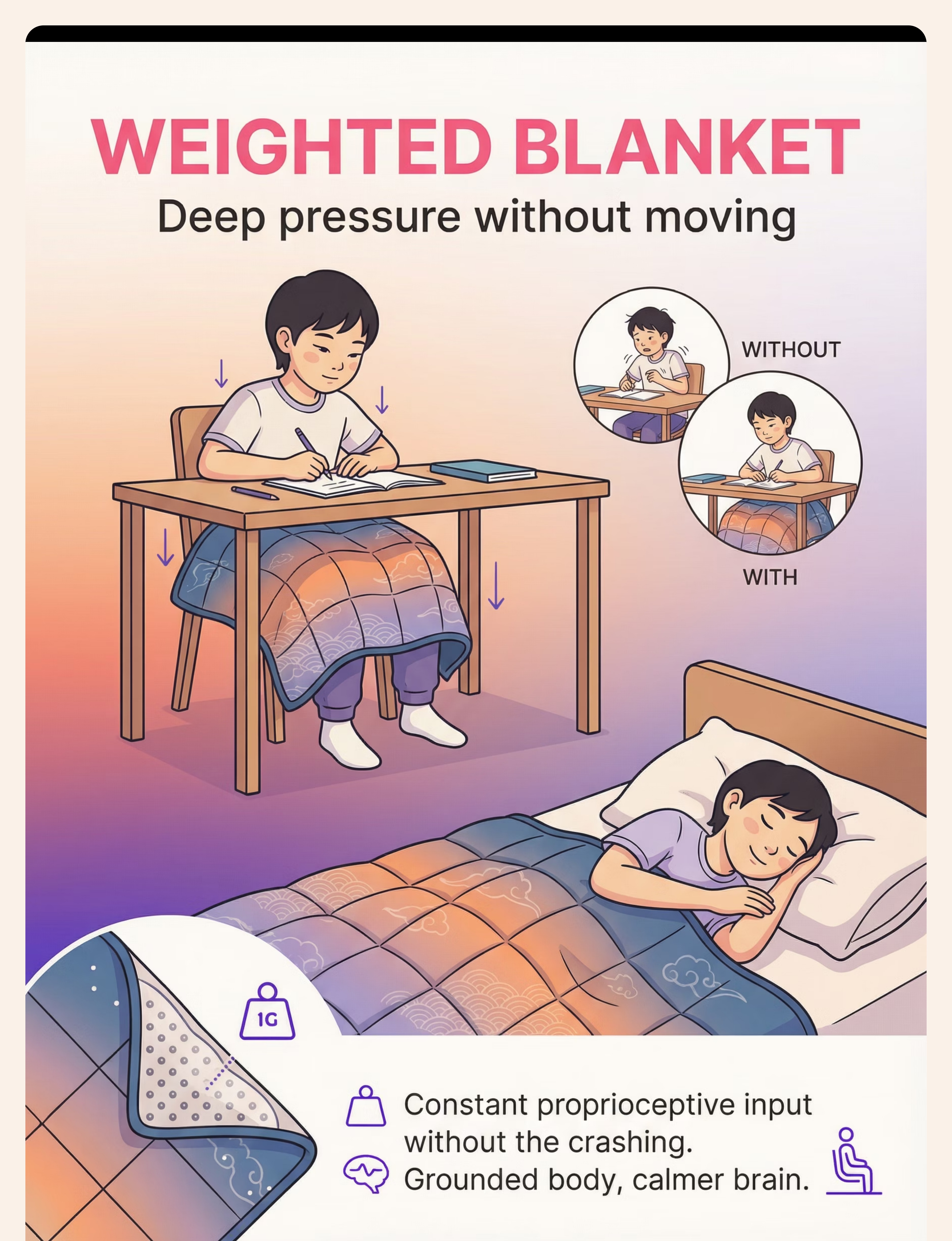
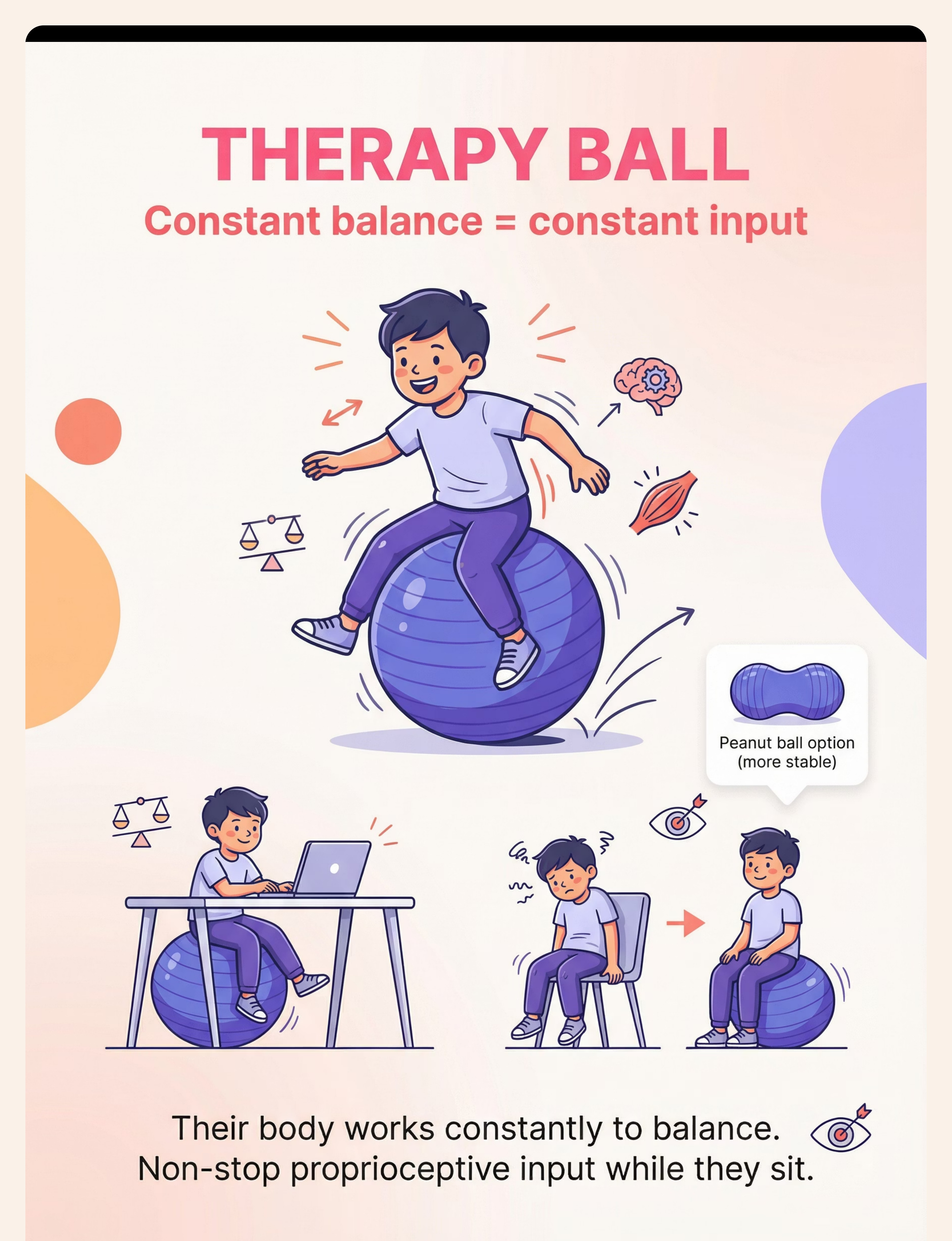
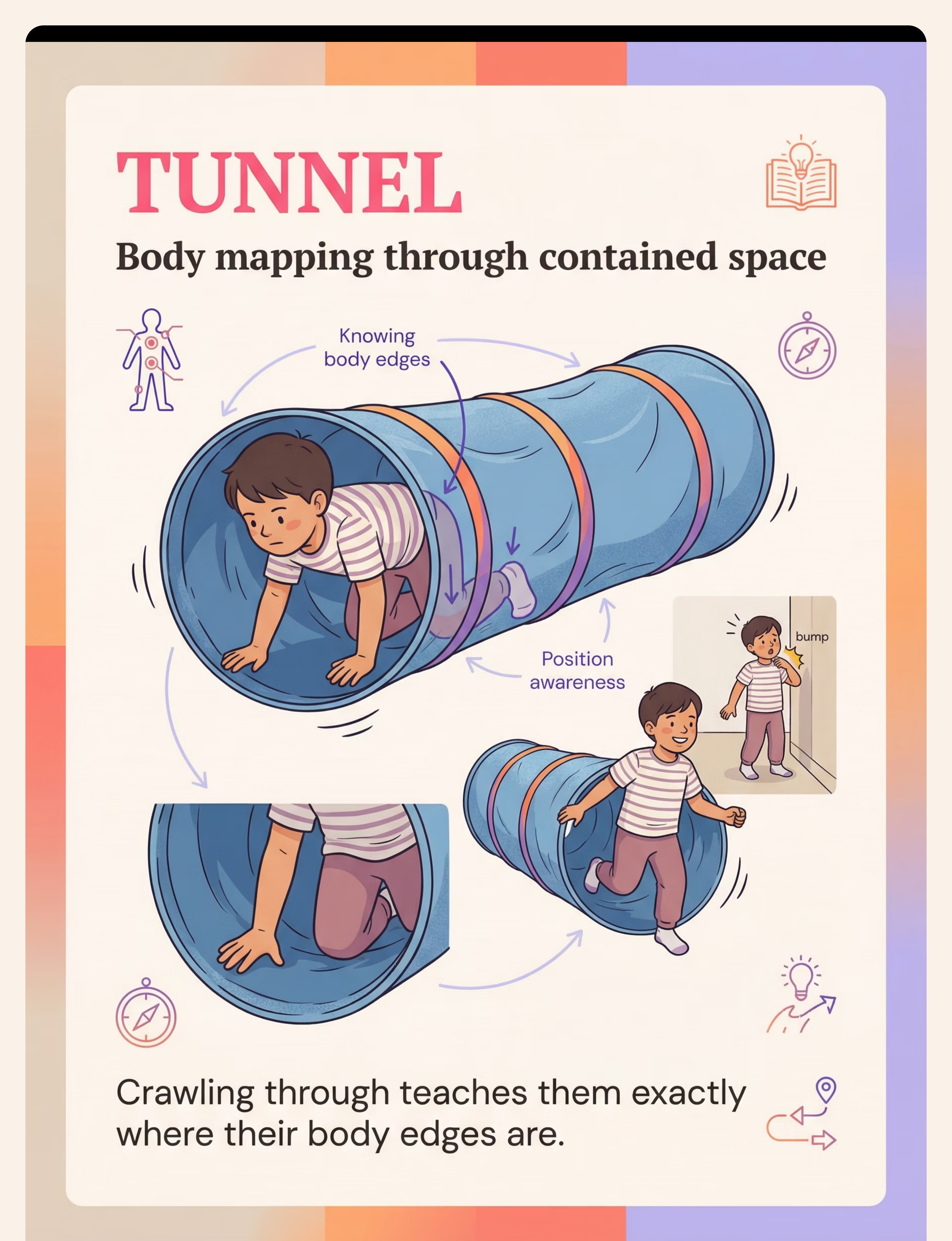
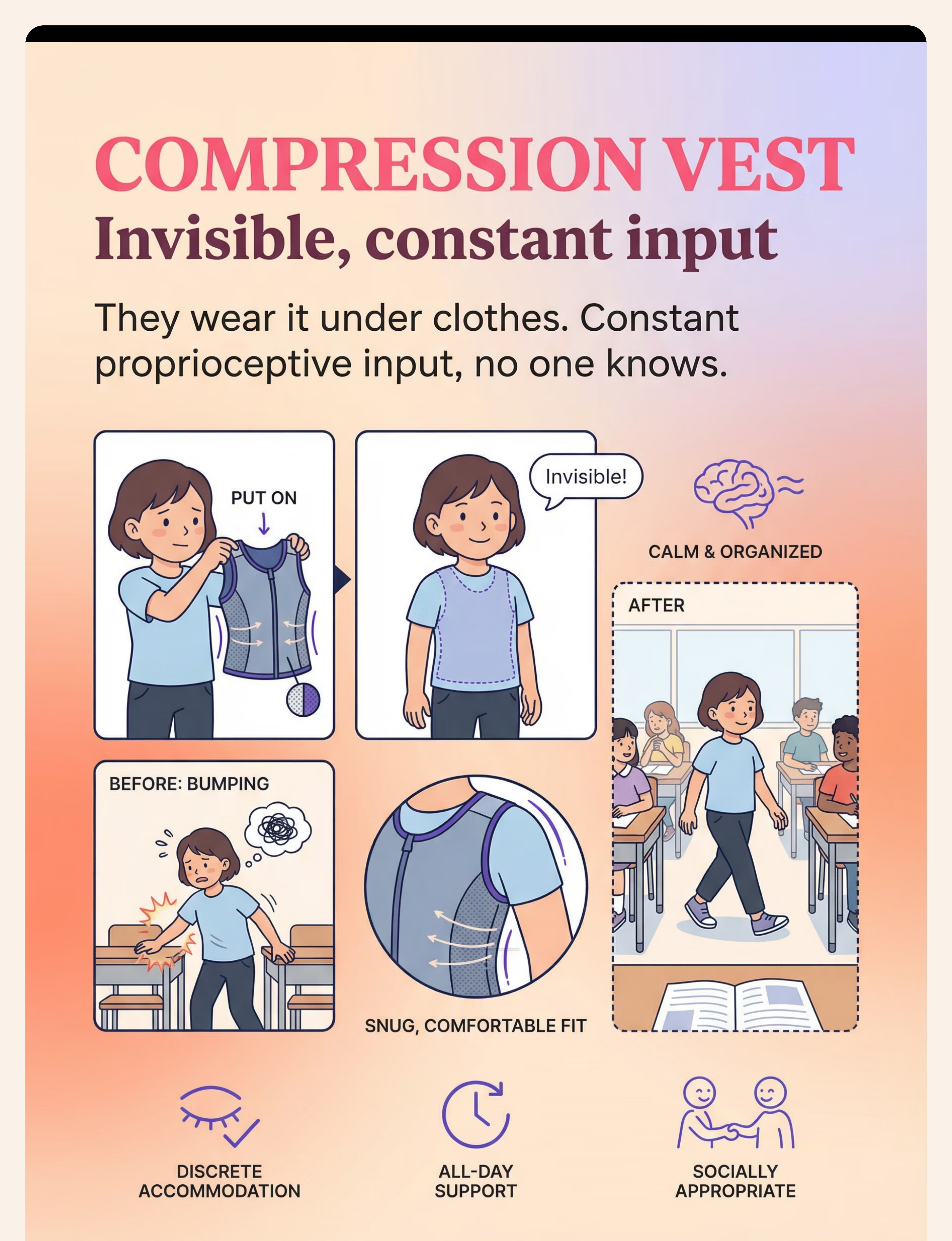
Preview of 9 materials that help when child bumps into walls Therapy Material
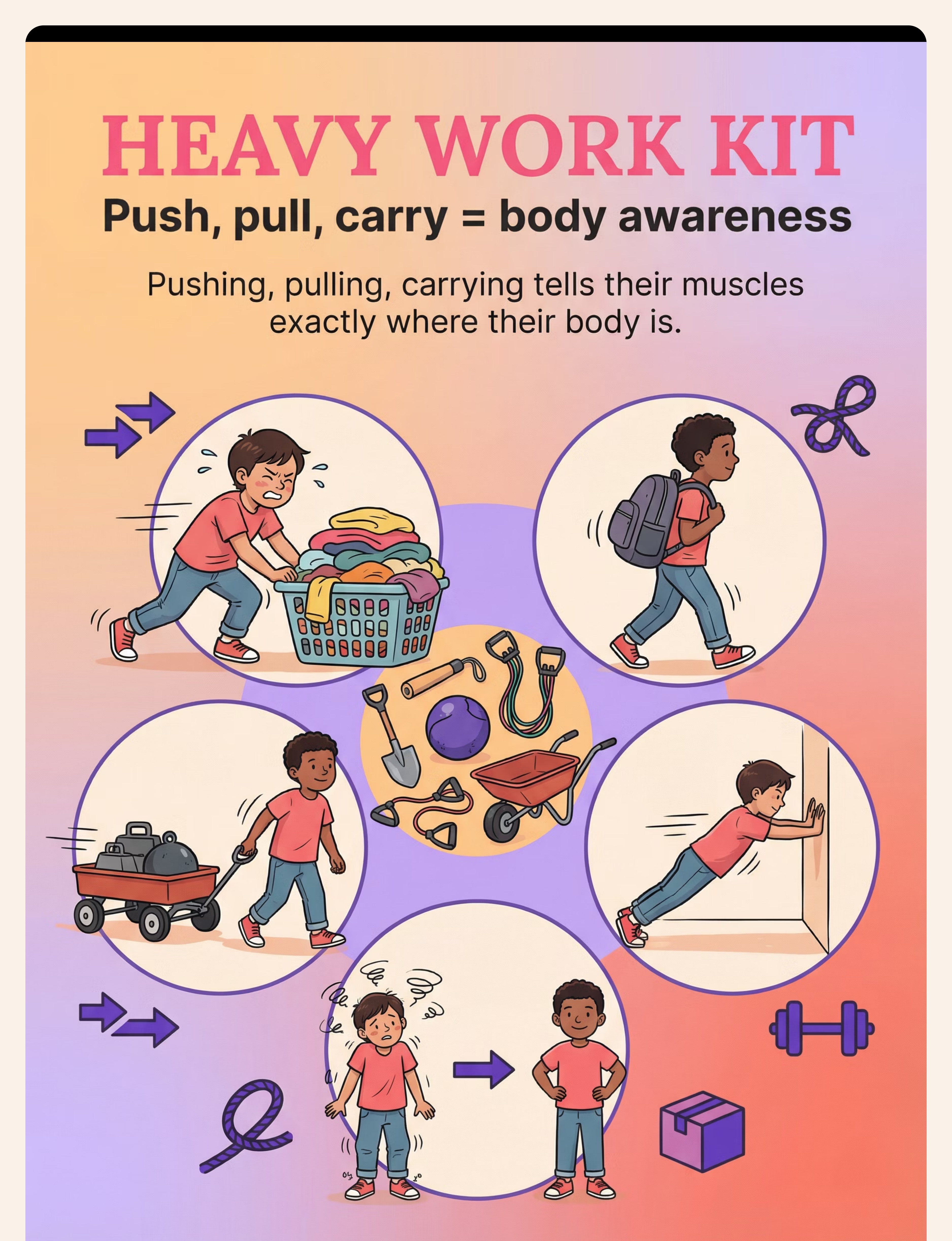
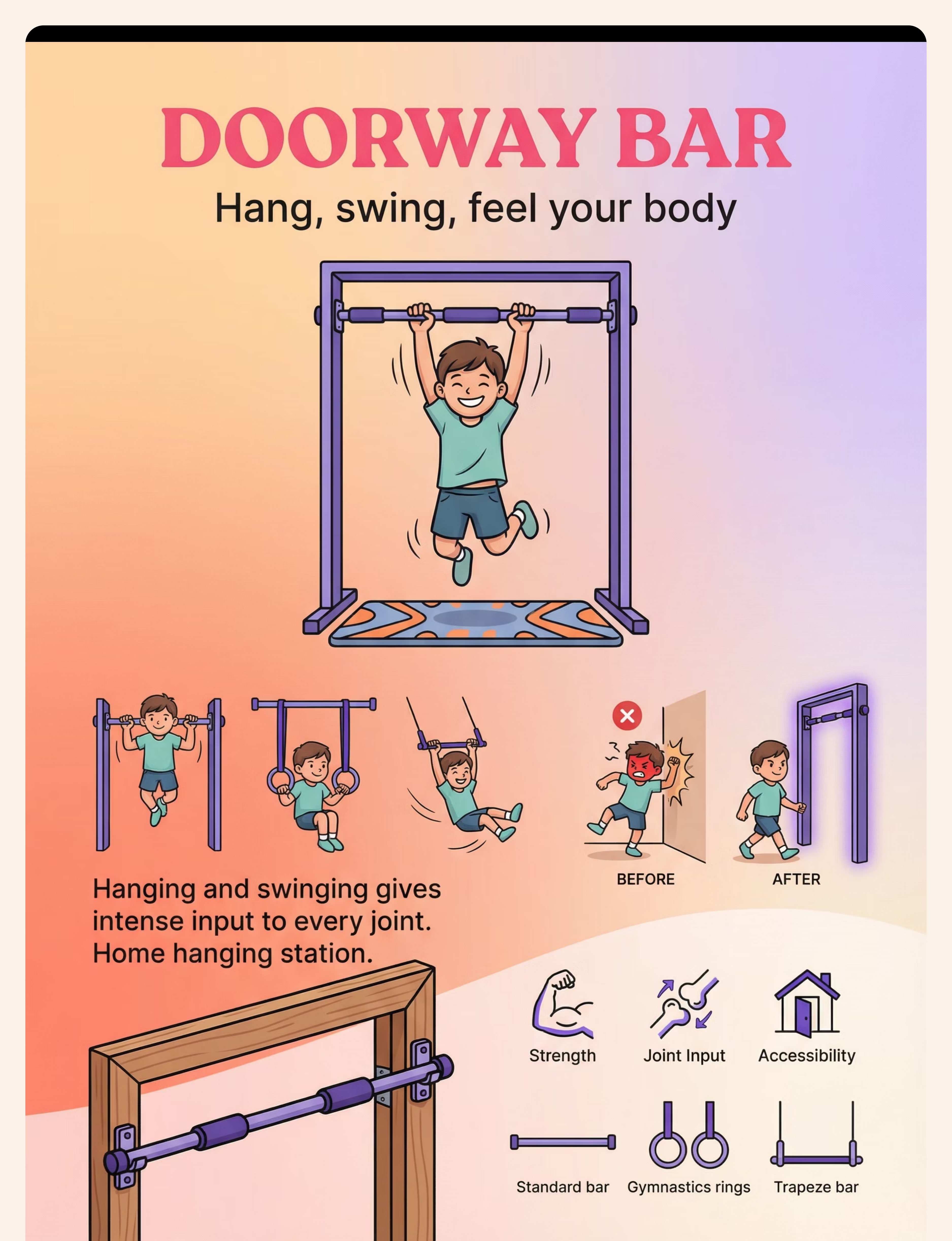
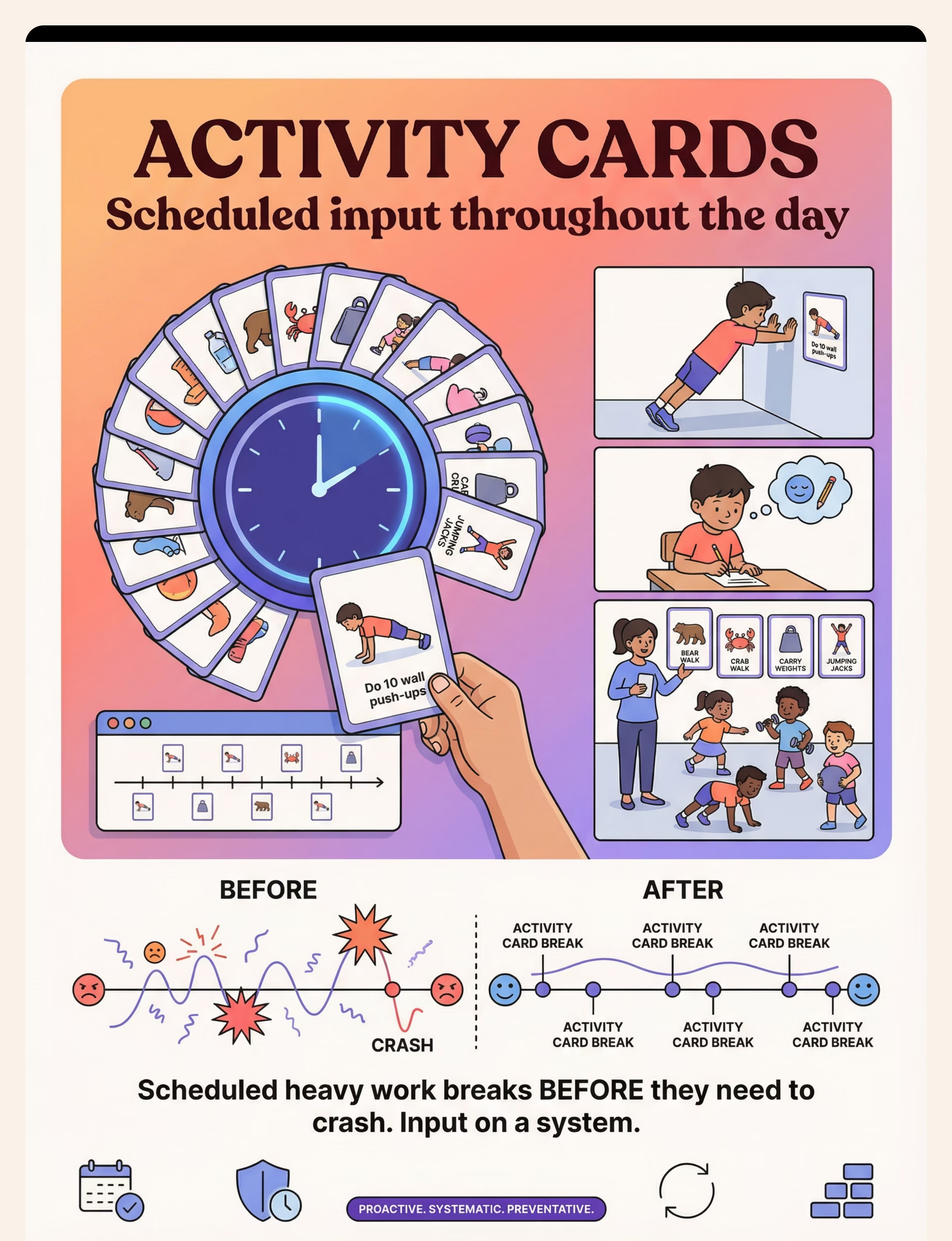
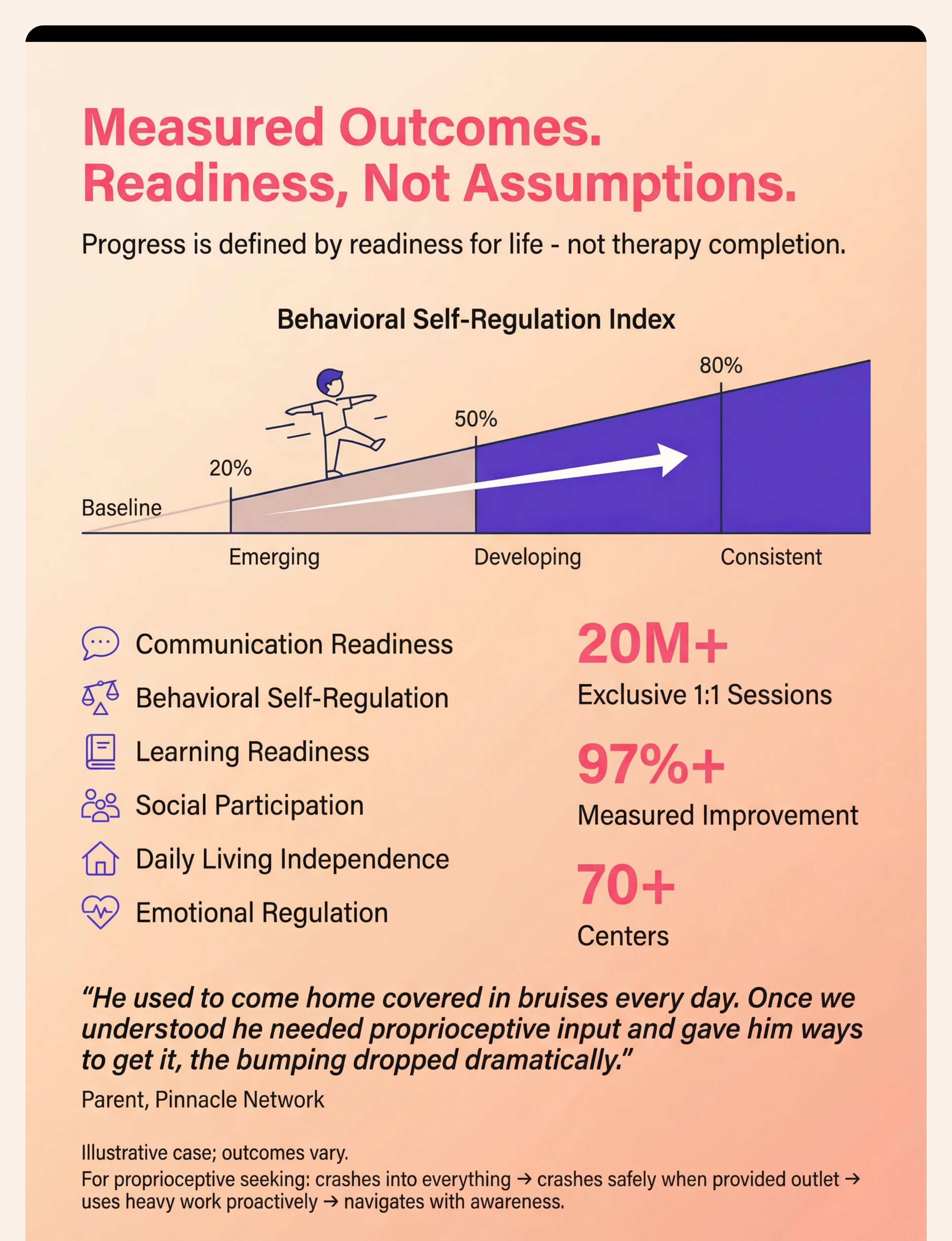
Below is a visual preview of 9 materials that help when child bumps into walls therapy material. The pages shown help educators, therapists, and caregivers understand the structure and content of the resource before use. Materials should be used under appropriate professional guidance.



Link copied!

Key Takeaways & Next Steps
Throughout this guide, we've explored how diverse sensory materials and thoughtful communication can profoundly impact a child's force modulation. From budget-friendly textured items to advanced sensory kits, and through clear caregiver collaboration, these strategies collectively empower children aged 2-6 to develop better motor control, self-regulation, and engagement in daily tasks, all within a nurturing play-based framework.
Start with Joy
Begin with activities and materials the child naturally loves and gravitates towards to foster intrinsic motivation.
Grade Skill Levels
Carefully select and adapt materials to match the child's current developmental stage, ensuring optimal challenge.
Home Practice is Key
Consistent reinforcement of therapeutic strategies at home significantly amplifies progress made in clinical sessions.
Celebrate Every Gain
Acknowledge and celebrate every small step forward. Progress is a journey, not a race, and every effort counts.
Next Steps for Clinicians & Caregivers
- Review and personalize sensory kit components based on individual child preferences and family resources.
- Integrate one new communication strategy with caregivers each week to enhance home program adherence and understanding.
- Schedule a follow-up discussion to reassess the child’s progress and adapt therapeutic goals accordingly.
"Play is often talked about as if it were a relief from serious learning. But for children, play is serious learning. Play is really the work of childhood."— Fred Rogers