
9 Materials That Help: Keeping Friends
Teaching the ongoing art of friendship — not just how to start it, but how to sustain it. For children ages 5–14. Technique C-311 from the Pinnacle Blooms Network® GPT-OS® Therapeutic Intelligence Library.
C-311 | Social Skills | Friendship Maintenance
They make friends. Then lose them. Every time.
September: your daughter runs home from school glowing — she has a new best friend, they're inseparable. By December, the calls have stopped, she doesn't understand why, and you watch her eat lunch alone again. This is not a friendship problem. This is a friendship maintenance skill she hasn't been taught yet.
"You are not failing. Your child's social brain needs explicit guidance that typical development takes for granted."
🌸 Consortium Validated
Pinnacle Blooms evidence-based approach
📚 Evidence-Based
Social Skills Domain | Peer-reviewed research
👶 Ages 5–14
Home-executable | Parent-led sessions
📞 FREE National Autism Helpline: 9100 181 181 | 18+ Languages | 24×7 | pinnacleblooms.org

The Numbers
Millions of families are navigating this exact pattern.
Making friends is one neural skill. Keeping them is another — and it requires explicit, systematic teaching for children with autism, ADHD, anxiety, or social communication differences. You are among millions of families who have discovered that their child's warmth and willingness to connect isn't the problem. The problem is the invisible maintenance work that neurotypical children absorb by osmosis.
1 in 36
Children with ASD
Diagnosed globally — CDC 2023 — each navigating social skill development
70%+
Peer Rejection Rate
Children with ASD report peer rejection or friendship loss (Frankel & Myatt, 2003)
8–12 wks
To Measurable Gains
Systematic intervention produces measurable friendship sustainability improvements (NCAEP 2020)
"Best friends in September. Strangers by December. Every single year." — Parent, Pinnacle Network
📞 9100 181 181 | PMC11506176 (PRISMA 2024) | Laugeson & Frankel, PEERS Treatment Manual (2010)

The Neuroscience
Making friends and keeping friends use different neural circuits.
The Brain Science
Friendship initiation activates approach motivation circuits — dopamine-driven reward seeking. It is spontaneous, exciting, and relatively automatic. Friendship maintenance requires sustained executive function: working memory, cognitive flexibility, inhibitory control, and theory of mind — continuously tracking the friend's emotional state. In autism spectrum conditions and ADHD, the prefrontal cortex processes these maintenance functions differently, creating a gap between desire and sustained skill.
Plain English Translation
- "This is NOT your child being selfish or uncaring."
- "Their brain genuinely does not automatically process the invisible work of friendship."
- "Reciprocity, repair, perspective-taking — these must be explicitly taught, practised, and reinforced."
- "This is a wiring difference, not a character flaw."
🔬 Neuroscience-Grounded | Frontiers in Integrative Neuroscience (2020) DOI: 10.3389/fnint.2020.556660

Developmental Timeline
Friendship maintenance skills develop from age 5 through adolescence.
Children who do not consolidate friendship maintenance skills by early adolescence face compounding social isolation — each lost friendship reduces the practice opportunities needed to develop the next skill. Early, explicit intervention interrupts this cycle.
Ages 3–5
Parallel play → cooperative play → basic sharing. Foundation of social awareness forming.
Ages 5–7 ★
First real friendships form — based on proximity and shared activity. C-311 intervention begins here.
Ages 7–9 ★★
Friendship maintenance becomes critical — reciprocity, loyalty, conflict navigation. High-impact window.
Ages 9–11 ★★★
Complex friendship management — trust, emotional support, group dynamics emerge.
Ages 11–14 ★★★★
Adolescent friendship sustainability — deepening bonds, repair after conflict. C-311 ceiling.
Friendship maintenance challenges co-occur with: ASD, ADHD, Anxiety Disorders, Social Communication Disorder, and Mood Disorders. Professional assessment identifies the root cause. WHO Care for Child Development Package (2023) | PMC9978394
Evidence Grade
Clinically validated. Home-applicable. Parent-proven.
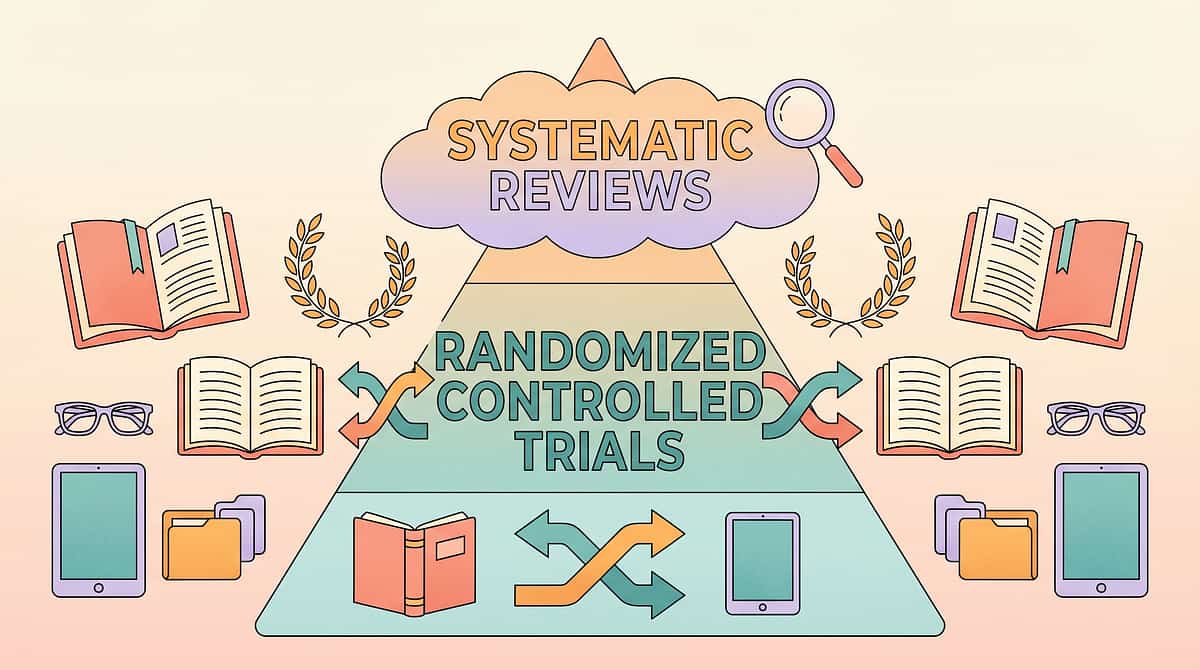
🛡️LEVEL I — SYSTEMATIC REVIEW + RCT SUPPORTED | 82% Strong Evidence Rating
Frankel & Myatt (2003)
Children's Friendship Training RCT. Explicit friendship skills training produced significant, lasting improvements in friendship quality and maintenance. Foundational protocol.
PEERS® Intervention (2010)
14-week manualized social skills programme. Evidence base: 30+ studies across 15 countries. Friendship maintenance skills demonstrated measurable gains in RCT designs.
NCAEP EBP Report (2020)
Social skills training, video modelling, and naturalistic developmental behavioural interventions all classified as evidence-based for autism.
PMC11506176 (PRISMA 2024)
16 articles confirm social-behavioural interventions meet criteria for evidence-based practice in ASD. Home-based components enhance maintenance.
Padmanabha et al. (2019)
Indian J Pediatr — DOI: 10.1007/s12098-018-2747-4. Home-based structured social interventions demonstrate significant outcomes in Indian paediatric population.
📞 9100 181 181 — For structured guidance, contact the FREE National Autism Helpline.

Technique Definition
🤝 The Friendship Garden Method — What It Is
Formal Name: Friendship Maintenance Skills Training — Material-Supported Approach. A structured home-based intervention in which caregivers use 9 evidence-grounded therapy materials to explicitly teach children the ongoing skills required to sustain friendships: reciprocity, conflict navigation, apology and repair, perspective-taking, intensity calibration, attentive listening, flexibility, and proactive relationship monitoring. Unlike friendship initiation (connecting), this technique addresses the maintenance phase — the invisible daily work that keeps friendships alive and growing.
Age Range
5–14 years
Session Duration
15–20 minutes
Frequency
3–4 sessions/week
Setting
Home, any room
Lead Discipline
SLP + ABA + SpEd
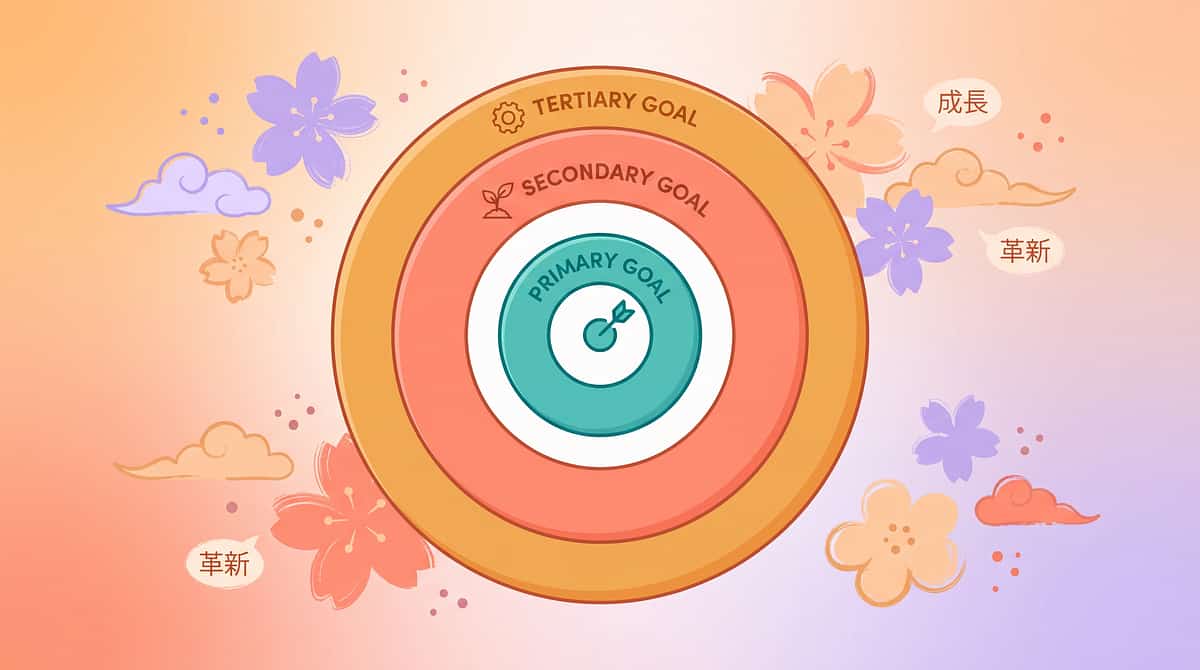
📋 Social Skills | Friendship Maintenance & Relationship Sustainability | 🎯 Primary: Relationship Sustainability | Secondary: Emotional Intelligence | Tertiary: Peer Integration
Multi-Disciplinary Team
This technique crosses therapy boundaries — because friendship doesn't organise by therapy type.
Speech-Language Pathologist (SLP) — PRIMARY
Addresses the pragmatic language of friendship: topic reciprocity, conversational balance, asking questions, remembering what was said, repair phrases after conflict. SLP teaches the verbal architecture of lasting connection.
Occupational Therapist (OT) — SECONDARY
Addresses sensory and emotional regulation during social interactions — friendship intensity calibration, knowing when proximity is too much or too little, managing the sensory demands of social environments.
ABA / BCBA — SECONDARY
Designs reinforcement schedules, token economies, and behavioural data systems for friendship maintenance practice. Tracks observable friendship behaviours across settings for generalisation.
Special Educator (SpEd) — SECONDARY
Implements classroom generalisation — social narratives, peer-mediated strategies, and the "friendship curriculum" that transfers home skills to school contexts.
NeuroDev Paediatrician — TERTIARY
Identifies whether friendship maintenance difficulties stem from ASD, ADHD, anxiety, or comorbid conditions. Determines whether pharmacological support could amplify social intervention outcomes.
🌸 Pinnacle Blooms Multi-Disciplinary Consortium | Validated across OT • SLP • ABA • SpEd • NeuroDev | 📞 9100 181 181
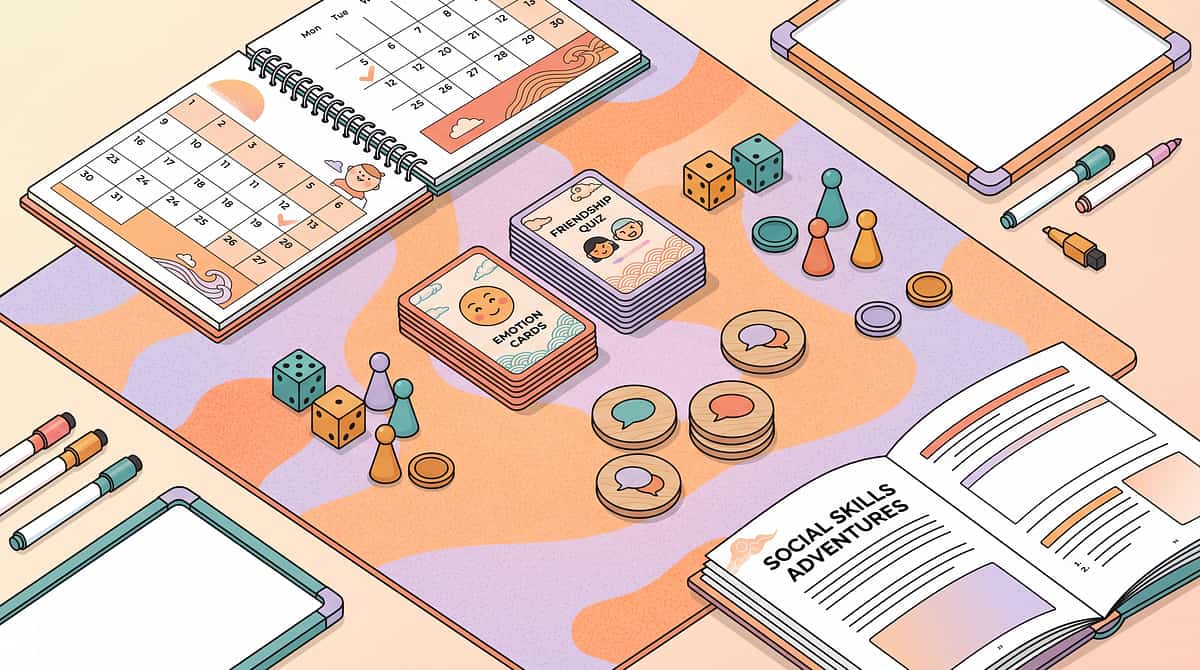
The 9 Materials
9 materials. One friendship garden toolkit.
Each material targets a specific friendship maintenance skill. You don't need all 9 immediately — start with your child's primary challenge area. Every material has a ₹0 DIY version. Essential Starter Pack: Materials 1 + 3 + 4 (Calendars + Conflict Cards + Apology Materials).
Total investment: ₹1,350–3,650 for comprehensive setup. Essential Starter Pack available for under ₹1,000. Every material has a ₹0 DIY alternative — no family left behind.
Material 1
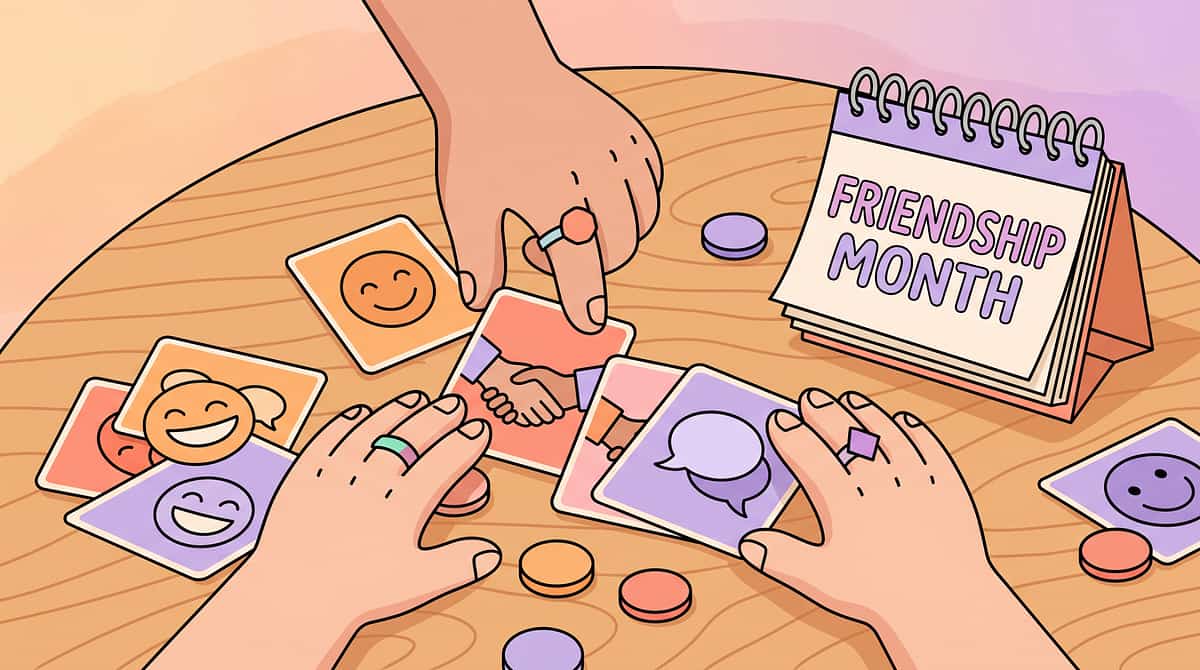
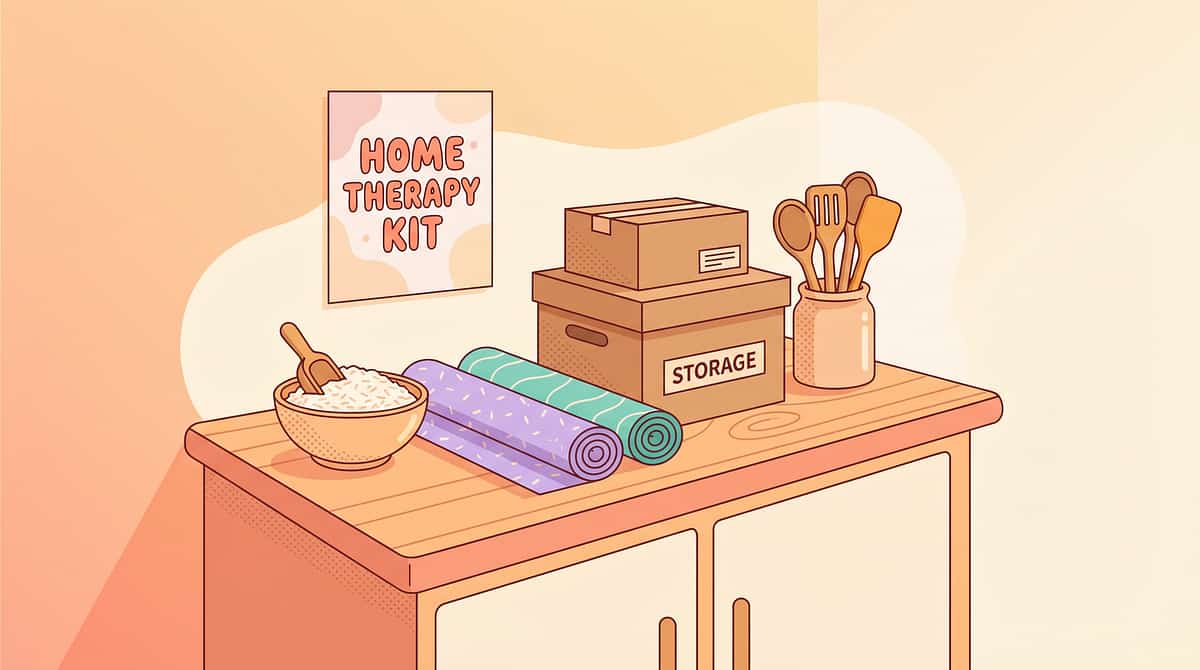
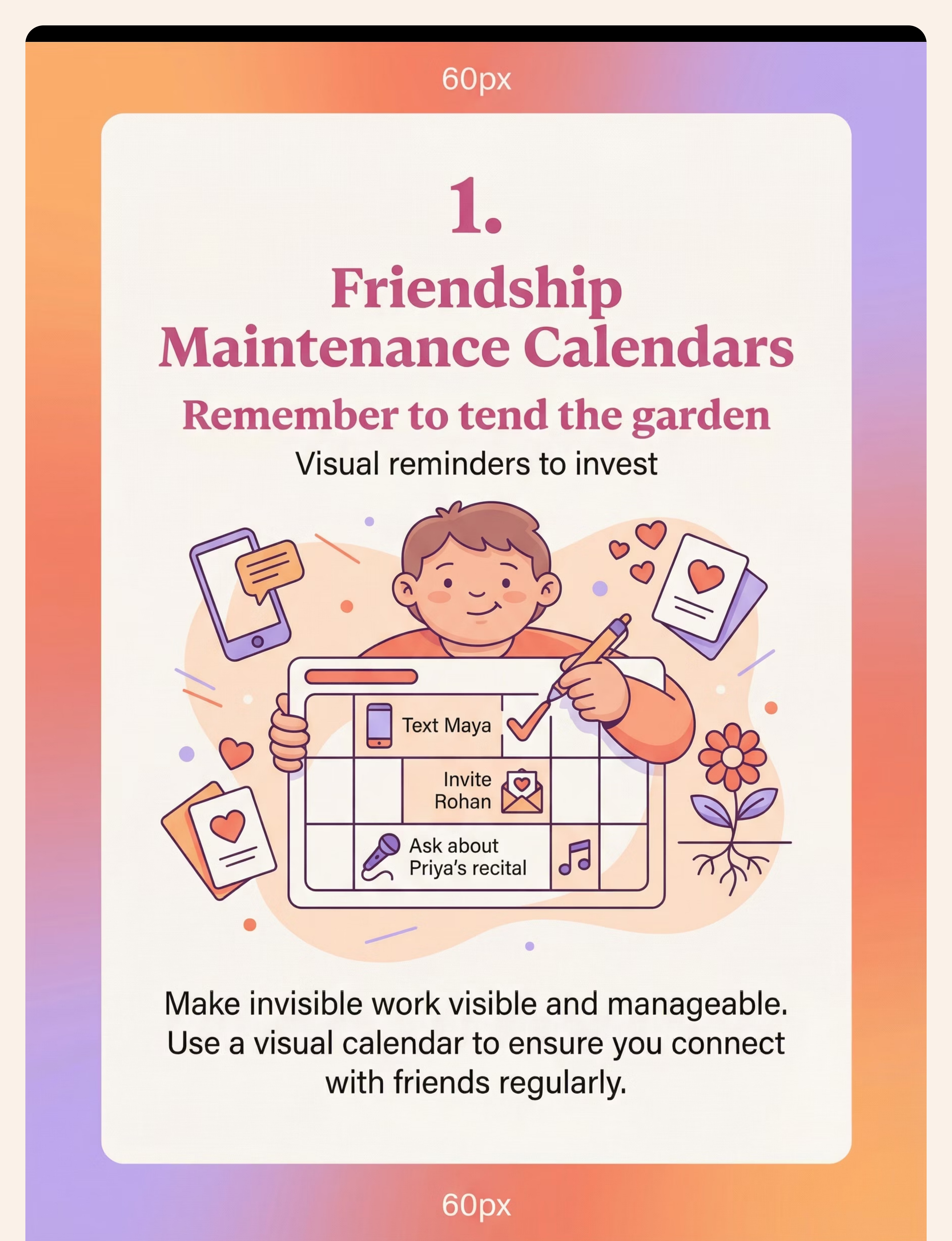
🗓️ Friendship Maintenance Calendars & Connection Trackers
Canon Category: Social Skills Tools | Visual Supports | Price Range: ₹150–400
Makes the invisible work of friendship visible — externalising memory so children know when to reach out, check in, and invest in friends. When a child can see on paper that it's been two weeks since they spoke to a friend, the calendar does what the child's working memory cannot yet do automatically: it prompts connection before the friendship quietly fades.
What It Teaches
Proactive relationship monitoring. Scheduling friendship acts as intentional, caring choices — not as obligation, but as love made visible.
How to Use It
Label 3 friends on a monthly grid. Schedule one "friendship act" per week per friend: a message, an invitation, a follow-up question about something the friend mentioned.
✅ DIY Available | 🌸 Pinnacle Recommends | Search: Amazon.in "friendship tracker for kids"
Material 2
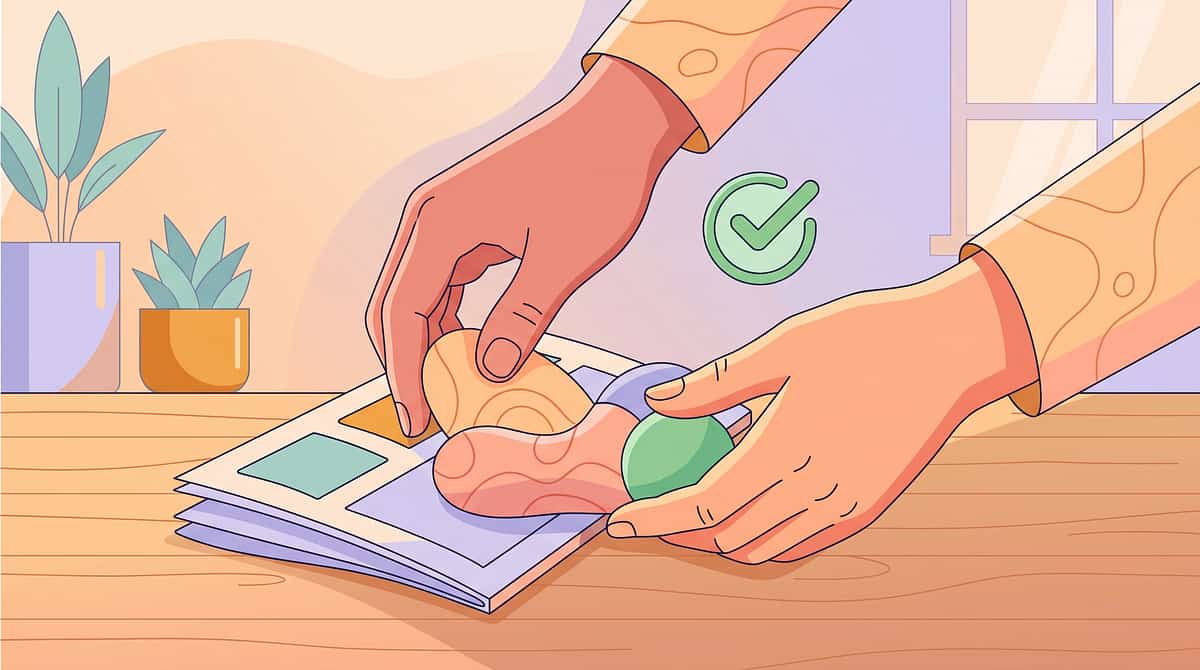
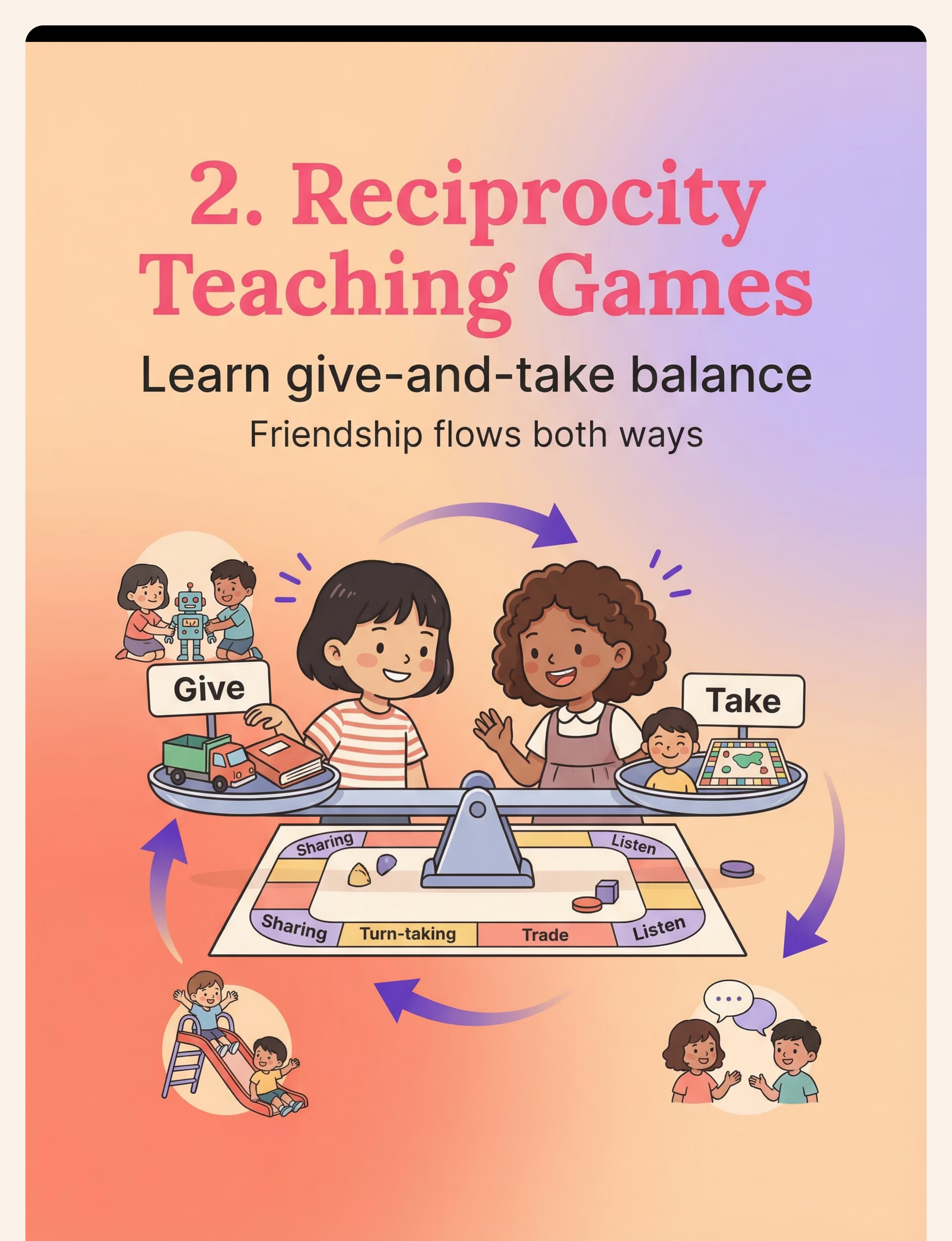
⚖️ Reciprocity Teaching Games & Give-Take Balance Tools
Canon Category: Social Skills Games | Cooperative Play Resources | Price Range: ₹200–500
Teaches that friendship flows both ways — noticing and correcting give-take imbalances before they damage relationships. Many children who lose friends are unaware that they have been dominating choices, topics, or turn-taking without realising it. Reciprocity games make this invisible imbalance tangible, teachable, and correctable in a low-stakes play context before the skill is needed in a real friendship moment.
What It Corrects
One-sided conversations, dominating choices, unequal turn-taking — before damage occurs
Core Skill Built
Give-take awareness in 60%+ of observed social exchanges — the reciprocity target
DIY Version
Any card game with a homemade give/take tally board. Use bottle caps as give-take counters.
✅ DIY Available | 🌸 Pinnacle Recommends | ₹200–500 | Search: Amazon.in "cooperative games children"
Material 4
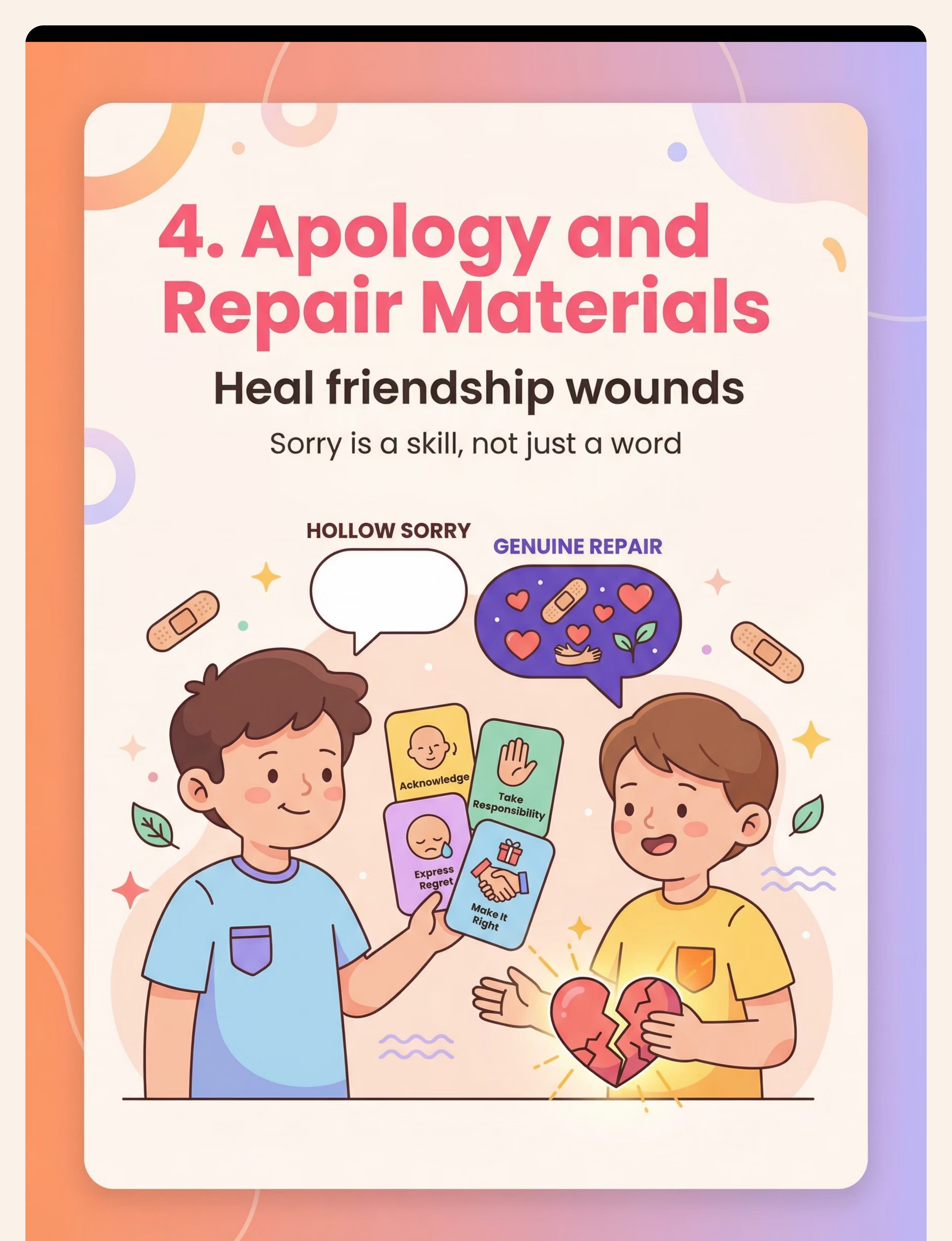
🙏 Apology & Repair Skill Materials
Canon Category: Social Skills Cards | Emotion Recognition Tools | Price Range: ₹150–400
Teaches genuine apology as a 4-step skill — not "sorry" as a magic word, but as a structured act of repair that communicates genuine understanding. A real apology shows you understand why it hurt, not just that you're saying sorry. This distinction is the difference between an apology that heals and one that dismisses.
Step 1: Acknowledge
"I did ___" — naming the specific action without deflection or minimising
Step 2: Express Regret
"That made you feel ___" — demonstrating understanding of the emotional impact
Step 3: Take Responsibility
"I'm sorry because ___" — owning the impact without shifting blame
Step 4: Offer Repair
"I'll try to ___ / Can I make it right by ___?" — the action that restores trust
Never force an insincere apology. The goal is skill, not performance. Start with "noticing impact" before practising the full sequence. ✅ DIY Available | 🌸 Pinnacle Recommends
Material 5
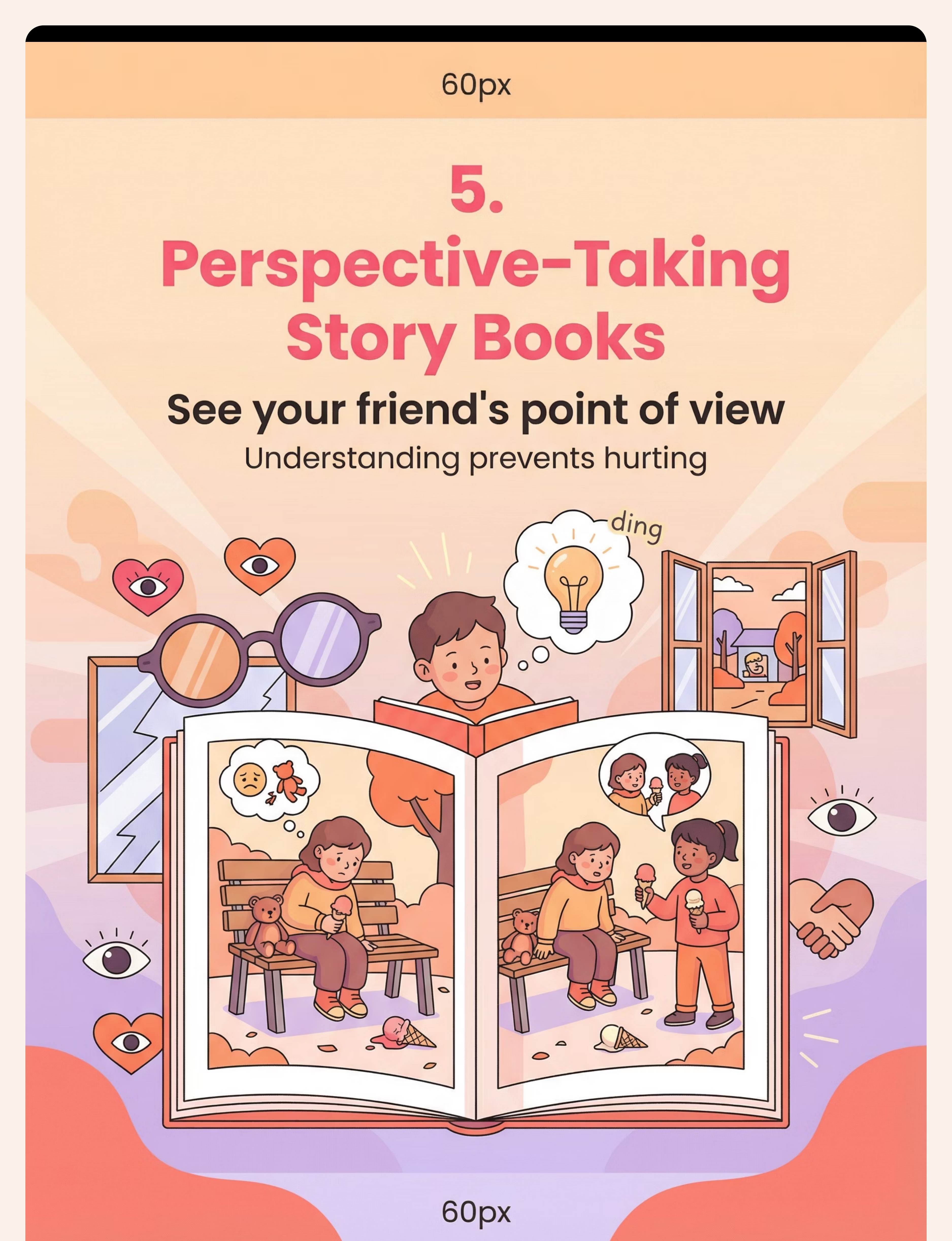
📖 Perspective-Taking Story Books & Empathy Builders
Canon Category: Social Narrative Books | Theory of Mind Resources | Price Range: ₹200–500
Helps children see through their friend's eyes — understanding how their own actions appear and feel to others before damage is done. Theory of mind — the ability to recognise that others have thoughts, feelings, and perspectives different from your own — is often delayed in autism and ADHD. Story books make this invisible mental process visible, concrete, and emotionally engaging. They are the gentlest entry point for perspective-taking practice because they use characters, not the child's own relationships, as the learning ground.
During Reading — Stop & Ask
- "How do you think [character] feels right now?"
- "How does the situation look from their side?"
- "Has [friend's name] ever been in a situation like this?"
DIY Version (₹0)
Use any story book or cartoon. After reading or watching, ask the perspective questions. Free perspective-taking practice with any existing media your child already loves.
✅ DIY Available | Match developmental level — expect gradual progress. 🌸 Pinnacle Recommends | ₹200–500
Material 7
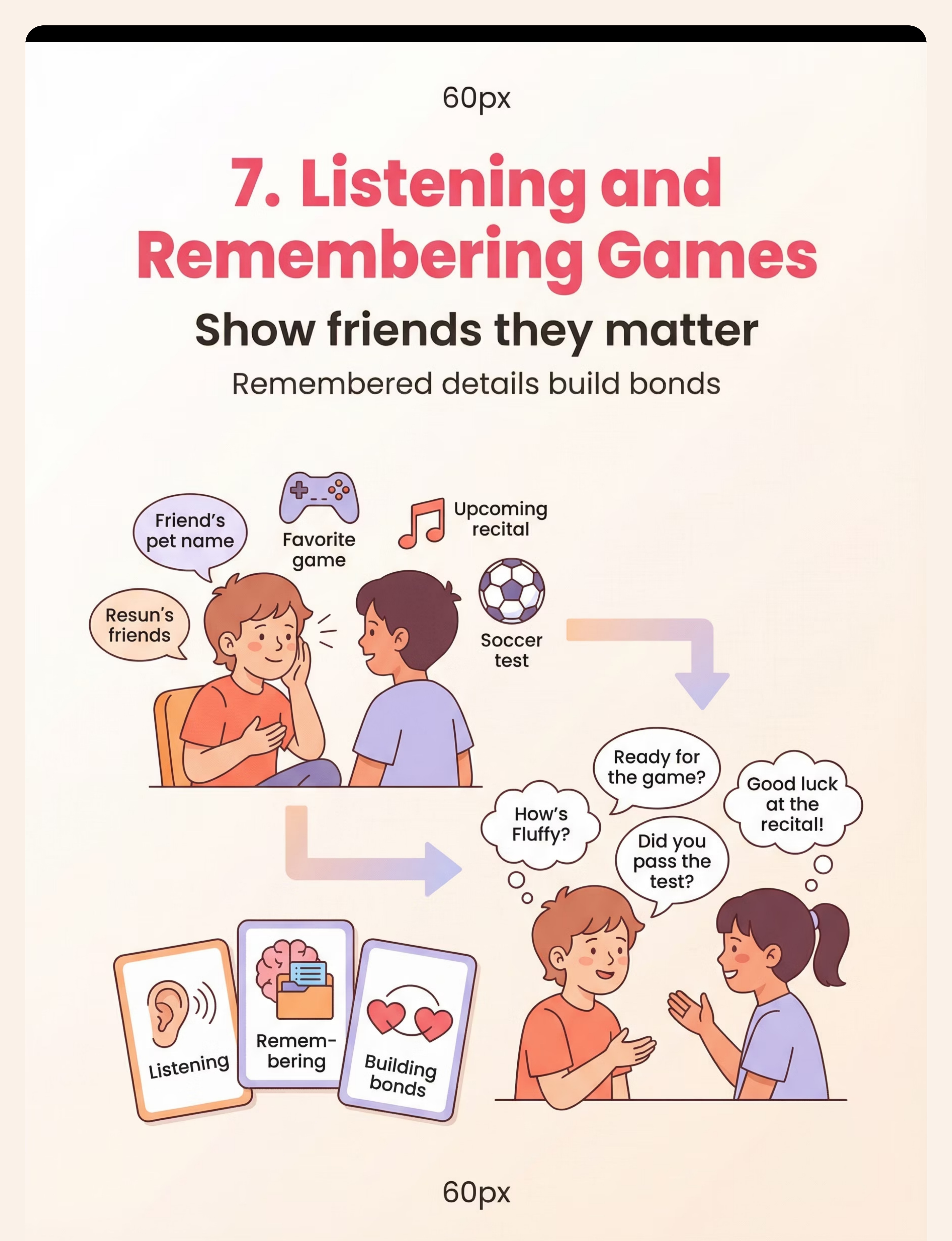
👂 Listening & Remembering Games
Canon Category: Social Skills Games | Active Listening Activities | Price Range: ₹150–400
Shows friends they matter by remembering what's important to them. Practising attentive listening and recall builds genuine connection — because when a friend mentions their sister's dance recital in passing and you ask about it two weeks later, they feel seen. That feeling is the glue of lasting friendship. For many children with ASD and ADHD, working memory challenges mean these details literally don't register — this material creates an explicit practice structure to build that capacity.
The Friend Facts Game
Each person shares 3 things about their week. Next session: quiz each other. Celebrate detail recall as a friendship superpower.
Track the Score
Keep a "remembering score" across sessions. Watch it grow. This is data the child can own and celebrate.
Connect to Real Life
"What did your friend say about their weekend last time? Did you remember to ask about it?" Bridges practice to real friendship moments.
✅ DIY: Play with any trivia format at home. 🌸 Pinnacle Recommends | ₹150–400
Material 8
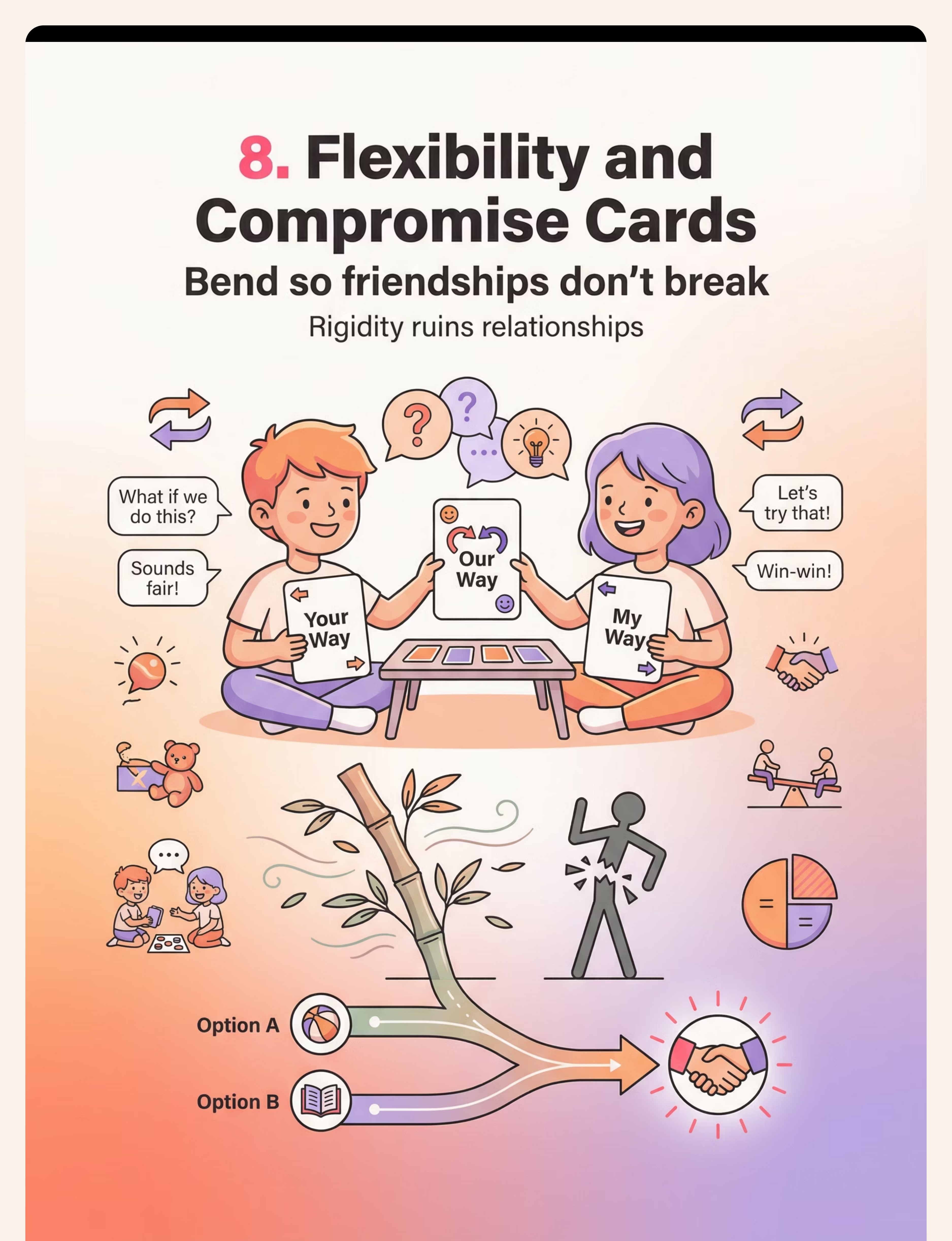
🔄 Flexibility & Compromise Cards
Canon Category: Cognitive Flexibility Tools | Problem-Solving Cards | Price Range: ₹150–350
Teaches bending without breaking — rigid expectations ruin friendships; the flexibility to find "our way" instead of "my way" saves them. Cognitive inflexibility is one of the core features of ASD and is also common in ADHD and anxiety. When a child cannot compromise on rules, choices, or plans, the friendship eventually exhausts the other child's patience. These cards make the concept of compromise concrete, practisable, and — crucially — reframeable as strength rather than surrender.
The Three-Column Framework
Your Way → what you want
Their Way → what they want
Our Way → what works for both
Their Way → what they want
Our Way → what works for both
Generate 3 possible "Our Way" solutions for each scenario card. Celebrate: "You found a way that works for both — that's what keeps friendships strong."
DIY Version (₹0)
Write 10 compromise scenarios on paper slips. Use real upcoming situations when possible — "We both want to choose the game. What's our way?" Practice before the moment arrives.
✅ DIY Available | 🌸 Pinnacle Recommends | ₹150–350 | Search: Amazon.in "flexibility cards children"

Material 9
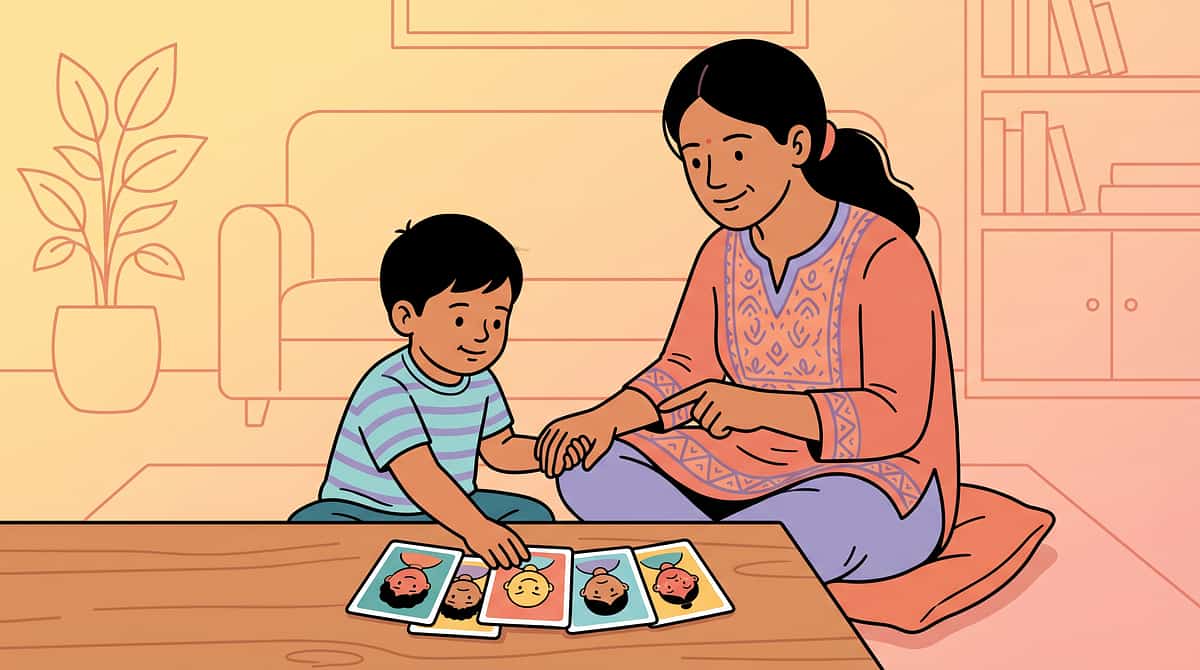
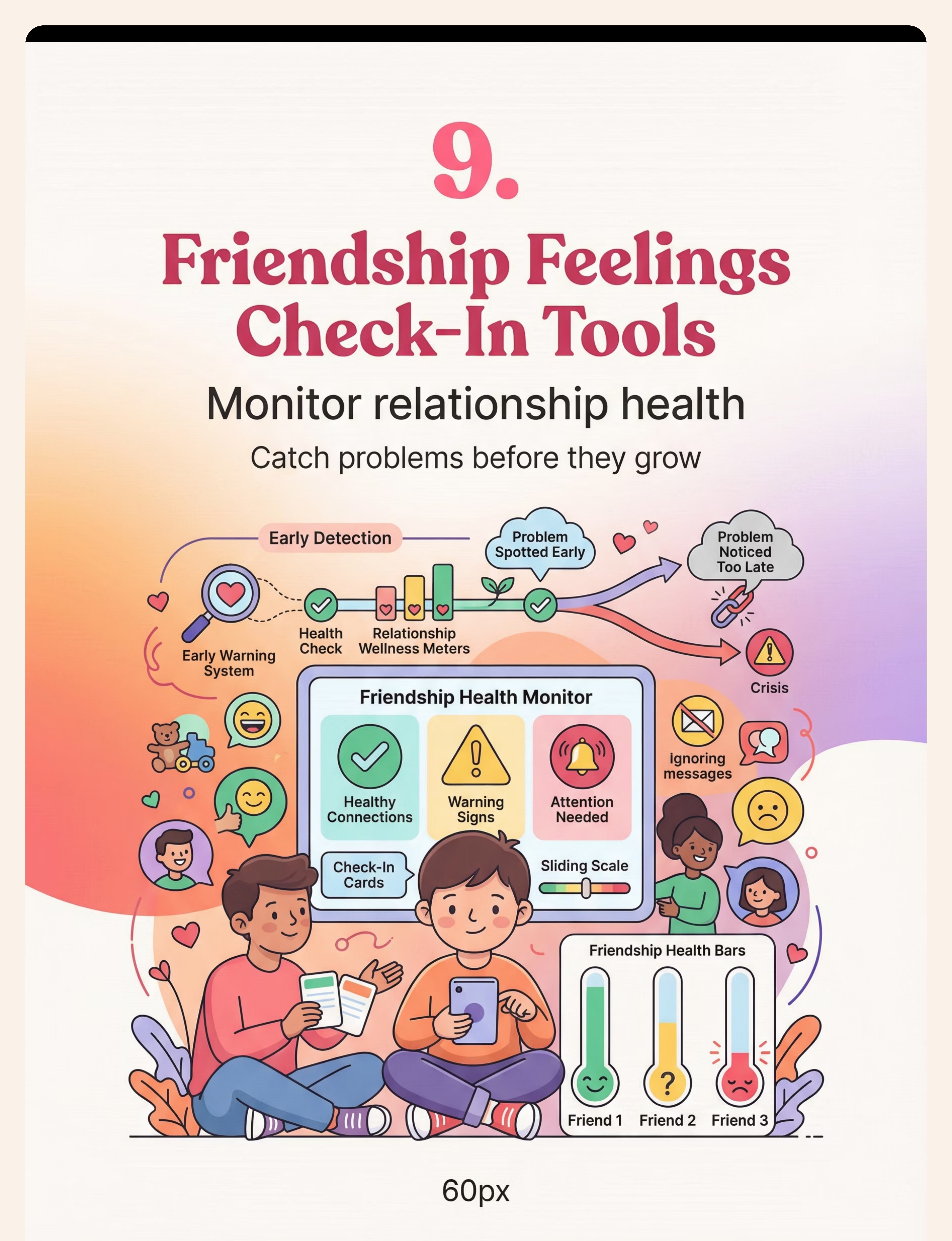
💚 Friendship Feelings Check-In Tools
Canon Category: Emotional Check-In Visuals | Relationship Monitoring | Price Range: ₹100–300
Health monitoring for friendships — catching problems before they escalate. Just as we check temperature when we suspect illness, the friendship check-in asks "how is this friendship feeling right now?" on a regular schedule, before small issues become irreparable. This is the material that closes the loop: the calendar (Material 1) tracks what we do for friends; the check-in (Material 9) monitors whether what we're doing is working.
🟢 Healthy
"How did this friendship feel this week?" — positive response, no action needed beyond maintenance acts
🟡 Needs Attention
"When did you last have fun together?" — one intentional connection act scheduled this week
🔴 Action Needed
"Is there anything that felt off?" — use conflict cards or apology materials this session
✅ DIY: 3 weekly questions, same day each week, 5 minutes. 🌸 Pinnacle Recommends | ₹100–300
DIY Alternatives
Every material has a ₹0 version. No family left behind.
Per WHO/UNICEF equity principles: access to evidence-based intervention must not depend on purchasing power. Every technique in the GPT-OS® library has zero-cost household alternatives. The material is a scaffold, not the intervention itself. Your consistent engagement with your child is the active ingredient.
Material 1 — Friendship Calendar (₹0)
Draw a monthly grid on paper. Label 3 friends. Schedule one "friendship act" per week per friend. Child checks off completed acts with a sticker. Stick on the refrigerator as a visible commitment.
Material 2 — Reciprocity Games (₹0)
Play any card game with a homemade give/take tally board. Use bottle caps as give-take counters. After each session: "Did we each get equal turns to choose?"
Material 3 — Conflict Cards (₹0)
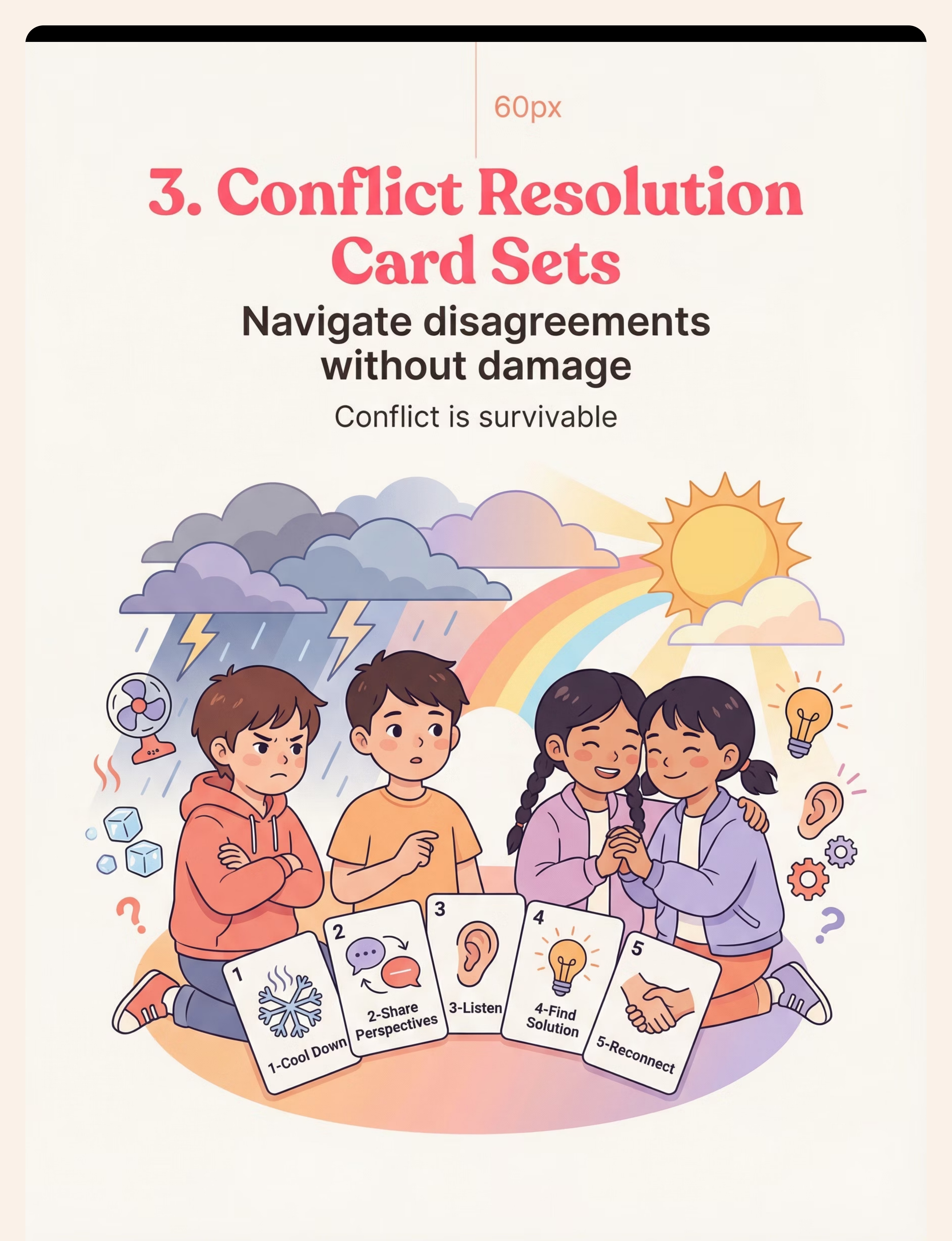
Write 5 steps on index cards: 1-Cool Down 🧊 | 2-Share View 💬 | 3-Listen 👂 | 4-Find Solution 💡 | 5-Reconnect 🤝. Laminate or cover with tape.
Material 4 — Apology Blueprint (₹0)
Four boxes on paper: "I did ___" | "That made you feel ___" | "I'm sorry because ___" | "I'll try to ___ / Can I make it right by ___?" Practice with hypothetical scenarios before real ones arise.
Material 5 — Perspective Practice (₹0)
Use any story book or cartoon. After watching, ask: "How did Character A feel when Character B did that?" Free perspective-taking with existing media.
Materials 6–9 (₹0)
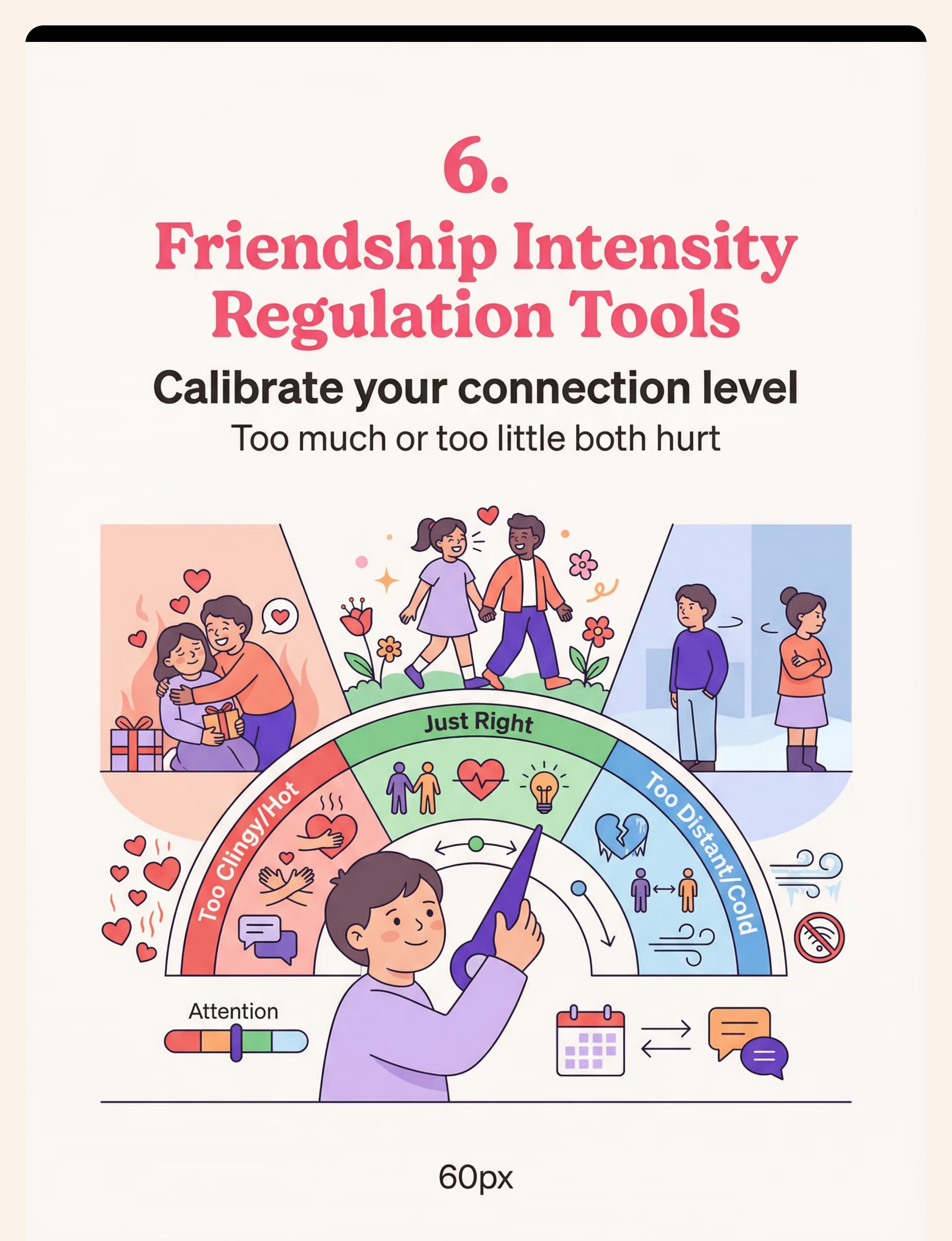
Cardboard thermometer for intensity | Friend Facts memory game | Paper slips for compromise scenarios | 3 weekly check-in questions on a sticky note
WHO NCF (2018) equity principles | PMC9978394 | WHO CCD Package — household-material efficacy across 54 LMICs
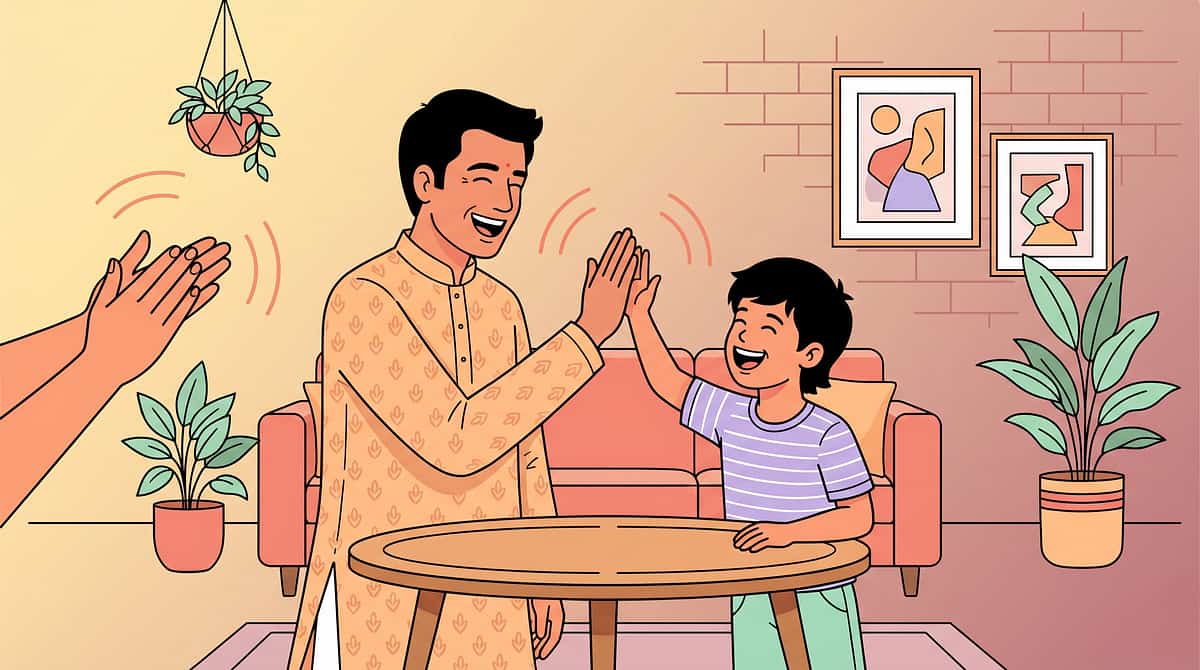
Safety First
Read this before your first session. Every time.
🟢 GREEN LIGHT — Proceed When
- Child is fed, rested, and emotionally regulated
- No intense conflict in the last 2 hours involving the specific friend
- Child is willing to engage — not in distress
- Parent is calm, present, and unhurried
- Environment is quiet and sibling-free
🟡 AMBER — Modify the Session When
- Child had a difficult day at school
- Child is mildly dysregulated (restless, distracted)
Action: Use a shorter, lower-demand version — just the check-in tool, or one conflict card scenario instead of the full protocol.
🔴 RED LINE — Stop Immediately If
- Child becomes tearful, distressed, or emotionally flooded during role-play
- Apology practice causes a shame spiral rather than skill-building
- Conflict card scenarios trigger re-living of painful memories
- Child refuses and shows avoidance distress (not just mild reluctance)
Do NOT target friendships the child genuinely doesn't want to maintain. Do NOT use this technique if the friendship ended due to the other child's harmful behaviour toward your child. Consult a psychologist if pattern is severe or if no measurable progress after 12+ weeks. 📞 9100 181 181
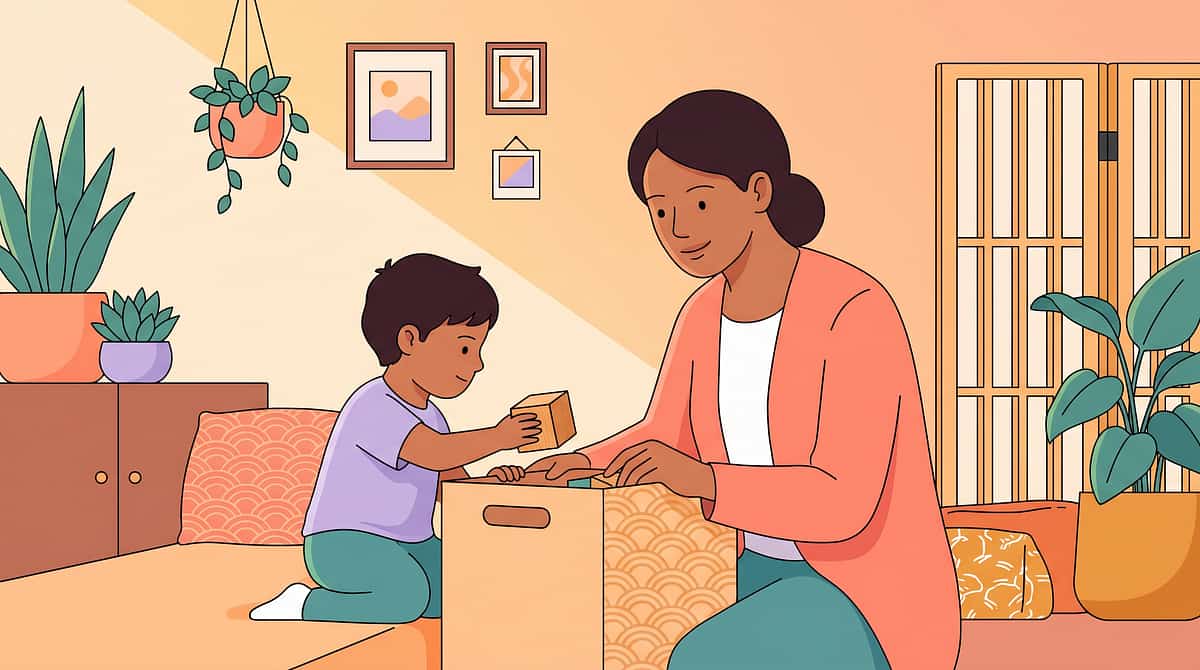
Environment Setup
The right environment produces the right session.
Lighting & Sound
Soft, consistent lighting — avoid fluorescent or flickering lights. TV off. Background music optional (low, instrumental). Comfortable temperature throughout.
Timing & Duration
After snack or meal, not immediately before or after school transition. 15–20 minutes maximum. Finish before satiation — always end on a positive moment.
Materials Pre-Staged
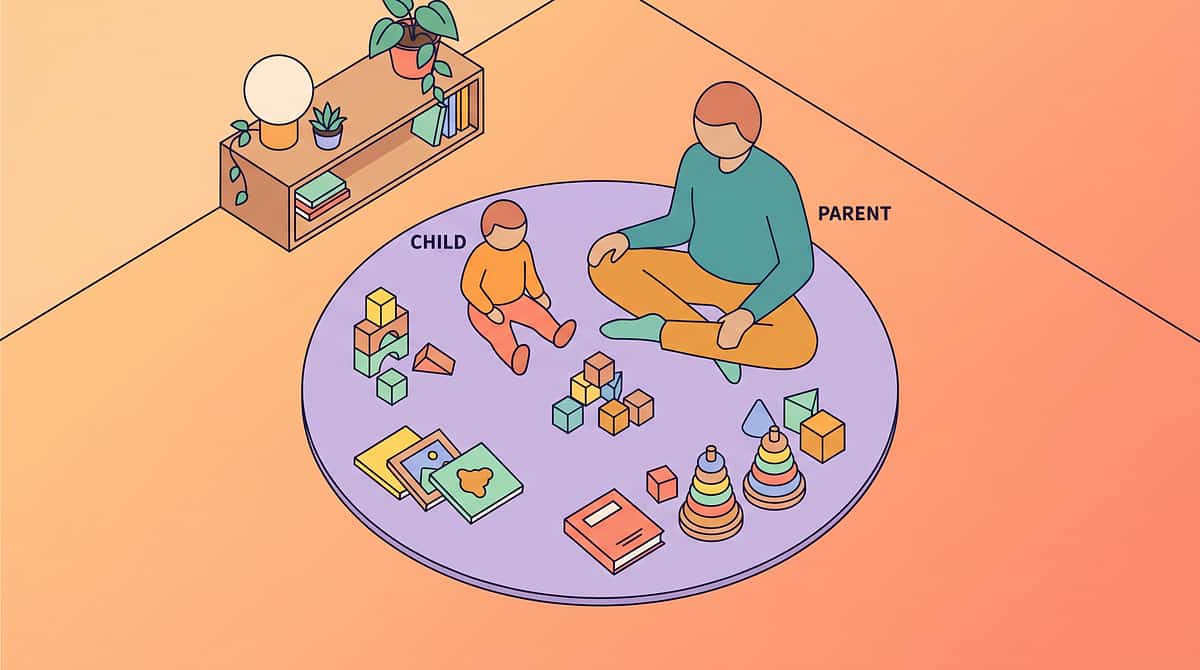
Everything the session needs is out before the child enters. No mid-session searching. Child and parent face each other or sit side-by-side — avoid opposite sides of a table.
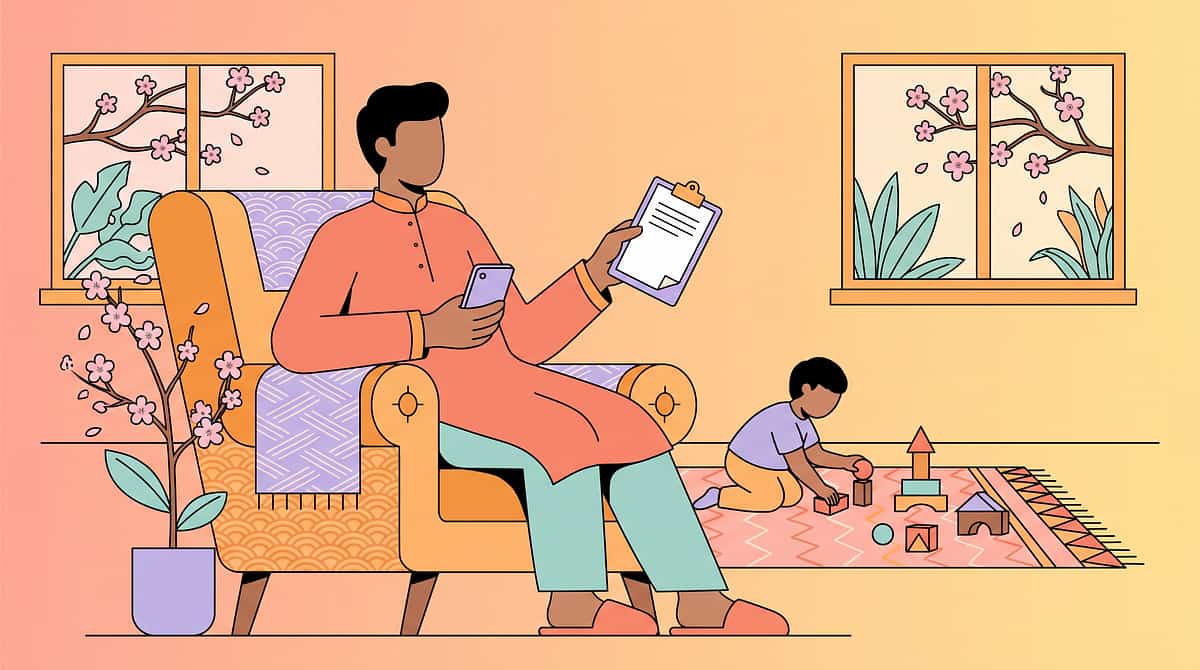
Your Phone: Away
Put yours away. Your undivided attention is the most powerful therapeutic input. The best friendship maintenance sessions feel like a warm conversation, not a lesson.
Remove from space: Siblings (younger especially) | Distracting toys or screens | Anything associated with recent conflict. Come regulated. Come curious. Come with no agenda beyond genuine connection.
Readiness Check
60-second pre-flight check. Every session.
Before every session, run through this 7-item checklist. It takes 60 seconds and prevents the most common session failure: starting when the conditions are wrong.
1
Fed
Child has eaten in the last 90 minutes
2
Regulated
No dysregulating event in the last 2 hours
3
Well
No signs of illness — fever, fatigue, stomach upset
4
Baseline
Child is in baseline emotional state, not elevated distress
5
No Rush
No urgent transition coming within 25 minutes
6
Parent Ready
Parent is calm, regulated, and fully present
7
Space Set
Environment is set up per Card 12 — materials staged, room ready
7/7 YES → GO
Full session as planned. You are ready.
5–6/7 YES → MODIFY
10 minutes, 1 material only, lower demand. A shorter session is still a session.
4 or fewer → POSTPONE
Use an alternative calm activity. "Today isn't the right time — let's do something fun together instead." Never make the child feel they failed the check.

Step 1 of 7
Step 1: The Invitation — Begin with belonging, not instruction.
The session starts with an emotional invitation — not a command, not a "we're doing social skills now." The child chooses to enter, and that choice matters. This voluntary entry is itself a therapeutic act: it teaches the child that these sessions are something done with them, not to them.
1
For Verbal Children (Ages 7–14)
"Hey — I found something really cool that I think could help with the [friend's name] situation. Want to try it together? Takes about 15 minutes."
2
For Early Verbal Children (Ages 5–8)
"Let's do our special friendship game! I have a new card for you to try."
3
For Children Who Respond to Choice
"We can do the friendship calendar OR the conflict cards today — which do you want to start with?"
If child declines: offer once more with a different framing. If declined again → accept gracefully, postpone. Never force. Show the day's material visually before starting — let the child handle it, examine it, ask questions. Familiarity reduces resistance. ABA preference assessment literature supports child-directed activity principles.
Step 2 of 7
Step 2: Establish Engagement — Warm up the social brain before the therapeutic work.
Before using the session's target material, spend 2–3 minutes in genuine connection. This warm-up activates the social brain, brings the specific friendship into emotional focus, and creates the relational context that makes the therapeutic material meaningful rather than abstract.
The 3-Minute Warm-Up
- Ask about the friend you're targeting today: "How was school? Did you see [friend's name]?"
- Notice and reflect any friendship feelings that arise: "Oh, you sound excited they texted you."
- Connect today's session to real life: "Remember when [situation] happened? Today we're going to practise exactly that."
✅ Engagement Indicators
- Making eye contact or oriented toward you
- Responding to questions about the friend
- Showing curiosity about the material
- Body is settled — not jumping, running, spinning
- Affect is warm or neutral — not distressed or shut down
If engagement is partial: Use an easier opening — let the child demonstrate a skill they already have before introducing new learning. Confidence activates engagement.

Step 3 of 7
Step 3: The Therapeutic Action — The active ingredient.
Present one material per session. Rotate across the 9 according to the weekly rotation guide. Each material targets a distinct friendship maintenance skill — rotating ensures comprehensive coverage while preventing any single skill from feeling repetitive or rote.
Week 1
Material 1 (Friendship Calendar) + Material 9 (Check-In) — establish the monitoring system first
Week 2
Material 2 (Reciprocity Games) + Material 3 (Conflict Cards) — the give-take and repair foundations
Week 3
Material 4 (Apology) + Material 5 (Perspective Books) — empathy and repair skills together
Week 4
Material 6 (Intensity Tools) + Material 7 (Listening Games) — calibration and attentiveness
Week 5
Material 8 (Flexibility Cards) + Review favourite from weeks 1–4
Week 6+
Child-directed selection from all 9 — ownership signals mastery readiness
Step 3 — Execution Detail
Core Execution: Bringing Each Material to Life
Material 1 — Friendship Calendar
Sit together and review. Identify 2–3 "friendship acts" to schedule this week. Child makes the choices; parent facilitates. Always discuss WHY each act matters: "When we text Maya, we're telling her she matters to us even when we're not together."
Material 3 — Conflict Cards
Present a real or hypothetical conflict scenario. Work through the 5 cards in order. Role-play with parent taking the "friend" role. Pause between cards: "How would you be feeling right now?"
Material 4 — Apology Materials
Practice each component separately before combining. Key teaching: "A real apology shows you understand why it hurt, not just that you're saying sorry." Practice until components feel natural, not scripted.
Material 6 — Intensity Tools
Review the friendship thermometer using a real recent interaction. "Where were you on the thermometer?" "Where do you think your friend wanted you to be?" Practice adjusting toward the green zone.
Material 9 — Check-In Tools
Complete the weekly friendship health check for 2–3 active friendships. Rate each 🟢🟡🔴. For any 🟡/🔴: "What one thing could you do this week to tend this friendship?"
Common Execution Errors: Making it a lecture instead of a conversation | Using only hypothetical scenarios — always connect to real friendships | Skipping the "why it matters" explanation | Moving too fast through conflict cards without emotional check-ins between steps

Step 4 of 7
Step 4: Repeat & Vary — 3 quality repetitions beat 10 mechanical ones.
Two to three cycles through the core action per session is the therapeutic target. Each cycle should introduce a slight variation to prevent rote response. Never exceed the child's engagement window — watch for satiation signals.
Variation Options by Material
- Friendship Calendar: Different friends each session | Different types of contact acts (digital vs in-person)
- Reciprocity Games: Change the game | Change the "currency" tracked (words, turns, choices, topics)
- Conflict Cards: Low-stakes → high-stakes scenarios | Parent plays a less cooperative "friend"
- Apology: Hypothetical → recent past → current relationships | Practice receiving an apology
🛑 Satiation Indicators — Stop the Cycle
- Child gives same-word answers without thinking
- Body language closes off — crossed arms, looking away
- Engagement drops to single-syllable responses
- Yawning, fidgeting significantly increases
- Child asks to stop or change activity
"3 GOOD REPS > 10 FORCED REPS."

Step 5 of 7
Step 5: Reinforce & Celebrate — Celebrate the attempt, not just the success.
Reinforcement must arrive within 3 seconds of the desired behaviour. Delayed praise loses 60% of its behavioural impact. The child needs to connect the praise to the specific friendship skill — generic "good job!" without naming the behaviour is a missed opportunity.
For Listening
"That's exactly what 'listening to a friend' looks like. You remembered what she said — that's a real friendship skill."
For Compromise
"You found a compromise! That's what keeps friendships strong when things get hard."
For Apology Practice
"You just practised what to say when you need to apologise. That's not easy — and you did it."
For Self-Awareness
"You noticed the friendship temperature was getting too hot. That self-awareness is what great friends have."
Reinforcement Menu: Verbal praise (specific, immediate) — always | Token/sticker on friendship progress chart | 5-minute child-directed activity after session | "Friendship win" journal entry | Parent affirmation: "I'm proud of you for working on this"
Step 6 of 7
Step 6: The Cool-Down — No session ends abruptly.
Social skills practice activates the emotional brain. Ending too abruptly can leave residual dysregulation. A 2–3 minute cool-down transitions the child from therapeutic engagement back to baseline — and creates a positive association with the session overall. The cool-down is not optional; it is part of the therapy.
1
Give a Warning
"We have 2 more turns and then we're all done for today." Allow the child to anticipate the ending — no surprises.
2
Close Together
"That's our session! You worked really hard. Let's put the cards away together." Child participates in the material put-away ritual — this builds ownership.
3
Reflection Question
"What was your favourite part today?" One question, open-ended. Listen to the answer without evaluation.
4
Child's Choice Activity
2–3 minutes of child-chosen brief activity: drawing, LEGO, short video, comfortable silence. Unrelated to today's topic.
5
Session Close Ritual
High five + specific praise statement + visual timer acknowledgment: "We did our 15 minutes!" Consistency of this ritual builds positive anticipation for the next session.
Step 7 of 7
Step 7: Capture the Data — Right now.
Without data, you're guessing. With data, you're progressing. Three simple data points per session — captured immediately — build the longitudinal pattern that GPT-OS® uses to personalise your child's intervention pathway. Wait more than an hour and the details blur.
Date & Material
Today's date + which of the 9 materials was used. Builds the rotation record and shows which materials are being practised most frequently.
Engagement Level
😔 1 | 😐 2 | 🙂 3 | 😊 4 | 😄 5 — A single emoji rating captured immediately. Over 8 weeks this builds a pattern that reveals your child's optimal session conditions.
Notable Moment
One sentence: what worked, what surprised you, or what needs adjustment. "She connected conflict card Step 3 to the situation with Priya without prompting." That is clinically significant data.
Log online: pinnacleblooms.org/tracker/C-311 | Offline PDF download available. Our clinical team can review your session data and provide personalised guidance. 📞 9100 181 181
Troubleshooting
When things don't go as planned — every challenge is information, not failure.
"My child refuses to engage with the materials at all."
Start with observation only. Sit with the materials but don't demand participation. "I'm going to practise the conflict cards. You can watch if you want." Curiosity often overrides resistance within 2–3 sessions.
"My child does activities but skills don't transfer to real friendships."
Generalisation requires explicit bridging. After each session, end with: "When could you use this with [specific friend] this week?" Follow up at next session: "Did you get a chance to try it?"
"Role-playing conflict scenarios makes my child emotional."
Start with very low-stakes hypothetical conflicts — characters from a cartoon, not real friends. Build up to real situations only after child can stay regulated with fictional ones.
"My child says sorry immediately but clearly doesn't mean it."
Don't practise the full apology sequence yet. Start by practising "noticing impact": "How do you think that made them feel?" Meaning comes before mechanics.
"The friendship calendar feels like homework."
Make it collaborative, not corrective. Let the child decorate it. Celebrate filled squares. Use stickers. The visual itself should feel like a belonging document, not an obligation.
"We've been doing this 6 weeks and no friendships have improved."
Two considerations: (1) Is the child practising skills in real situations? Generalisation needs explicit in-context practice. (2) Is professional assessment needed? A BCBA or SLP can identify whether underlying ASD/ADHD needs additional clinical support.
📞 9100 181 181 — If troubleshooting doesn't resolve the concern, call our clinical team. Stokes & Baer (1977) generalisation and maintenance principles underpin all troubleshooting approaches.
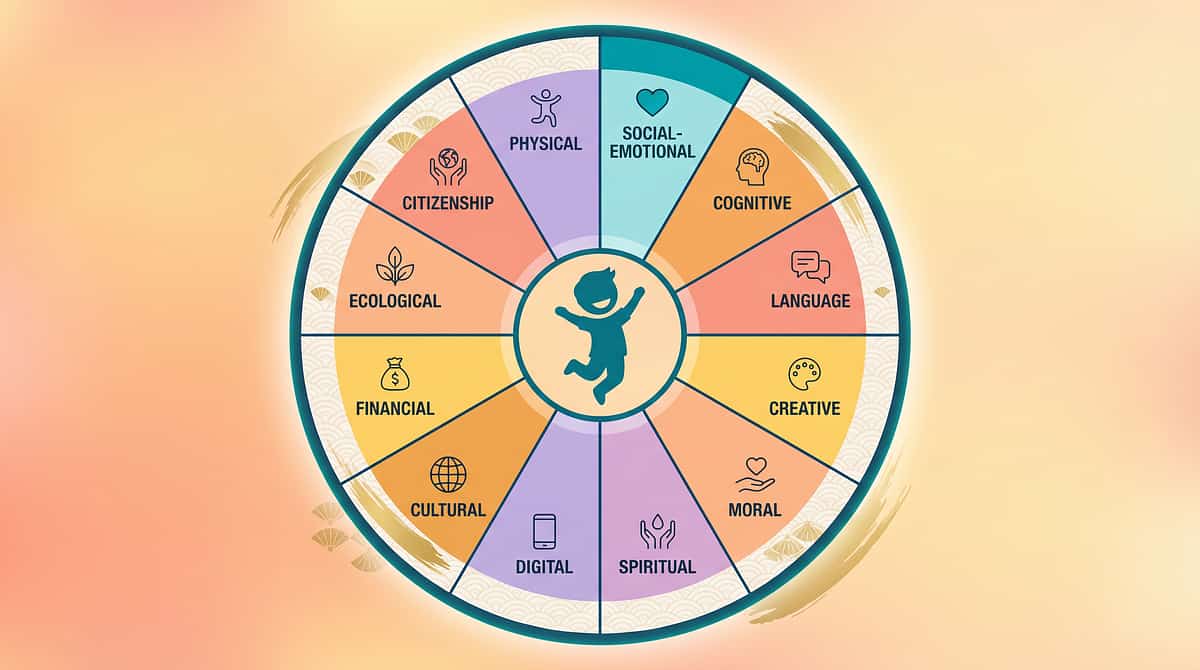
Personalisation
One technique. Infinite personalisations.
C-311 is designed for the full 5–14 age range, which spans enormous developmental territory. The core materials remain the same; what changes is how they are presented, how long each session runs, and who leads the learning as the child matures.
Ages 5–7: Concrete & Play-Based
- Friendship Calendar: use pictures/emojis, not words
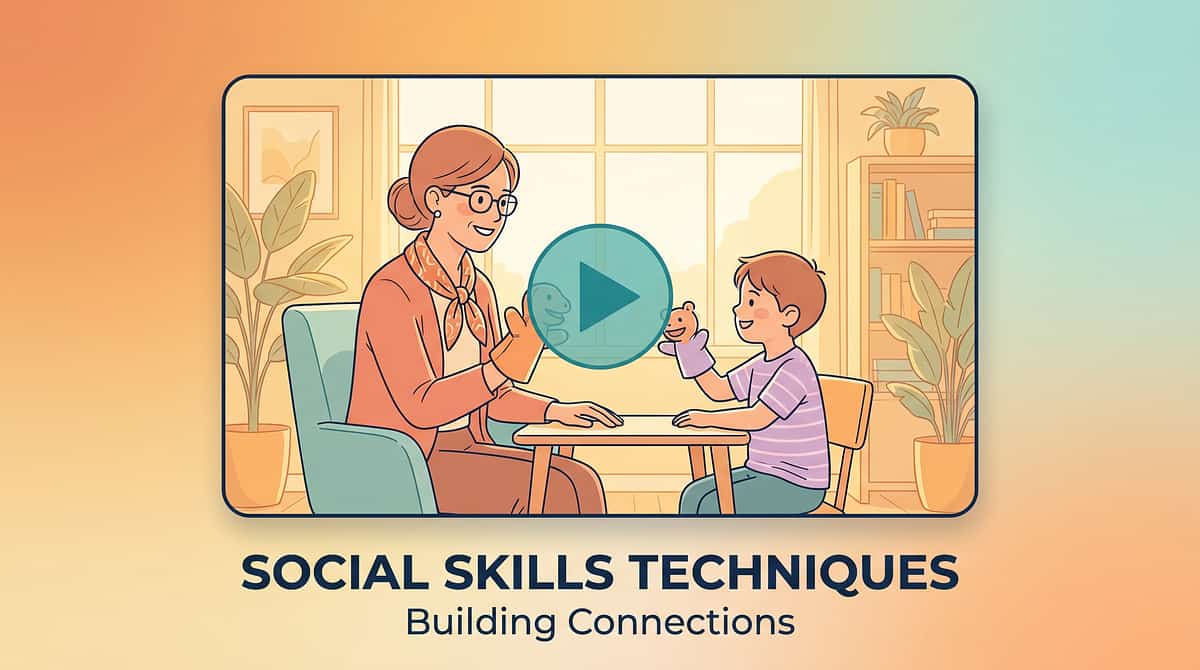
- Conflict Cards: use puppet or stuffed animals for role-play
- Intensity Tool: simple smiley dial instead of full thermometer
- Apology: teach just 2 components before the full 4
Ages 8–11: Scenario-Based
- Use all 9 materials as designed
- Introduce friendship journalling as supplementary tool
- Begin connecting to school social situations explicitly
- Practice skills with peers in supervised play dates
Ages 12–14: Insight-Based
- Shift from parent-led to youth-led — parent as consultant
- Add digital friendship maintenance component (texting etiquette)
- Introduce intensity regulation in close friendship contexts
- Incorporate self-monitoring apps or spreadsheet trackers
High Anxiety Profile
Start with check-in tools and perspective books before conflict cards and apology materials — lower vulnerability exposure first
ADHD Profile
Shorter sessions, higher-energy reciprocity games, visible timer always present throughout
Non-Speaking / Low Verbal
Visual-only materials, reduce language demands, accept pointing and gesture responses as valid
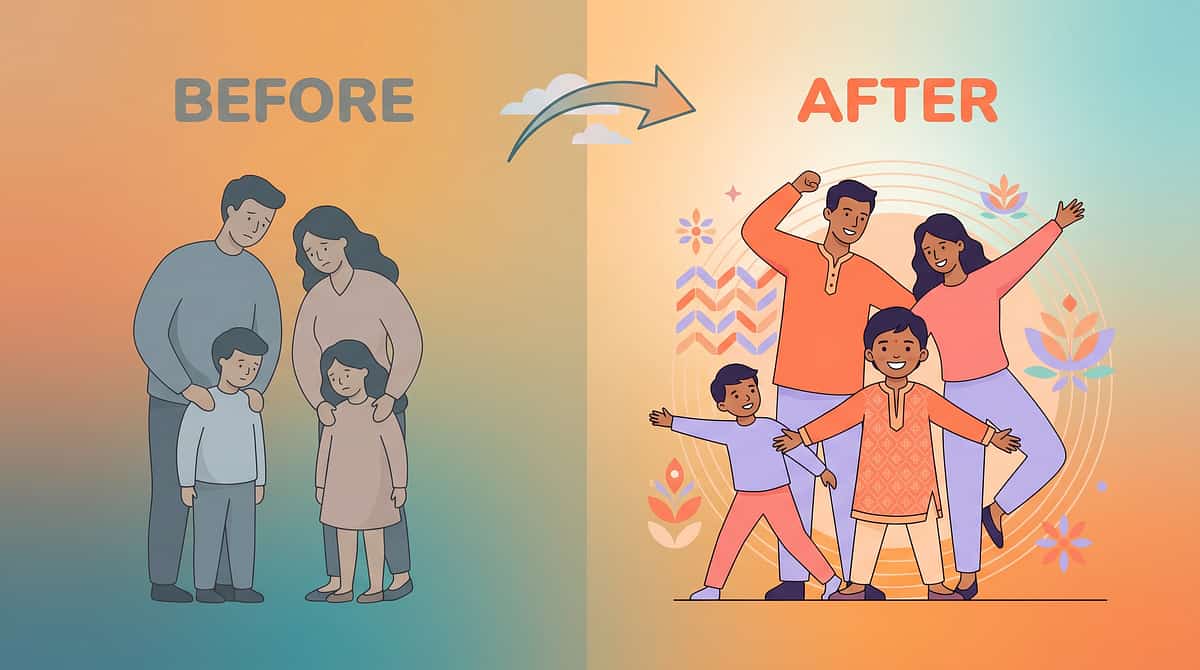
Progress: Weeks 1–2
Week 1–2: What to Expect
Progress is measured in seconds and small gestures, not transformed friendships. The first two weeks test your patience — and that is entirely normal. Your child's nervous system is still learning that these sessions are safe, valuable, and worth engaging with. Your consistent, warm presence — not the materials — is what creates that safety.
✅ Look For in Weeks 1–2
- Child tolerates sitting with materials without significant resistance
- Child completes at least 1 material interaction per session
- Child can name at least 2–3 current or recent friends
- Child shows curiosity about 1 of the 9 materials
❌ Not Expected Yet
- Spontaneous use of skills in real friendships
- Conflict resolution without prompting
- Genuine apologies in real situations
- Sustained engagement for the full 20 minutes
If your child tolerates the calendar for 30 seconds longer than last week — that is real progress. PMC11506176 — 8–12 week intervention timelines confirm early-phase tolerance indicators precede skill mastery.
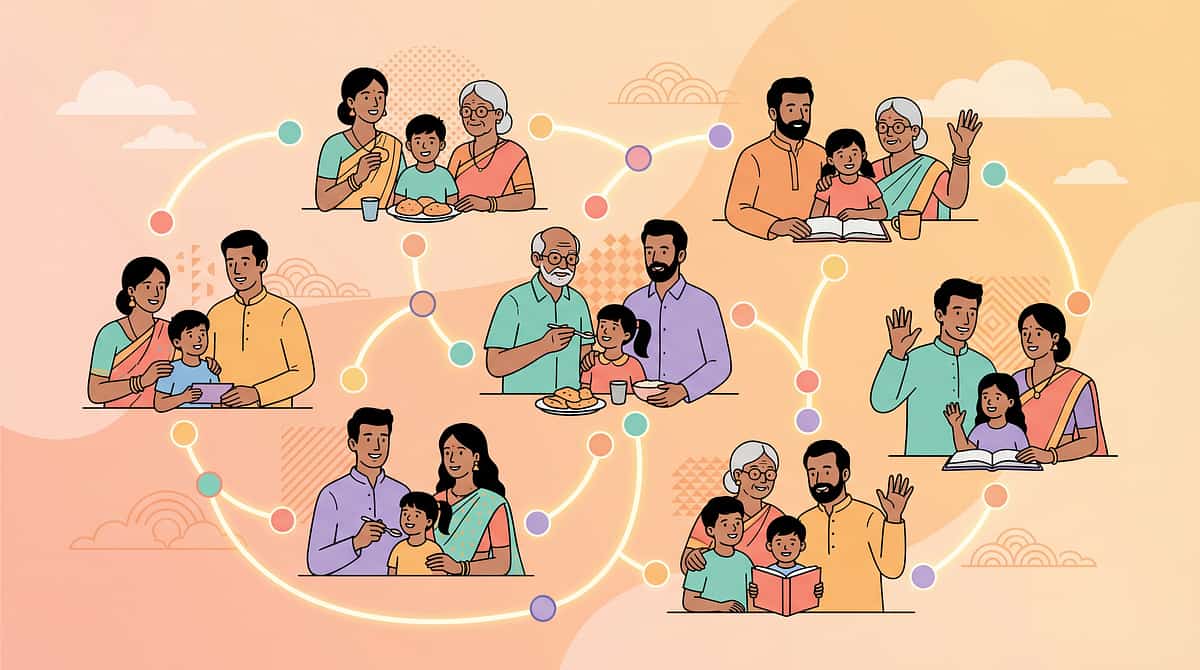
Progress: Weeks 3–4
Week 3–4: Consolidation Signs
The neural pathways are forming. You may not see it yet — trust the process. Consolidation-phase gains are often invisible to the eye but measurable in the data you've been capturing since week one.
Visible Consolidation Signs
Child begins to anticipate the session material: "Are we doing the conflict cards today?" Child starts referencing a real friendship situation during a session unprompted. Child uses one component of a material correctly without full prompting.
The "Neural Pathway Forming" Indicators (Most Parents Miss These)
Child mentions a friend's upcoming event without being asked | Child asks for help planning a "friendship act" without parent initiating | Child uses the word "compromise" or "our way" in normal conversation | Child seems less anxious about a conflict — "I know what to do."
When to Increase Frequency
If you're seeing consistent engagement and real-world application attempts → increase to 4 sessions/week and add a second material per session. Neuroplasticity evidence: synaptic strengthening through repeated structured input follows predictable timelines in paediatric populations.
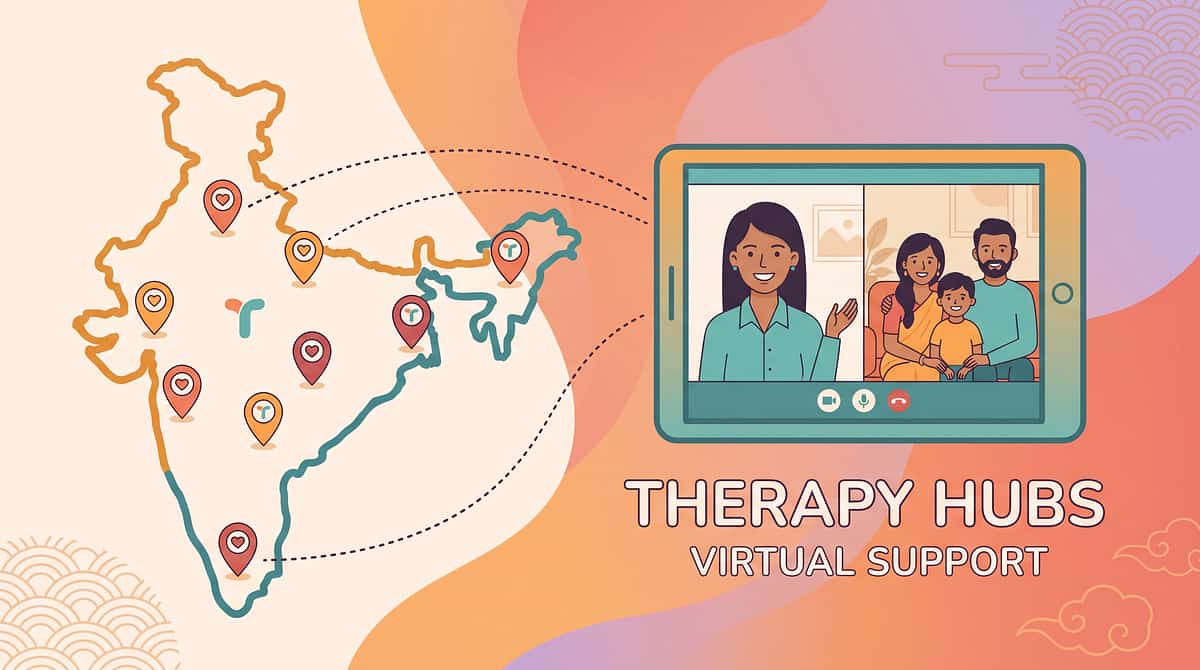
Progress: Weeks 5–8
Week 5–8: The Garden Is Visibly Growing.
The garden is visibly growing. Skill emergence is the phase where home practice begins appearing in real-world friendships — the moment every caregiver has been working toward.
✅ Look For in Weeks 5–8
- Child uses conflict resolution sequence with adult support in a real situation
- Friendship Calendar contains completed acts from the previous week
- Child can articulate why a friendship act matters ("Because she needs to know I remembered her recital")
- Same friend mentioned across 3+ consecutive weeks of conversations
- Child initiates a friendship maintenance act independently at least once
🌟 The Real Victories — Generalisation
- School reports child handled a playground conflict differently than before
- Friend's parent mentions increased connection quality
- Child asks "Am I being too much right now?" — intensity self-awareness emerging
- Child offers a genuine apology in real time, not just in practice
PEERS® RCT outcomes — friendship quality metrics at 8-week assessment | PMC11506176
Milestones
Every milestone is a neural victory. Celebrate it accordingly.
🌱 First Session Completed
"You took the first step. That's courage." — The beginning of everything that follows.
🌿 First Spontaneous Friendship Act
"You thought of [friend] without anyone reminding you." — The maintenance mindset is forming.
🌸 First Real Apology Given
"You healed something that was broken. That's extraordinary." — The repair skill is real.
🌺 First Conflict Navigated Without Ending the Friendship
"You bent instead of breaking. That's strength." — The most important milestone of all.
🌳 Same Friend for 8 Consecutive Weeks
"This friendship is still alive because of your work." — Sustainability achieved.
You too are growing. You are learning a new language — the language of your child's social development. Every session you show up for is an act of love that will compound across your child's lifetime.

Red Flags
Some patterns require a clinical team, not just home practice.
🔴Seek Professional Assessment Immediately If: All of child's friendships end in high-distress conflict | Child shows no awareness of lost friendships (emotional numbing) | Friendship loss is causing depression, school refusal, or self-harm ideation | Child's behaviour toward friends includes aggression or threats | No measurable progress after 12 consistent weeks | Extreme patterns: obsessive attachment OR complete social withdrawal
🟡Consider Professional Assessment If: Underlying diagnosed or suspected ASD, ADHD, or anxiety not formally assessed | Multiple therapeutic domains simultaneously impacted | Parents consistently unable to maintain session protocols | Friendship challenges significantly impacting school functioning
1
Call the FREE Helpline
📞 9100 181 181 — 18+ Languages | 24×7. Our clinical team will help you determine next steps without judgement.
2
Request AbilityScore® Assessment
Social Participation Assessment — establishes your child's baseline across all friendship maintenance dimensions.
3
Meet the Consortium Team
Multi-Disciplinary Consortium Team reviews your child's full profile — SLP, ABA, OT, and NeuroDev perspectives integrated.
4
Receive Your GPT-OS® Plan
Personalised intervention plan built from your child's specific profile, not a generic protocol.
Family Stories
From the pattern of loss to the joy of lasting friendship.
Ananya, Age 9 — Hyderabad
Before (3 months in): "Every September a new best friend. Every January, she's alone again. She didn't know what she was doing wrong. She'd cry herself to sleep and say 'no one wants to be my friend.' The school called us twice about social isolation."
After (6 months with Materials 3, 4 & 6): "Priya has been her best friend for eleven months now. They had a fight in March — I was terrified it would be the end. But Ananya used the conflict cards, actually apologised for her part, and they came out closer. The school called again — this time to say how much Ananya's social skills had grown."
Therapist's Note: Ananya's primary challenge was intensity calibration. The friendship thermometer gave her a visual language for self-regulation that she internalised within 8 weeks.
Rohan, Age 12 — Bengaluru
Before: "He's warm, funny, caring. He makes friends easily. But they always drift away and he never knows why. He'd stopped trying — 'what's the point, they always leave.'"
After (9 months including professional PEERS® group): "He texted me from a birthday party last weekend — his friend's birthday party. He's had the same group of 3 friends for 7 months. He told me: 'Amma, I apologised to Kabir when I cancelled plans and now we're even closer.' I cried."
Therapist's Note: Rohan's primary issue was not understanding the ongoing work of friendship. The maintenance calendar shifted his mental model from "friendships just happen" to "friendships need tending."
"Making friends was never the problem. Keeping them is a skill she didn't know she needed to learn — but she learned it. And now she has a best friend who's been there through everything."
— Mother of 10-year-old, Pinnacle Network, Chennai
Outcomes vary by individual child profile. Results based on consistent implementation with professional guidance.
Community
You don't have to navigate this alone.
Pinnacle Friendship Skills Parent Group — WhatsApp
Join 1,200+ parents working on friendship maintenance with their children. Share wins, ask questions, get peer support from families who understand exactly what you're navigating. Join the WhatsApp Group →
Pinnacle Parent Community Forum
Moderated by Pinnacle clinicians. Topic threads for each technique. Real questions, real answers, real families. Visit Forum →
Local Parent Meetups
Pinnacle centres organise monthly parent meetups by challenge domain. Meet families in your city navigating the same journey. Find Your Nearest Meetup →
Peer Mentoring Programme
Connect with a parent whose child has already completed this intervention. Learn from lived experience, not just clinical guidance. Request a Peer Mentor: 9100 181 181 →
"I was doing this alone for two years. Joining the Pinnacle parent group changed everything — not just for me, but for how I showed up for my son." — Parent, Pune

Professional Support
Home + clinic = maximum impact.
Home sessions build the foundational skills. Clinical sessions at Pinnacle accelerate generalisation — giving your child real peer practice in supervised environments, with professionals monitoring progress and adjusting the protocol in real time. The combination is significantly more powerful than either alone.
How Pinnacle Supports C-311
- AbilityScore® Assessment — establish your child's Social Participation baseline
- FusionModule™ — coordinates SLP, ABA, SpEd, and psychology into one convergent plan
- EverydayTherapyProgramme™ — your home sessions aligned with clinical sessions
- Group Social Skills Sessions — real peer practice in supervised environments at Pinnacle centres
Therapist Matching for C-311
- Primary: SLP with social pragmatics specialisation
- Secondary: BCBA / ABA specialist for behavioural tracking
- Optional: Child psychologist for underlying anxiety or depression
Teleconsultation Available
For families not near a Pinnacle centre — video sessions in 18+ languages. Book Online →
📞9100 181 181 — FREE National Autism Helpline | 18+ Languages | 24×7. Speak to a clinical adviser in your language. First call is always free. Find your nearest centre → | 70+ centres across India

Watch the Reel
See it in action. Watch the original C-311 reel.
🎬 C-311 Reel
Title: 9 Materials That Help: Keeping Friends
Series: Social Connection Solutions — Episode 311
Domain: Social Skills | Friendship Maintenance
Duration: 75 seconds
Series: Social Connection Solutions — Episode 311
Domain: Social Skills | Friendship Maintenance
Duration: 75 seconds
What You'll See in the Reel
- All 9 materials demonstrated briefly with clinical commentary
- The friendship garden metaphor explained visually
- Parent-child role-play clips for conflict resolution and apology practice
- Real children's responses to the materials
Related Reels
- → C-310: Making Friends (watch this first if initiating is also a challenge)
- → C-312: Personal Space (watch next for spatial dimension)
NCAEP 2020 — video modelling as evidence-based practice | Multi-modal learning improves parent skill acquisition significantly compared to text-only instruction.
Preview of 9 materials that help keeping friends Therapy Material
Below is a visual preview of 9 materials that help keeping friends therapy material. The pages shown help educators, therapists, and caregivers understand the structure and content of the resource before use. Materials should be used under appropriate professional guidance.




Link copied!

Share with Family
Consistency across caregivers multiplies impact by 3×.
When grandparents, teachers, and other caregivers use the same language and reinforce the same skills, the child's nervous system receives a consistent message across every environment. Generalisation — the hardest part of any social skills intervention — accelerates dramatically.
Share This Page
URL: techniques.pinnacleblooms.org/social-skills/keeping-friends-C-311
📄 Download: Pinnacle C-311 Family Guide — 1-page PDF
📱 Download: WhatsApp-Ready Summary — Image card for instant sharing
📱 Download: WhatsApp-Ready Summary — Image card for instant sharing
"Explain to Grandparents" — Simplified Version
"We are teaching [child's name] specific friendship skills using structured activities at home. The most important things you can do are: (1) Never tell them to 'just apologise' without using the apology script. (2) Celebrate when they show flexibility or remembering. (3) Focus on depth and duration of friendships — not the number of friends."
Teacher/School Template: "[Child's name] is working on friendship maintenance skills through Pinnacle Blooms Network's GPT-OS® programme — specifically conflict resolution, apology skills, and reciprocity. If you observe peer conflict, using the steps: 1-Cool Down | 2-Share View | 3-Listen | 4-Solve | 5-Reconnect would align with their home practice. Contact us for the full protocol summary." PMC9978394 | WHO CCD Package — multi-caregiver training is critical for generalisation.