
9 Materials That Help Joining Group Play
She hovers at the edge. Watching. Wanting in. Here are 9 evidence-based therapy materials that teach group play entry skills — from play theme reading to rejection recovery. Validated by India's largest autism therapy consortium.
Pinnacle Blooms Consortium Validated
Ages 3–10 Years
C-304 | Social Development
ACT I — THE EMOTIONAL ENTRY
She Hovers at the Edge. Watching. Wanting.
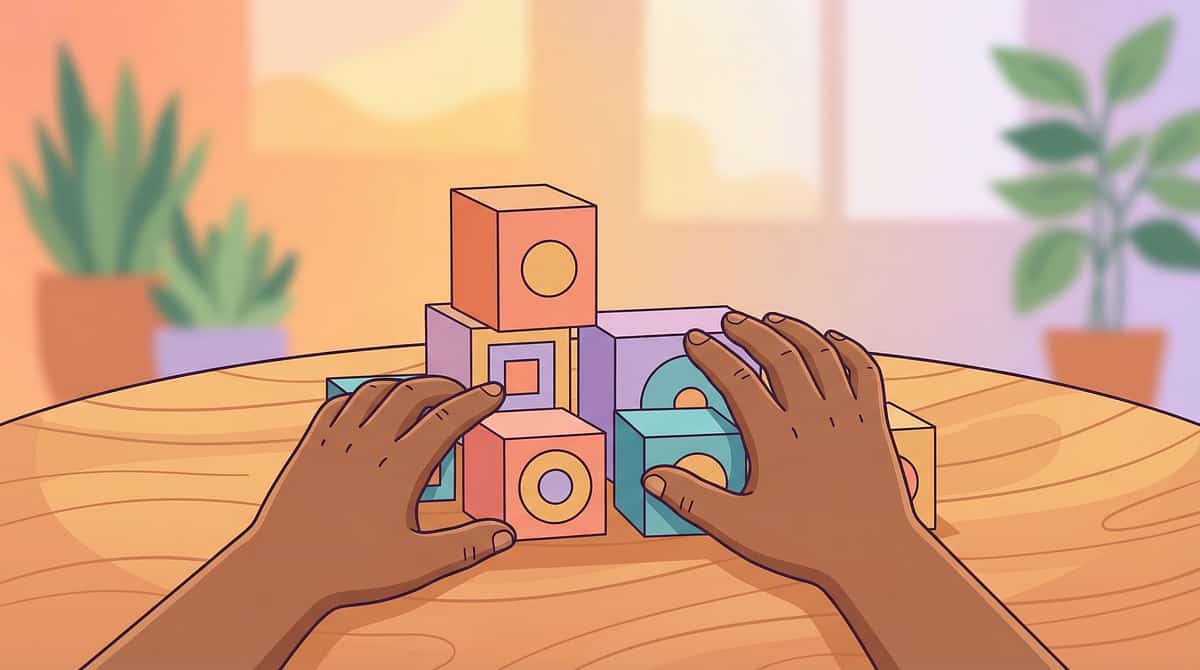
The other children are playing — she can see every detail from the outside looking in. But the door to the group stays closed. She doesn't know how to knock. Every failed attempt makes the next one scarier.
"She stands at the edge watching other kids play. Sometimes she tries to join but gets rejected. Now she doesn't even try anymore."
What you are witnessing is not shyness. It is not stubbornness. It is not a character flaw. Your child is facing one of the most complex invisible skill sets in all of childhood development — group play entry. A multi-component social skill that neurotypical children absorb unconsciously, but that children with autism, ADHD, social anxiety, or developmental differences simply cannot intuit without explicit teaching.
This page exists because of exactly that moment — the one where your heart breaks watching your child on the outside looking in. We are going to change that.
Technique C-304
Domain: Social Development — Peer Interaction & Play Entry
🏥 Pinnacle Blooms Consortium Validated
🎯 Ages 3–10 years
🏠 Home-Executable
📋 C-Series | SOC-PEI
📞 FREE Helpline: 9100 181 181
THE NUMBERS
You Are Among Millions of Families Navigating This
Research by Corsaro (1981) and Putallaz & Gottman (1981) — the foundational studies on peer play entry — established that group entry is among the most socially complex moments in childhood. Even neurotypical children fail entry attempts approximately 50% of the time. For children with autism or related differences, the failure rate is significantly higher — and without explicit teaching, it compounds into avoidance. Across India, the Pinnacle Blooms Network has identified group play entry difficulties as one of the top 10 presenting social challenges across 70+ therapy centers.
1 in 36
ASD Globally
Children diagnosed with autism spectrum disorder (CDC, 2023)
80%
Social Difficulty
Children with ASD who experience social participation difficulties
67%
Peer Rejection
Children with autism experiencing peer rejection at school age
20M+
Sessions Delivered
1:1 therapy sessions delivered by Pinnacle across social domains
Pinnacle Network Outcome: 97%+ measured improvement across Social Participation Index | Pinnacle Blooms Network®
THE NEUROSCIENCE
Group Play Entry Is a Multi-System Brain Event
What's Firing in Your Child's Brain
When your child watches a group play but cannot enter, multiple brain systems are firing simultaneously — and not in coordination. For children with autism, ADHD, or sensory processing differences, one or more of these systems processes differently. The result is not unwillingness — it is a navigation system that needs explicit recalibration.
"This is a wiring difference — not a social failure. And it is teachable." — Pinnacle Blooms Consortium, Pediatric Social Development Team
📞 For expert guidance: 9100 181 181 (FREE, 16 languages, 24×7)
Prefrontal Cortex
Reading social cues, planning the approach sequence
Amygdala
Threat detection — broadcasting fear of rejection
Mirror Neuron System
Perspective-taking and understanding others' play roles
Social Brain Network
Theory of Mind and role identification in peer groups

DEVELOPMENTAL MAP
Your Child's Journey on the Developmental Timeline
Age 2–3
Parallel play — playing alongside, not yet with others
Age 3–4
Simple cooperative play begins — "Can I play?"
Age 4–5
Play theme identification, role assignment begins
Age 5–7
Complex entry strategies, social negotiation
Age 7–10
Flexible entry across peer groups and contexts
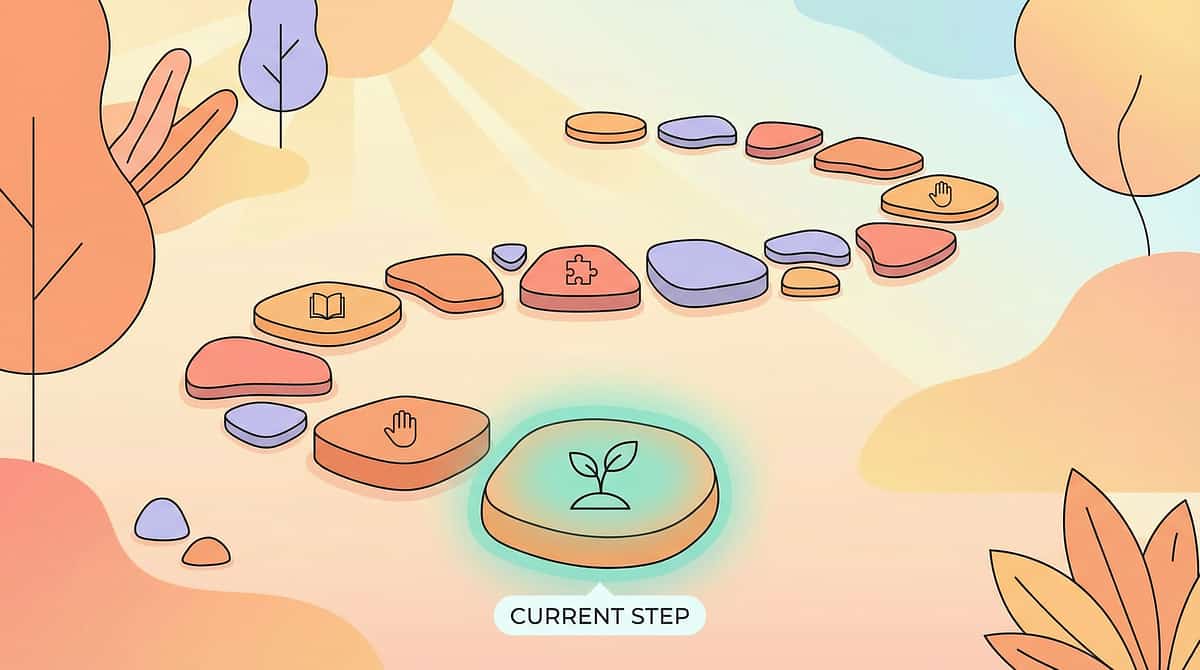
Your child is here. Here is where we're heading. Whether your child is 3 hovering at the sandbox or 9 circling the playground, the entry skills described on this page are teachable at every developmental stage. The intervention simply adjusts in complexity.
Co-Occurring Conditions
- Autism Spectrum Disorder (most common)
- ADHD — impulsivity drives disruptive entry
- Social Anxiety Disorder — fear of rejection leads to avoidance
- Developmental Language Disorder — lack of entry phrases
- Sensory Processing Differences — overwhelm in play environments
EVIDENCE BASE
Clinically Validated. Home-Applicable. Parent-Proven.
🛡️ Evidence Grade
Level II
Multiple Controlled Studies + Clinical Consensus
████████░░
80% Confidence
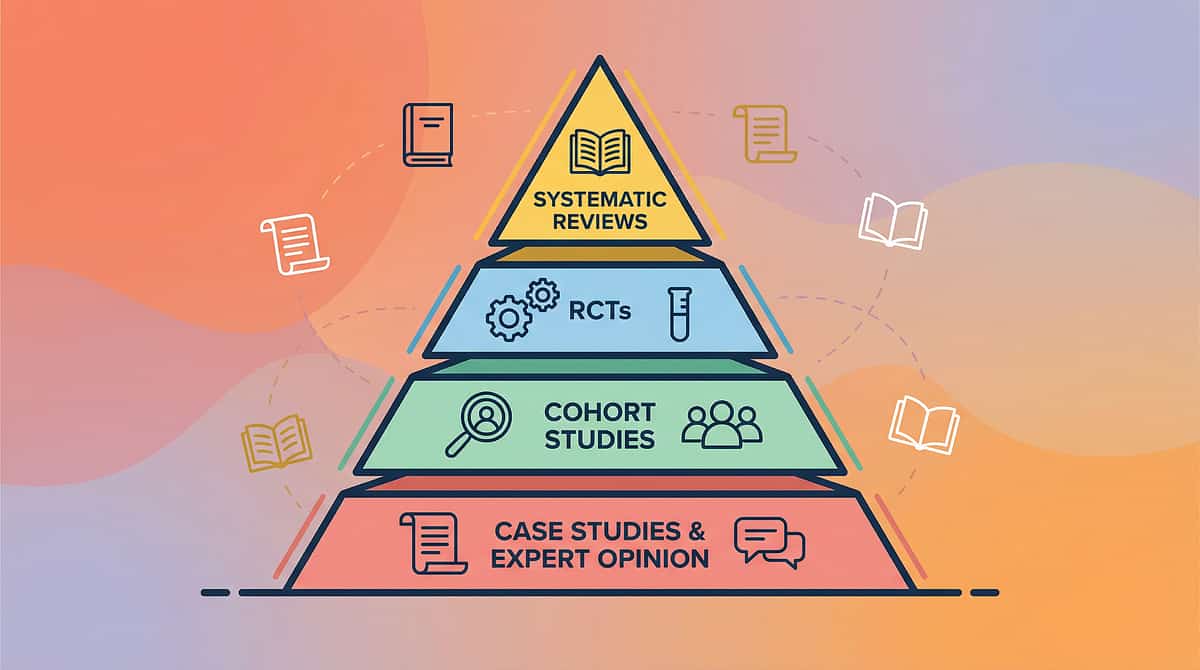
Strong evidence base with clinical consensus across meta-analyses and EBP classifications.
Key Studies
Corsaro (1981) Child Dev. | Identified 6 successful vs. failed entry strategies — foundational taxonomy | |
Putallaz & Gottman (1981) | Entry strategy determines peer acceptance — timing and theme-relevance are critical | |
Bellini & Akullian (2007) | Meta-analysis: Video modeling effective for social skill acquisition in ASD | |
NCAEP EBPs (2020) | Social narratives and video modeling classified as EBPs for autism | |
PMC10955541 (2024) | Social skills interventions effectively promote peer participation across 24 studies |
"Explicit entry skill instruction, structured practice, and supported real-world attempts can transform exclusion into inclusion." — SPD Foundation Clinical Guidance
📞 FREE National Autism Helpline: 9100 181 181

ACT II — THE KNOWLEDGE TRANSFER
Group Play Entry Skills Training — Technique C-304
Parent-Friendly Name
"Teaching the Invisible Rules of Joining"
A structured, multi-component social skill intervention that explicitly teaches children how to successfully enter ongoing peer play. Unlike general social skills training, this technique targets the specific sequential steps of play entry: observational reading, theme identification, role availability scanning, timing recognition, verbal requesting, gradual blending, and rejection recovery.
Session Parameters
Age Range
3–10 years
Duration
15–20 min (home)
Frequency
3–5× per week
Program
8–12 weeks for measurable progress
WHO USES THIS
This Technique Crosses Every Therapy Boundary
"The brain doesn't organize by therapy type. Neither should this intervention."
Speech-Language Pathologist (SLP) — Primary Lead
Targets pragmatic language: entry phrase development, conversational scripts, reading social cues in peer communication, verbal negotiation of roles.
Occupational Therapist (OT)
Addresses sensory processing factors, motor planning for blend-in approach, and environmental modifications for successful entry contexts.
BCBA / ABA Therapist
Structures skill acquisition through discrete trial training, video modeling, role-play rehearsal, and reinforcement of successful attempts.
Special Education Specialist
Generalizes entry skills across school environments, coordinates peer buddy programs, supports IEP social goals related to peer interaction.
Parent / Caregiver (YOU)
Coaches entry attempts in real-world settings, provides prompting during playground visits, celebrates all attempts, manages post-rejection emotional support.
PRECISION TARGETS
What This Technique Targets — Not Random Activities
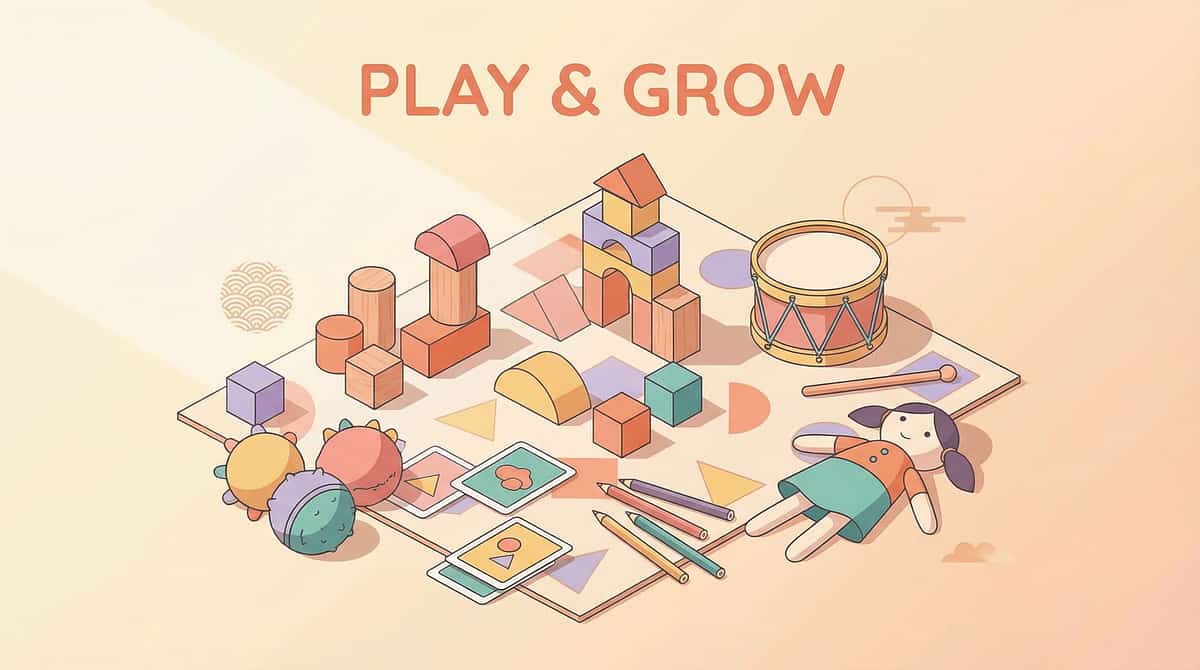
🎯 Primary Target
Successful spontaneous group play entry — child independently joins peer play without adult prompting.
🔵 Secondary Targets
- Play theme reading and observation skills
- Social role flexibility — taking available rather than desired roles
- Timing awareness in social situations
- Verbal entry requesting ("Can I play?" / "Can I be the customer?")
- Rejection resilience — recovery from "no" without shutdown
🟢 Tertiary Targets (Long-term)
- Theory of Mind development and perspective-taking
- Friendship formation capability
- Reduced social anxiety around peer settings
- Reduced behavioral meltdowns triggered by exclusion
Observable Behavior Indicators
Child approaches peer group within 2 minutes of opportunity
Child reads the ongoing play theme before attempting entry
Child uses an appropriate entry phrase
Child accepts an available role even if not preferred
Child recovers from rejection within 2 minutes
9 MATERIALS
The 9 Materials That Open the Door to Group Play
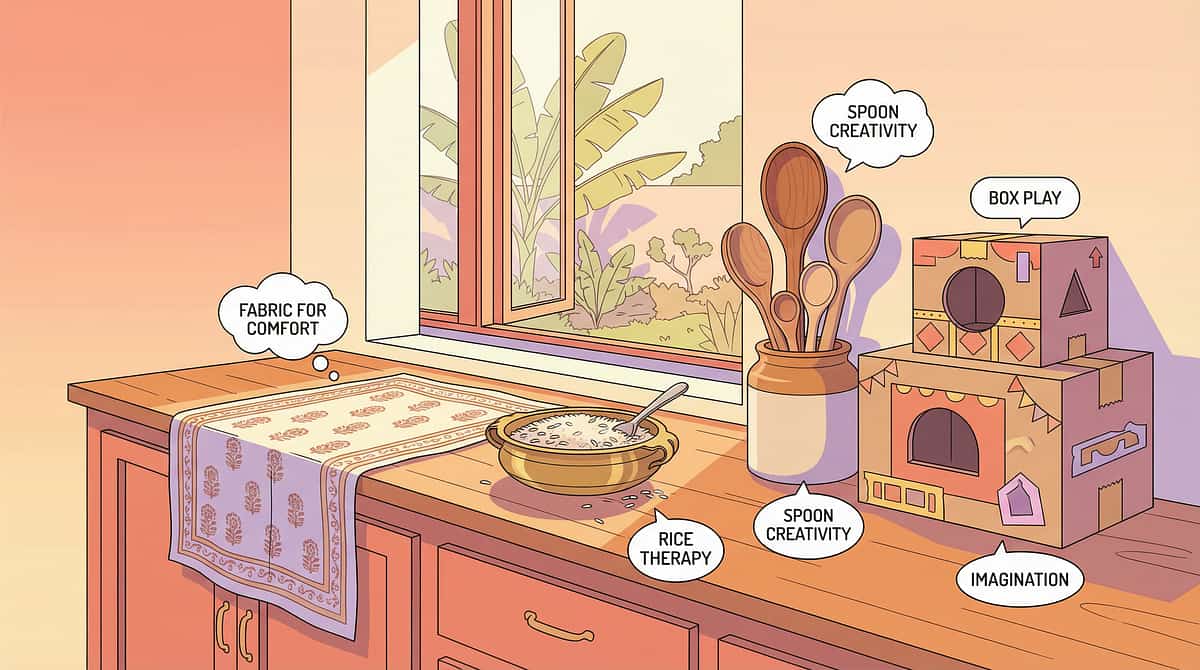
Every material below has a commercial option and a zero-cost DIY alternative. No family is excluded. These materials work together as a complete system — each one targets a specific step in the group play entry sequence.
1 — Play Theme ID Cards
Learn to read the game before joining
2 — Role Availability Maps
Find the open spot in their story
3 — Entry Phrase Scripts
The exact words that open doors
4 — Contribution Props
Arrive with something to offer
5 — Timing Cue Cards
Red, yellow, green — know when to move
6 — Blend-In Guides
Ease in, don't crash in
7 — Rejection Recovery Cards
Turn "no" into information, not devastation
8 — Structured Entry Games
Safe low-stakes practice before real entry
9 — Video Modeling Sequences
See the invisible process made visible
📞9100 181 181 FREE — Speak to a therapist about which materials to prioritize for your child.
Material 1
Play Theme Identification Cards
What It Is
Visual cards depicting common play scenarios — house play, restaurant, construction, superheroes — with identification cues that teach children to decode what game is being played before attempting to enter. You cannot join a game you don't understand.
Why It Helps
Teaches children to read ongoing play before attempting entry. Correct theme identification is the foundation of all other entry skills — it determines which role to request and which entry phrase to use.
Canon: Social Skills Cards / Scenarios
₹200–500
Pinnacle Recommends ✓
DIY Option (₹0)
Take photographs of common play scenarios from daily life. Create laminated identification cards with the question: "What are they playing? What gave you the clue?" Practice during TV shows or at the playground as an observer game.
⚠️ Safety Note
Observation practice should lead to action — monitor that it doesn't become avoidance. The goal is always eventual entry, not permanent observation.
Material 2
Role Availability Maps
What It Is
Visual maps of play scenarios showing which roles are taken (marked X) and which are open (dotted circle). These maps teach children to scan for available roles rather than demanding already-taken ones — finding your spot in their story.
Why It Helps
One of the most common causes of peer rejection is a child demanding the role someone else already holds. Role Maps redirect that energy toward what's genuinely available — transforming potential conflict into successful entry.
Canon: Social Skills Cards / Role-Play Props
₹200–450
DIY Option (₹0)
Draw common play setups (restaurant, hospital, school) with labeled role circles. Mark some filled, some open. Practice: "If they're playing school and someone is the teacher, what roles are still open?"
⚠️ Safety Note
Balance role-fitting with role-proposing — children can also invent creative new roles that add to the play narrative rather than only claiming existing ones.
Material 3
Entry Phrase Scripts
What It Is
Laminated cards with proven entry phrases mapped to specific play scenarios. When children don't know what to say, scripts give them language that works — removing the cognitive load of word-finding under social pressure.
Key Phrases
"Can I play?"
"Can I be the customer?"
"Do you need a helper?"
"May I join your game?"
"Can I be the patient?"
Canon: Conversation Visual Supports
₹150–400
DIY Option (₹0)
Create 5–7 phrase cards with matching play scenario illustrations. Role-play each phrase before real situations. Laminate with packing tape and carry in the school bag.
⚠️ Safety Note
Scripts are one component — timing and theme-matching matter too. A perfectly worded phrase delivered at the wrong moment (red light) will still likely be rejected.
Material 4
Contribution Props and Materials
What It Is
A portable "contribution bag" of extras — additional building blocks, pretend food, character accessories, art supplies. This material changes the entry dynamic from intrusion to contribution. Arriving with something to offer makes entry dramatically easier because the child adds value to the group rather than simply asking to take from it.
Entry Line
"I brought customers for your restaurant!"
Canon: Role-Play / Pretend Play Props
₹300–800
DIY Option (₹0)
Curate a contribution bag at home: extra LEGO pieces, small figurines, pretend food items, drawing paper. Rotate monthly. Practice: "What could you bring that would help their play?"
⚠️ Safety Note
Teach genuine contribution mindset, not material manipulation. The prop is a bridge to connection — not a transaction. Children should understand they are adding to the story, not buying their way in.
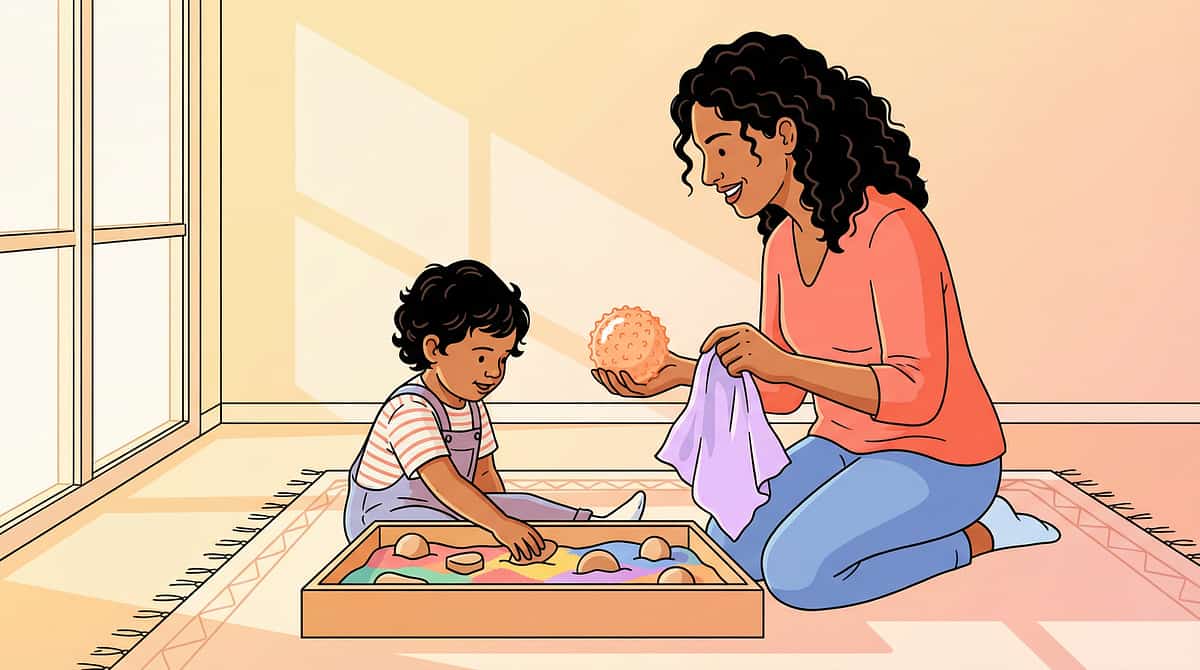
Material 5
Timing Cue Cards — The Traffic Light System
Teaches children to recognize when the door opens. Good timing prevents many rejections before they happen. Research by Putallaz & Gottman (1981) found that timing was the single strongest predictor of peer acceptance in entry attempts.
🔴 RED — Don't Approach
- Intense focus in progress
- Conflict or negotiation happening
- Children in deep imaginative focus
🟡 YELLOW — Watch & Wait
- Activity is slowing down
- Some children looking around
- Transition between game stages
🟢 GREEN — Move NOW
- Natural pause in action
- Children looking around or up
- New round beginning
DIY Option (₹0)
Create laminated traffic light cards. Practice in videos: pause and ask "Red, yellow, or green?" During playground observation: "Is this a green moment yet?"
⚠️ Safety Note
Don't teach such cautious timing that the child never enters — balance patience with action. The traffic light teaches when to enter, not whether to enter at all.
Canon: Visual Rules / Expectations Cards
₹200–450
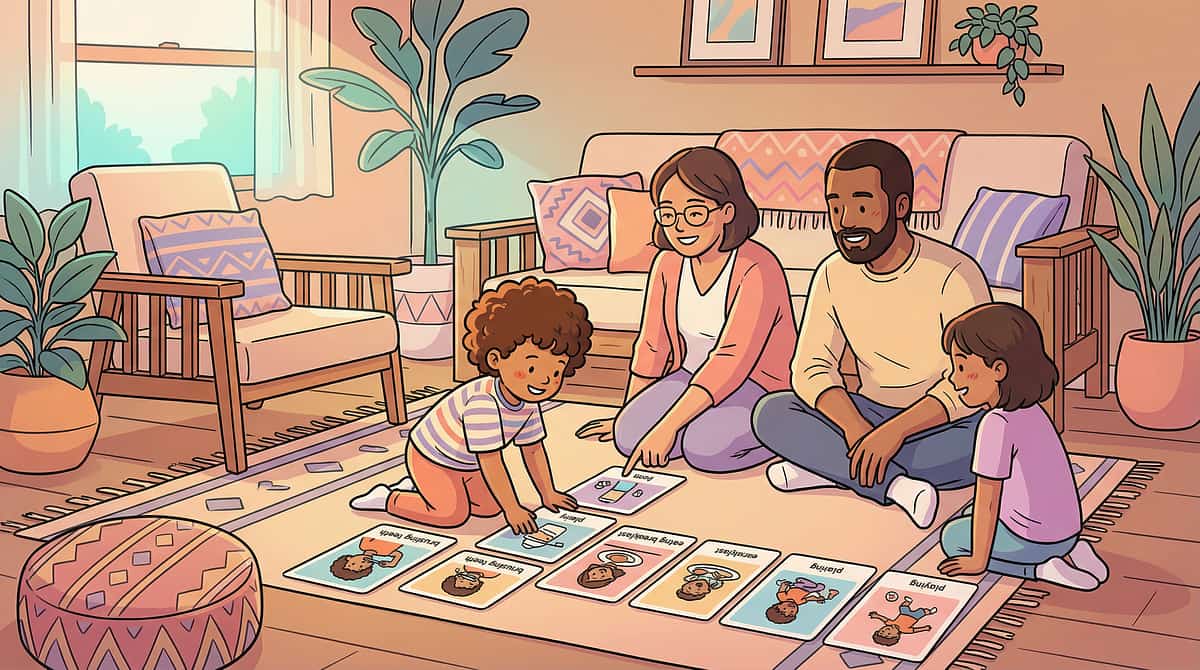
Material 6
Blend-In Strategy Guides
What It Is
Step-by-step visual sequence guides teaching gradual entry rather than sudden demands. Ease in, don't crash in. Gradual blending works because it matches the natural social rhythm of the group — making the newcomer feel like a natural addition rather than a disruption.
Canon: Sequencing Cards / Social Stories
₹200–500
⚠️ Safety Note
Ensure child practices the complete sequence including actual entry — not just hovering. The goal of the blend-in guide is to reach genuine participation, not extended proximity without joining.
The 4-Step Blend-In Sequence
Move Closer
Proximal positioning — 1–2 steps toward the group
Comment on Play
"Cool castle!" — showing understanding of their theme
Offer Help
"Do you need more blocks?" — demonstrating contribution mindset
Ask to Join
"Can I be the builder too?" — the verbal entry request
DIY Option (₹0)
Draw a 4-panel comic strip showing the blend-in sequence. Laminate with packing tape. Practice each step separately, then run the full sequence in role-play before real situations.
Material 7
Rejection Recovery Cards
What It Is
Visual coping cards showing what to do when entry fails, with branching recovery strategies. Research shows children who recover quickly from rejection attempt entry again 3× more than those who don't. These cards transform rejection from devastation into data.
Canon: Emotion Cards / Feelings Faces
₹150–400
Recovery Pathways
Try another group nearby
Wait 5 minutes and retry the same group
Ask: "What could I do to play next time?"
Self-talk: "Rejection isn't the end — it's information"
⚠️ Safety Note
Acknowledge the hurt feelings first — then move to the recovery strategy. Never bypass the emotion. Emotional validation before coping strategy is the non-negotiable order.

Material 8
Structured Entry Games
What It Is
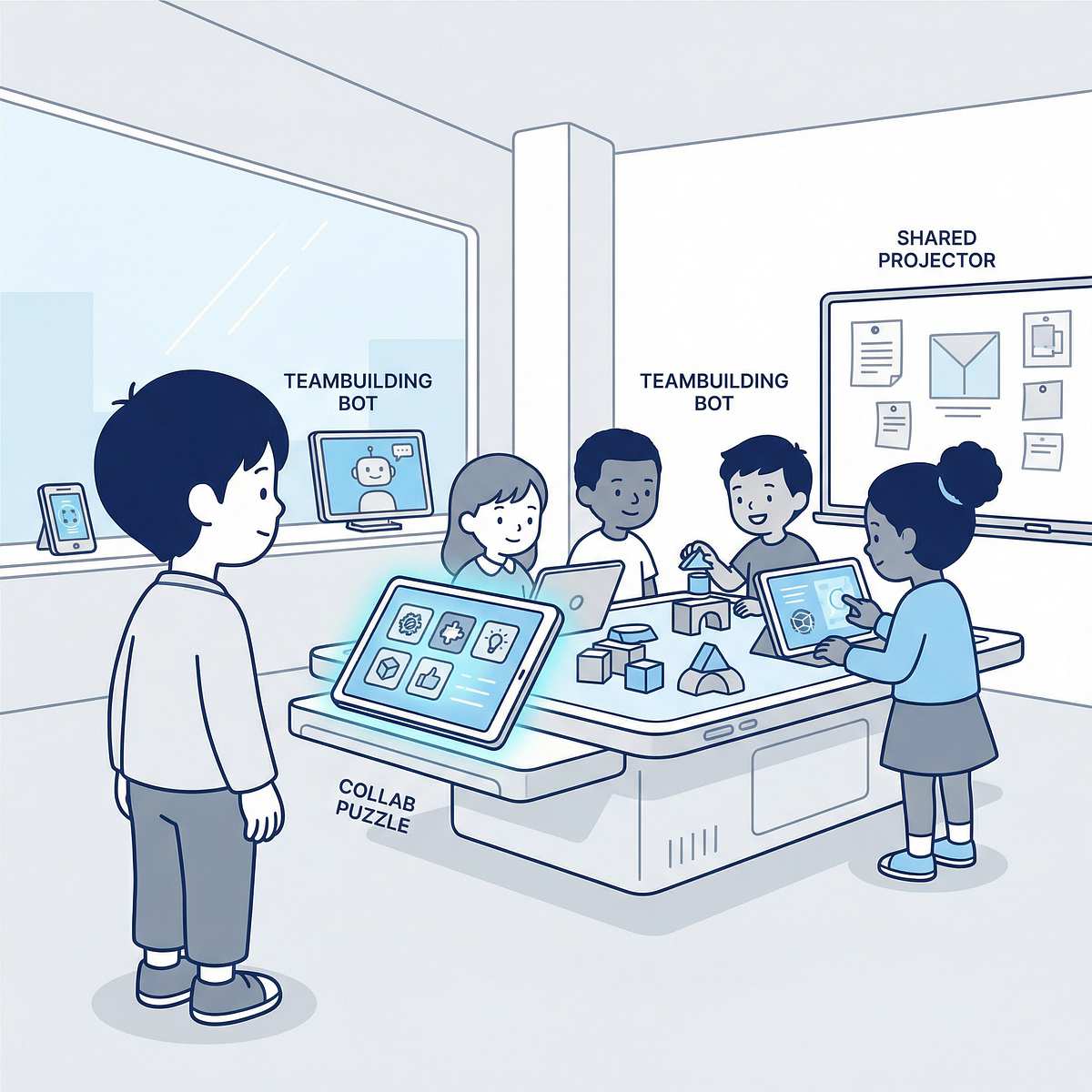
Board games and structured play activities with a built-in "new player joins" mechanic, creating safe, low-stakes entry practice. When practice is the game, pressure drops and skill builds through repetition. One group plays; one child practices the full entry sequence. Rotate roles every 3 rounds.
Game Mechanic
Celebrate every attempt, not just accepted entries. The goal is building the behavioral habit of approaching — acceptance rates improve as skills consolidate.
Canon: Turn-Taking / Cooperative Games
₹400–900
Pinnacle Recommends ✓
Recommended Product
SHINETOY 8 Dice Shut The Box Game (₹428) — View on Amazon.in
DIY Option (₹0)
Modify any existing board game to include a "new player joining round." Create joining practice with siblings — one group plays with blocks, child practices entry steps. Switch roles every 5 minutes.
⚠️ Safety Note
Structured practice is preparation, not a substitute for real-world entry. Skills must transfer to natural contexts. Plan for real-world generalization from Week 5 onward.

Material 9
Video Modeling Entry Sequences
What It Is
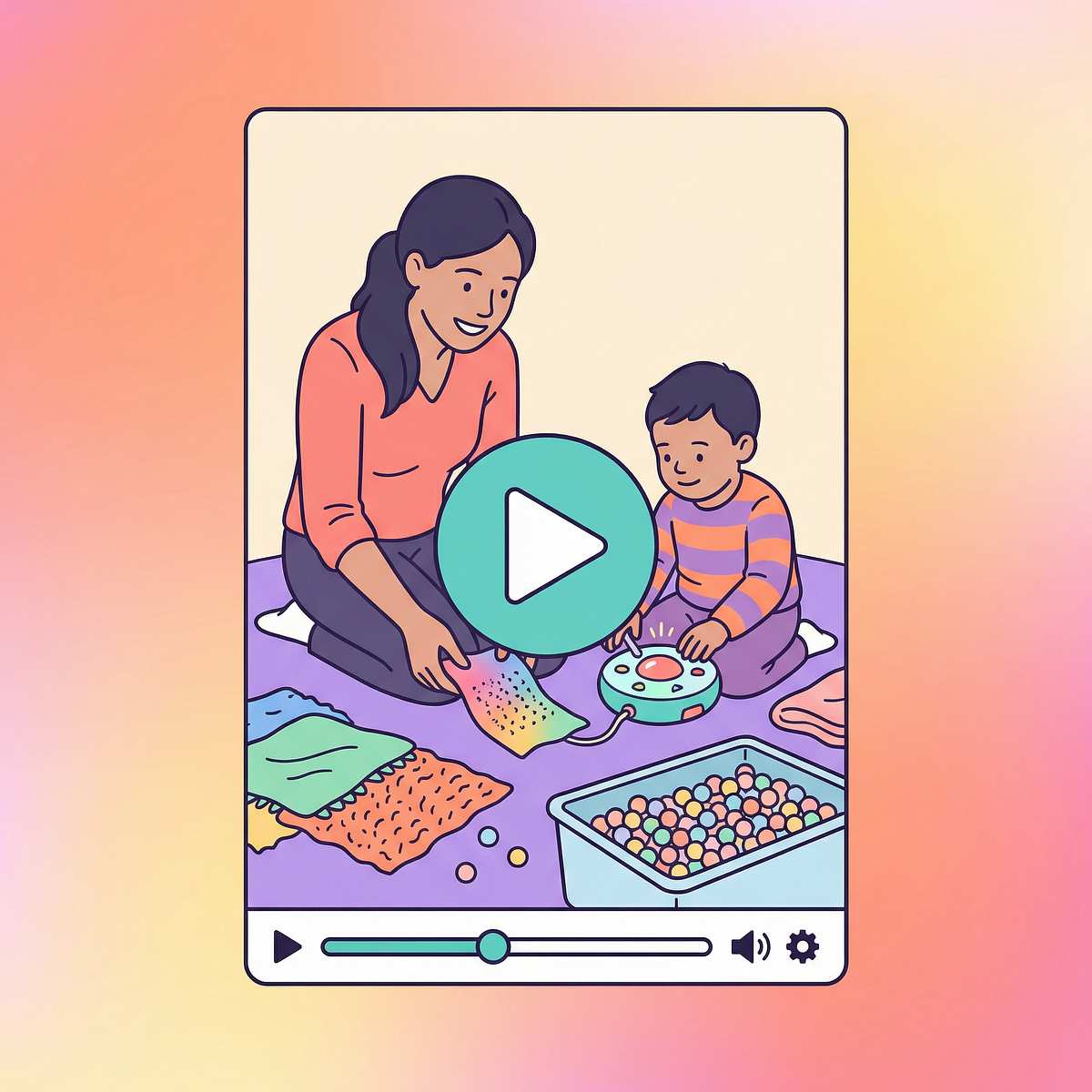
Videos showing peers successfully navigating the complete group play entry sequence — observation → timing → asking → blending. Children see the invisible process made visible before attempting it themselves. Video modeling is classified as an evidence-based practice for autism by NCAEP 2020.
Research Base
Bellini & Akullian (2007) Meta-analysis: Video modeling effective across multiple social targets in ASD. NCAEP 2020 Evidence-Based Practice classification for social skill acquisition.
Canon: Video Modeling
₹0–600
DIY Option (₹0)
Record successful entry attempts with siblings or therapy peers. Watch together, pause to highlight: "See how she waited for the pause?" Use children's TV shows with joining scenes. Create a personal "success video library."
⚠️ Safety Note
Videos alone don't build skill — must pair with role-play practice. Ensure models are developmentally appropriate. Structured 10-minute therapeutic viewing differs from passive watching.

INVESTMENT SUMMARY
Materials Investment — Every Budget, Every Family
Every family can start today. All 9 materials can be created in one afternoon using paper, markers, a phone camera, and household play materials. No family is excluded from access to this technique.
Starter Kit
Entry Phrase Scripts + Play Theme Cards + Rejection Recovery Cards + Timing Cue Cards
₹500–1,300
Core Kit
Starter Kit + Blend-In Guides + Role Maps + Structured Entry Games
₹1,500–2,800
Comprehensive Kit
All 9 Materials including Video Modeling + Contribution Props
₹2,000–5,000
Zero-Cost Kit
All 9 DIY alternatives — complete kit using household materials only
₹0
📞9100 181 181 FREE — Call for a free consultation on setting up your home kit and prioritizing materials for your child's specific profile.
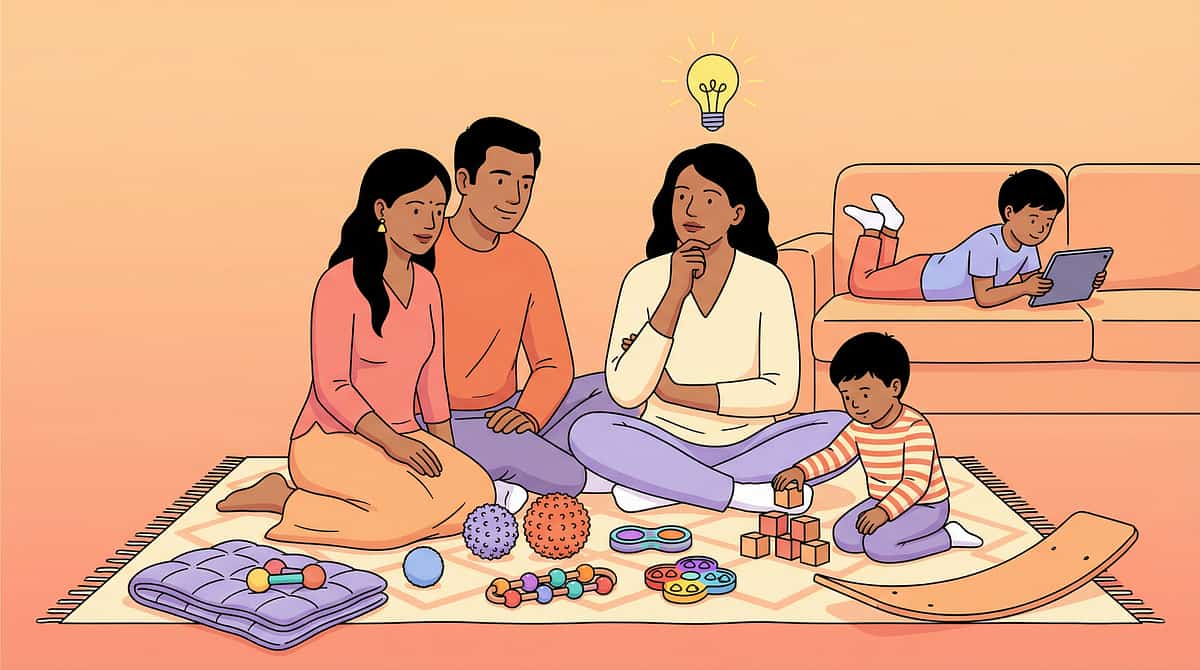
⚠️ SAFETY FIRST
Read This Before Your First Session
🔴 CONTRAINDICATIONS — Do NOT Proceed Without Professional Consultation If:
- Child has active aggressive responses to peer rejection (hitting, biting, destructive behavior)
- Child has severe social anxiety requiring pharmacological intervention
- Child is in acute emotional distress from recent traumatic rejection
- Child is below age 3 — modify to parallel play facilitation instead
- Child has co-occurring conditions not yet formally assessed
🟡 MODIFY — Adapt the Session If:
- Child is tired, hungry, or recently dysregulated — use simplified 1-step approach only
- Child has had a difficult day — use video modeling only (observer role), no live practice
- Peer environment has history of bullying — practice only in controlled/supportive peer groups first
🟢 PROCEED — When:
- Child is fed, rested, in regulated baseline state
- Practice environment is safe and supervised
- You have a clear support plan for rejection recovery before beginning
🚨 ABSOLUTE RED LINES — Stop Immediately If:
- Child becomes severely distressed (inconsolable crying more than 5 min)
- Child exhibits self-injurious behavior in response to rejection
- Child dissociates or shows signs of emotional shutdown
- Peer group becomes hostile or exclusionary in a targeted way
📞 If in doubt, call first: 9100 181 181 FREE
SET UP YOUR SPACE
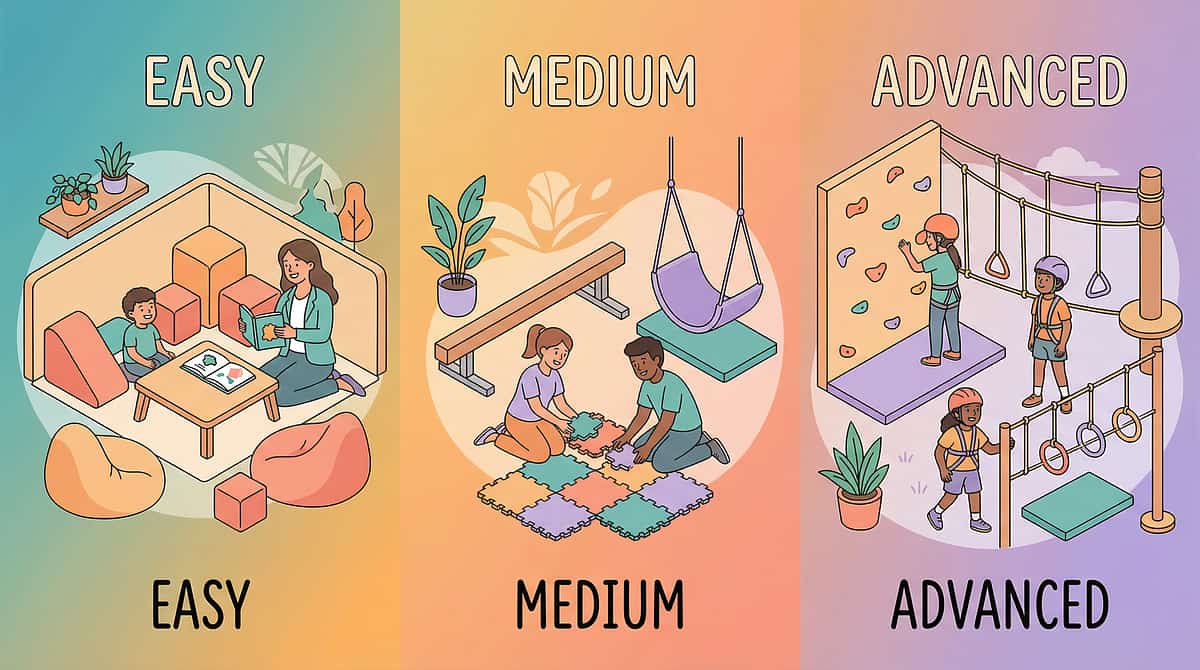
The Right Environment Makes Entry Practice Succeed
Positioning Rules
Child Starts 2 Meters Away
Close enough to observe, far enough not to intrude
Parent Positions Behind & to the Side
Visible for reassurance — not in the play zone
Entry Phrase Card Ready
In child's pocket or on wristband — accessible
Contribution Prop Bag In Hands
In child's hands or backpack, ready to deploy
Environmental Checklist
- ✅ Play area familiar and comfortable to child
- ✅ No competing distractions (TV off, phone away)
- ✅ Soft lighting — avoid fluorescent/harsh lights
- ✅ 2–3 peers maximum for initial practice (not large groups)
- ✅ Adult supervision visible but not intrusive
- ✅ Entry phrase card prepared and reviewed
- ✅ Post-session plan prepared for both outcomes
For Initial Sessions: Use siblings or cousins as the "group" before attempting with unfamiliar peers. Controlled practice first, then gradual real-world transfer.

ACT III — THE EXECUTION
60-Second Pre-Session Readiness Assessment
The best session is one that starts right. Before every practice session, run this 60-second readiness check. A child who is dysregulated, hungry, or anxious cannot learn new social skills — the nervous system is in survival mode, not learning mode.
Readiness Checklist
- ☐ Child is fed (not hungry or thirsty)
- ☐ Child is rested (not overtired)
- ☐ No meltdown or dysregulation in last 2 hours
- ☐ Child is not showing signs of sensory overload
- ☐ Child is willing (not actively avoiding)
- ☐ Environment is ready per Card 12 setup
- ☐ Entry phrase card is prepared and reviewed
Decision Gate
All 7 ✅ → GO
Begin full session — live entry practice
5–6 ✅ → MODIFY
Video modeling only — no live entry practice
Under 5 ✅ → POSTPONE
10-min calming activity. Session tomorrow.
📞9100 181 181 FREE

Step 1 of 6
Observe and Identify — Reading the Play Before Entering
The Action
Begin every session with a 2-minute observation phase before any entry attempt. This is not stalling — this is the foundational skill. Research shows observation before entry is the #1 differentiator between successful and failed peer entry attempts (Corsaro, 1981).
Script for Parent
"Before we try to join, let's watch. What are they playing? Can you find the clue?"
What Child Does
Stands at observation distance (2m)
Watches for 60–90 seconds
Identifies the play theme: "They're playing restaurant"
Scans for available roles: "I could be the customer"
Selects entry phrase: "I'll say 'Can I be the customer?'"
Identifies timing: "Wait for the green light moment"
Parent Coaching Language
- ✅ "What do you think they're playing?"
- ✅ "Which roles can you see? Which ones are open?"
- ❌ NOT: "Go join them" (no directive without preparation)

Step 2 of 6
Timing — Wait for the Green Light Moment
The door opens — recognize it. Putallaz & Gottman (1981) found that timing was the single strongest predictor of peer acceptance in entry attempts. Most green lights appear within 3–5 minutes of observation.
🔴 RED — Stay Back
- Intense action in progress
- Conflict or negotiation happening
- Children in deep imaginative focus
🟡 YELLOW — Watch & Wait
- Activity slowing down
- Some children looking around
- Transition between game stages
🟢 GREEN — Move NOW
- Natural pause in action
- Children looking around or up
- Game theme just established
- New round beginning
Parent Coaching
"Is this a red, yellow, or green moment? Let's wait for green."
If the Wait Is Hard
Give child a small observation task: "Count how many times the chef says something." Engagement keeps attention without forcing entry at the wrong moment.

Step 3 of 6
Ask — Use the Entry Phrase
When the green light appears, child moves forward (contribution prop in hand if using Material 4) and uses the pre-selected entry phrase from their script card. Success = attempt, not acceptance. Every attempt is a win, regardless of outcome.
Type A — Direct Ask
Approaches → makes eye contact → says "Can I play?" → waits for response
Type B — Role Request
Approaches → says "Can I be the [open role]?" → waits
Type C — Contribution Entry
Approaches with prop → says "I brought [contribution] for your [play theme]" → offers prop
Type D — Blend-In Comment
Moves closer → positive comment about play → follows with "Can I help?"
Body Posture Guide
- 📍 Stand beside (not in front of) the group
- 👁️ Make soft eye contact — not staring
- 🤲 Open body language — no crossed arms
- 📢 Normal speaking volume — not whisper, not loud
Parent Role During Entry
Silent support only. Do not speak. Prompt with agreed visual signal only (e.g., tap shoulder = "use your card"). Your quiet confidence transfers to your child.
📞9100 181 181
Step 4 of 6
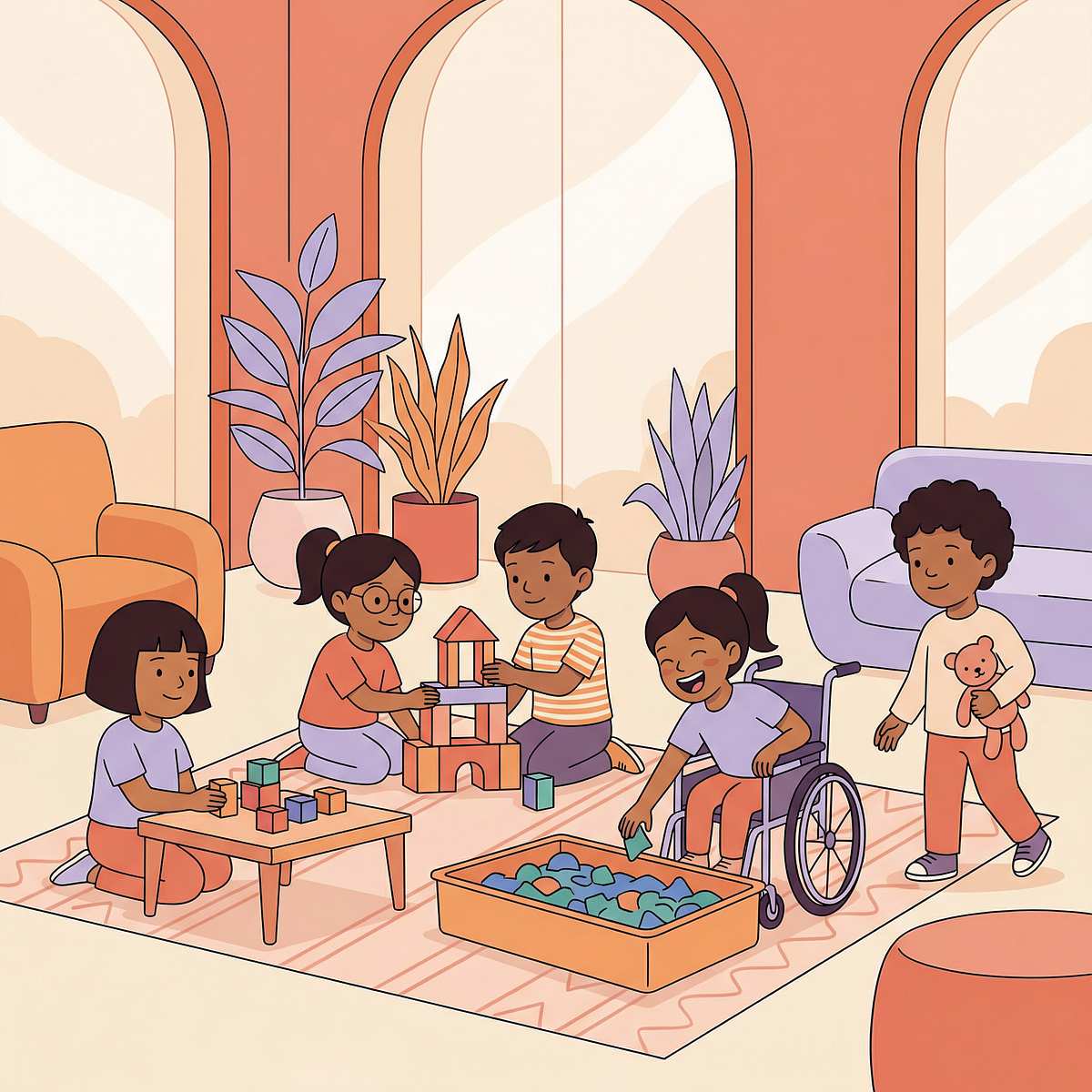
Blend — Ease In, Don't Crash In
If Accepted — What to Do Next
Take the Available Role
Not the preferred role — what's genuinely open
Mirror the Energy Level
Match the group's pace and volume
Contribute to the Narrative
"Should I bring more food to the restaurant?"
Follow First, Lead Later
After 3–5 minutes of successful participation
Common Errors to Avoid
- ❌ Immediately trying to redirect the play theme
- ❌ Demanding a better role than what's available
- ❌ Speaking too loudly or too much upon entry
- ❌ Breaking the play scenario's internal rules
For Each Practice Session: Target 2–4 minutes of sustained participation after successful entry. Don't extend beyond child's comfortable window. Corsaro (1981) found that children who mirrored group play style had 3× longer sustained participation.

Step 5 of 6
Reinforce — Celebrate the Attempt Immediately
Reinforcement must be delivered within 3 seconds of the desired behavior. Timing matters more than magnitude. Celebrate the attempt, not just the success — this is the ABA reinforcement principle that drives skill consolidation.
Child Observed Play 30+ Seconds
"Brilliant — you read the game first!"
Child Waited for Green Light
"Perfect timing — you knew when to move!"
Child Used Entry Phrase
"You asked! That took courage. I'm so proud."
Child Was Accepted
"You did it! You're part of the play!"
Child Was Rejected AND Recovered
"Look at you — you tried again. That's the skill!"
Reinforcement Menu
- Verbal praise (always primary — immediate and specific)
- Special sticker on progress chart
- The Rosette Imprint Reward Jar — ₹589 | View on Amazon.in
- 1800+ Reward Stickers — ₹364 | View on Amazon.in
- 5 extra minutes of preferred activity
- Phone call to tell grandparent about the success
"Celebrate the attempt, not just the success."

Step 6 of 6
Cool-Down — Close Every Session Well
No session ends abruptly. Abrupt endings spike anxiety and make children reluctant to begin the next session. A predictable, gentle closing ritual signals safety and builds anticipation for next time.
The Transition Sequence
2-minute warning: "Two more minutes in play, then we'll finish for today"
1-minute warning: "One more minute"
Gentle close: "All done for today! You worked so hard."
Material put-away ritual: Child places entry phrase card back in "kit"
Transition activity: 3-minute child's preferred calming activity
If Child Resists Ending
- Use visual timer showing end (Visual Timer Canon category)
- Offer transition object (soft toy — Transition Objects ₹425 | Amazon.in)
- Pre-agreed "next session" promise: "We'll practice again on [day]"
Post-Session Emotional Check
If rejection occurred: brief empathy first — "It hurt when they said no. That's normal. You handled it." Then reinforcement for coping. Then cool-down. Never skip the empathy.
TROUBLESHOOTING
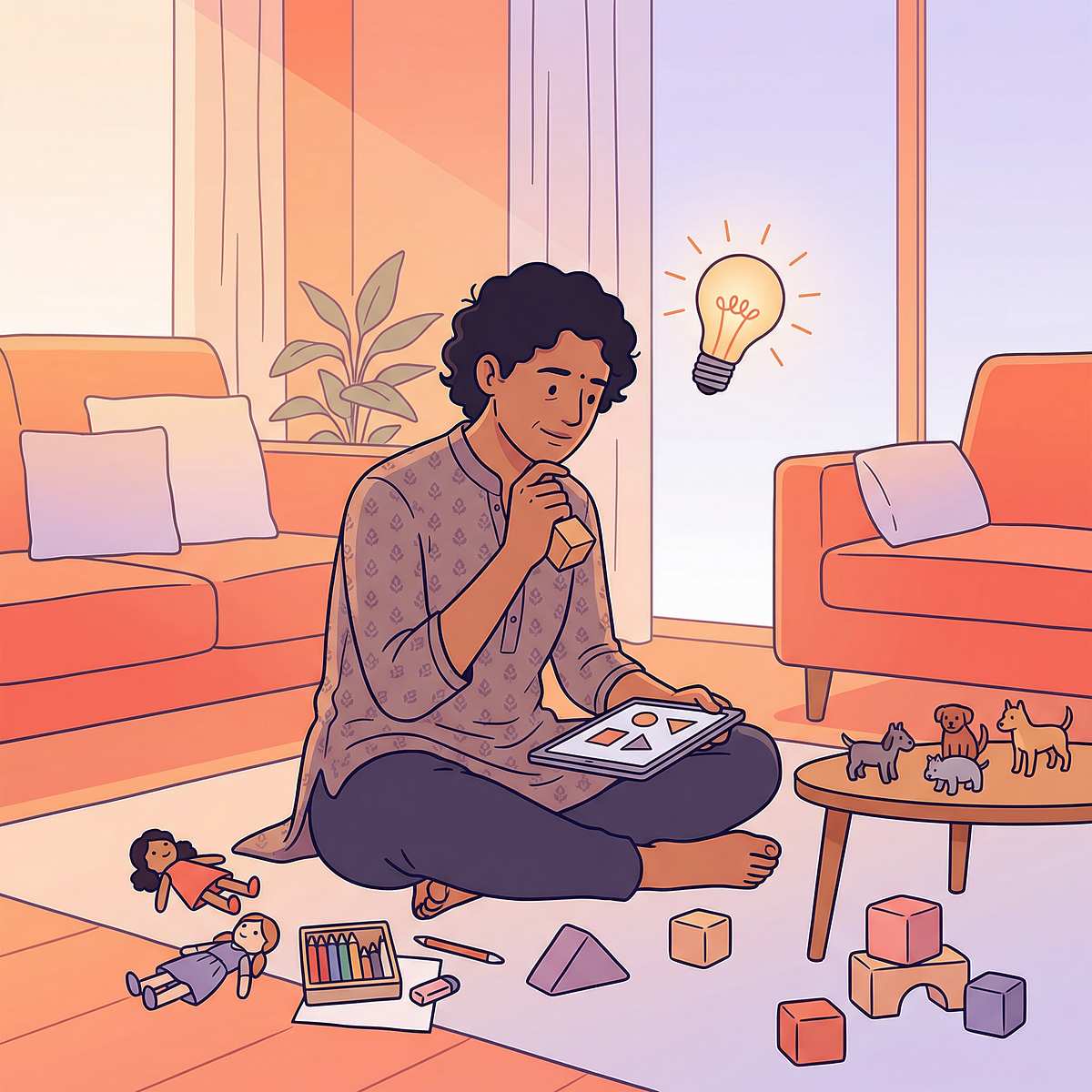
Most Sessions Aren't Perfect. Here's Your Fix.
"Session challenges are data, not failure."
❓ Child Refused to Approach During Green Light
Why: Anxiety override — fear of rejection stronger than desire to join.
Fix: Return to video modeling only. Rebuild confidence with 3 successful home role-plays before next live attempt.
Fix: Return to video modeling only. Rebuild confidence with 3 successful home role-plays before next live attempt.
❓ Child Approached but Froze — Couldn't Produce Entry Phrase
Why: Phrase not yet automatic under social pressure.
Fix: 5 additional role-play sessions. Add visual wristband with phrase written on it for next live attempt.
Fix: 5 additional role-play sessions. Add visual wristband with phrase written on it for next live attempt.
❓ Child Was Accepted but Redirected Play and Got Excluded
Why: Blend-in skills not yet consolidated — dominating rather than joining.
Fix: Practice Blend-In (Step 4) explicitly. Role-play: "Your job in the first 5 minutes is to be a follower, not a leader."
Fix: Practice Blend-In (Step 4) explicitly. Role-play: "Your job in the first 5 minutes is to be a follower, not a leader."
❓ Child Was Rejected and Had a Major Meltdown
Why: Rejection recovery skills not yet built; emotional regulation not yet stable.
Fix: Pause live entry practice. Work on Rejection Recovery Cards (Material 7) daily for 2 weeks before re-attempting.
Fix: Pause live entry practice. Work on Rejection Recovery Cards (Material 7) daily for 2 weeks before re-attempting.
❓ Peers Took the Contribution Prop and Still Excluded Child
Why: Contribution strategy requires pairing with verbal entry phrase.
Fix: Practice pairing: "I brought customers for your restaurant — can I be one?"
Fix: Practice pairing: "I brought customers for your restaurant — can I be one?"
❓ Peers Were Hostile — Excluded Repeatedly and Targeted
Why: This may be bullying, not entry skill deficit.
Fix: This requires adult environmental intervention. Contact school/therapy team immediately. 📞9100 181 181
Fix: This requires adult environmental intervention. Contact school/therapy team immediately. 📞9100 181 181

PERSONALIZATION
Every Child's Entry Journey Is Different
Difficulty Adaptations
← Easier (When Struggling) | → Harder (When Ready) | |
Practice with only 1 sibling as "peer" | Practice with 3–4 unfamiliar peers | |
Use full entry phrase card visible | Use memorized phrase (no card) | |
Parent gives explicit prompt | Parent gives only visual signal | |
Practice in highly familiar setting | Practice in new setting (playground, park) | |
1 entry attempt per session | 3+ entry attempts per session |
Profile-Based Variations
🔴 High Anxiety / Rejection History
Start with video modeling and role-play only for 2 weeks. Build "rejection immunity" through Rejection Recovery Cards before any live exposure.
🟠 Impulsive / ADHD Profile
Focus first on TIMING (Step 2). Mastery of green light identification is the prerequisite — impulsive children attempt entry at red/yellow moments.
🟡 ASD / Social Reading Difficulty
Prioritize Play Theme Cards (Material 1) and Role Maps (Material 2) before any live entry attempts. Child must correctly read 5/5 play scenarios first.
🟢 Social Anxiety (Understands Rules)
Prioritize entry phrase scripts and rejection recovery. Graduated exposure: sibling → trusted peer → 2 familiar peers → playground.
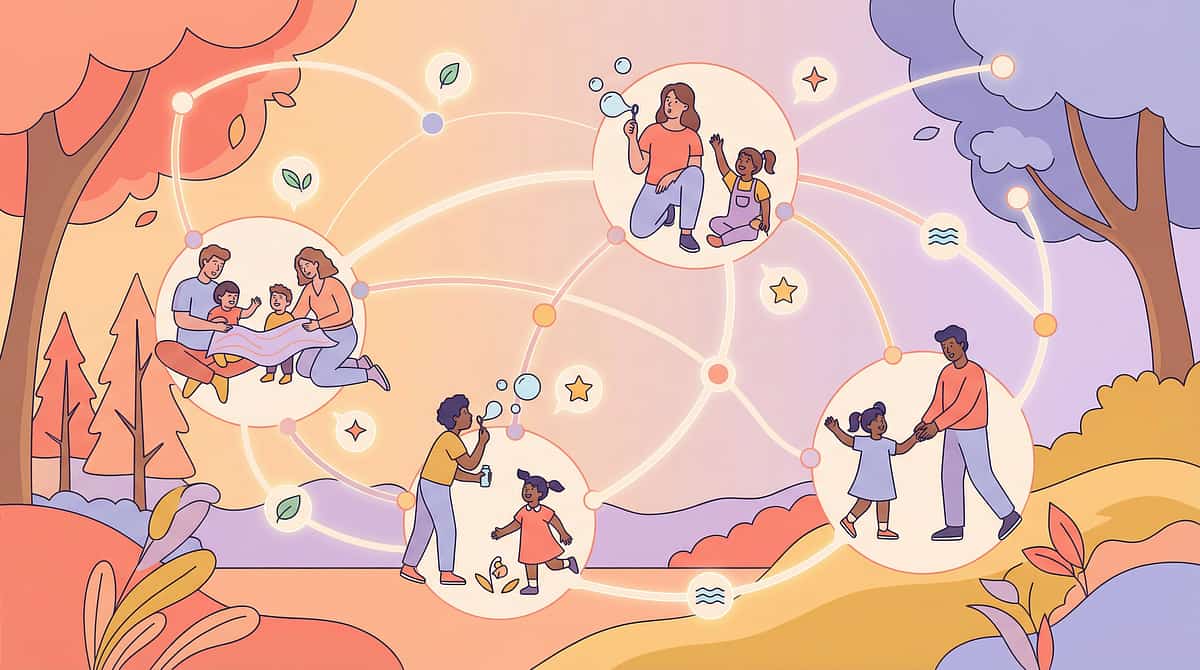
ACT IV — THE PROGRESS ARC
Weeks 1–2: Laying the Foundation
████░░░░░░ 15% Progress
What Real Progress Looks Like (Weeks 1–2)
- ✅ Child can correctly identify play theme in 3/5 video scenarios
- ✅ Child can name 2+ available roles in observed play
- ✅ Child uses entry phrase during role-play without prompting
- ✅ Child attempts at least 1 live observation (even without entry attempt)
- ✅ Child's anxiety around peer play settings is slightly reduced
What Is NOT Expected Yet
- ❌ Spontaneous successful entry into unfamiliar peer groups
- ❌ Rejection tolerance without parental support
- ❌ Mastery of blend-in skills
"If your child approaches the peer group and doesn't run away — that's real progress."
Parent Calibration
If your child can identify the play theme 3 seconds longer than they could last week — that is measurable neural progress. Do not look for the end result. Look for the millimeters.
What Parents Often Notice First
Increased willingness to watch peers play (reduced avoidance). This is the first measurable indicator. Honor it. 📞9100 181 181
PROGRESS WEEK 3–4
Weeks 3–4: The Neural Pathways Are Forming
████████░░ 40% Progress
Consolidation Indicators (Weeks 3–4)
- ✅ Child correctly uses a specific entry phrase matched to the play scenario
- ✅ Child waits for a green light moment before approaching
- ✅ Child makes at least 1 spontaneous live entry attempt per week
- ✅ Recovery from rejection within 5 minutes (down from 20+ minutes in Week 1)
- ✅ Child begins to use contribution strategy independently
The Neural Pathway Signal
Watch for the moment your child anticipates the session — reaches for their entry phrase card without prompting, reminds you they want to practice. This anticipatory behavior is the clinical sign that new neural pathways are consolidating.
When to Increase Difficulty
If child achieves 3/3 successful entry attempts (accepted by peers) in controlled practice → move to a slightly more challenging peer environment. Parent milestone: by Week 3–4, you are becoming a skilled therapeutic partner.
PROGRESS WEEK 5–8
Weeks 5–8: From Practice to Real Life
██████████████░░ 70% Progress
Generalization Indicators (Weeks 5–8)
- ✅ Child attempts spontaneous entry without prior coaching reminder
- ✅ Child flexibly adapts entry strategy based on play scenario
- ✅ Child maintains participation for 5+ minutes after successful entry
- ✅ Child attempts entry in 2+ different peer settings
- ✅ Rejection recovery time under 3 minutes without parental support
The Generalization Bridge
Skills learned in controlled practice may not automatically transfer to naturalistic settings. Bridge the practice to real life through:
- Playground visits immediately following home practice sessions
- Pre-entry briefing: 2-minute card review before peer opportunity
- Post-entry debrief: 5-minute review immediately after
Spontaneous Generalization Goal: Child approaches a group at a birthday party, waits for a pause, says "Can I be the customer?" and joins — without coaching. This happens in this window for many children.

FIND A CENTER
Expert Support Is Closer Than You Think
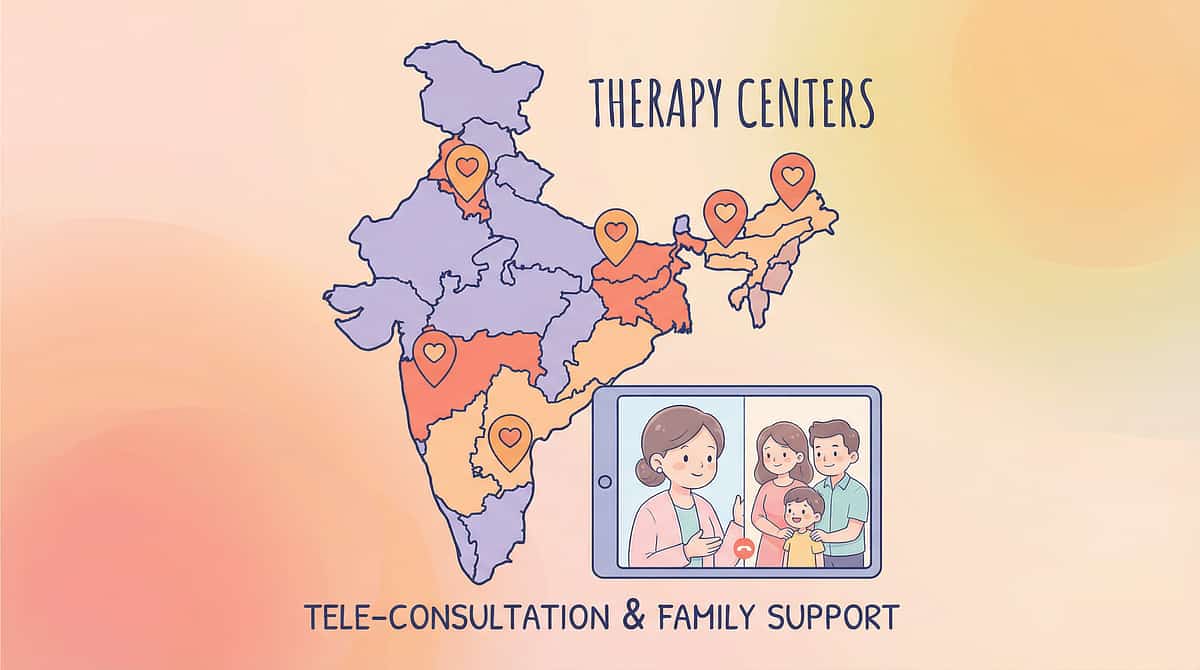
Pinnacle Blooms Network operates 70+ therapy centers across India, each staffed with coordinated OT, SLP, ABA, and NeuroDevelopmental specialists. For C-304 and peer interaction challenges, centers offer the full FusionModule™ multi-disciplinary approach.
AbilityScore® Assessment
Social Participation Index evaluation — establishes your child's baseline and tracks progress scientifically
Individual SLP Sessions
Pragmatic language and entry phrase development with a certified Speech-Language Pathologist
ABA Social Skills Groups
Structured entry practice with peers in supervised, supportive environments
OT Assessment
Sensory factors in peer participation — identifying and addressing what's blocking entry
How to Start
Call 📞9100 181 181 (FREE, 16 languages)
Request: "AbilityScore® Assessment for peer play entry"
Receive: Personalized Social Participation Index score + therapy pathway
Pinnacle Stats
- 70+ centers | 1,000+ clinical professionals | 20M+ sessions
- CIN: U74999TG2016PTC113063
- DPIIT: DIPP8651 | MSME: TS20F0009606
TECHNOLOGY
Your Practice Becomes Intelligence. Their Progress Becomes Science.
GPT-OS® Stack for C-304
Diagnostic Intelligence
Identifies peer entry difficulty pattern vs. anxiety vs. skill deficit
AbilityScore®
Social Participation Index — Peer Play Entry sub-index (0–1000 scale)
TherapeuticAI®
Sequences which of the 9 materials to introduce and when
EverydayTherapyProgramme™
Daily 5-minute entry practice micro-sessions for home
FusionModule™
Coordinates SLP (phrases) + OT (sensory) + ABA (reinforcement) into one integrated plan
Privacy & Mission
"This is not software. This is therapeutic infrastructure."
Your child's data is protected under ISO/IEC 27001. Individual data is never shared. Aggregate learning benefits all families across our global network.
WATCH THE REEL
Watch C-304: 9 Materials That Help Joining Group Play
Play & Social Development Solutions Series — Episode 304 | Duration: 75–85 seconds | Portrait 9:16
🎬Video Embed Placeholder — Pinnacle Reel C-304
Title: "9 Materials That Help Joining Group Play"
Hook: "She hovers at the edge. Watching. Wanting." → Materials 1–9 rapid showcase → Real-world entry skill examples → GPT-OS® closure + Helpline CTA
Title: "9 Materials That Help Joining Group Play"
Hook: "She hovers at the edge. Watching. Wanting." → Materials 1–9 rapid showcase → Real-world entry skill examples → GPT-OS® closure + Helpline CTA
This Reel Covers
- 🎬 Hook: The emotional recognition moment every parent knows
- 📋 Materials 1–9 rapid showcase with therapist voiceover
- 🌟 Real-world examples of entry skill building in action
- 📞 GPT-OS® closure + Helpline CTA
Share This Reel: [WhatsApp] [Instagram] [Facebook] [Copy Link]
Related Reels in the Series
- C-302: 9 Materials for Child Who Plays Alone →
- C-303: 9 Materials for No Interest in Peers →
- C-305: 9 Materials for No Imaginative Play →
NCAEP 2020 classifies video modeling as an EBP for autism. Multi-modal learning improves parent skill acquisition significantly.

ACT VI — THE CLOSE & LOOP
Frequently Asked Questions — Answered by the Consortium
Q1: My child knows the entry phrases but still freezes. Why?
This is the gap between cognitive knowledge and behavioral execution under social pressure. The phrase is intellectually known but not yet automatic. Solution: 20+ role-play repetitions until the phrase fires automatically, without cognitive load. The goal is "muscle memory" for language.
Q2: How long until we see improvement?
Observable improvement in observation and role identification typically emerges within 2–3 weeks. First successful live entry attempts typically occur within 4–6 weeks of consistent practice. Spontaneous generalization to unfamiliar settings: 8–12 weeks. Individual variation is significant.
Q3: What if the other children are intentionally excluding my child?
If exclusion is targeted and repeated by the same children, this is bullying — not a child skill deficit. Entry skill training is not appropriate in bullying environments. Address the environment first. Call 📞 9100 181 181 for guidance.
Q4: My child is 8. Is it too late to learn these skills?
Absolutely not. Social skill acquisition is possible at any age with appropriate developmental adjustment. Older children often progress faster because they can discuss strategies explicitly. The 9 materials are adapted for ages 3–10, with older children able to use more abstract versions.

From Fear to Mastery. One Technique at a Time.
Your child is not broken. The door is not locked. You have just been given the key.
🛡️Validated by the Pinnacle Blooms Consortium — OT • SLP • BCBA/ABA • SpEd • NeuroDevelopmental Pediatrics • CRO
20M+ sessions | 97%+ measured improvement | 70+ centers | DPIIT DIPP8651
📞 FREE National Autism Helpline: 9100 181 181 | 16 languages | 24×7
20M+ sessions | 97%+ measured improvement | 70+ centers | DPIIT DIPP8651
📞 FREE National Autism Helpline: 9100 181 181 | 16 languages | 24×7
Preview of 9 materials that help joining group play Therapy Material
Below is a visual preview of 9 materials that help joining group play therapy material. The pages shown help educators, therapists, and caregivers understand the structure and content of the resource before use. Materials should be used under appropriate professional guidance.


Link copied!

The Pinnacle Promise
"From fear to mastery. One technique at a time." — Pinnacle Blooms Network®, Consortium Charter
Our Mission
Pinnacle Blooms Network® exists to transform every home into a proven, scientific, 24×7, personalized, multi-sensory, multi-disciplinary integrated therapy center — powered by GPT-OS® — serving pediatric populations across 70+ countries.
Statutory Identifiers
- CIN: U74999TG2016PTC113063
- DPIIT: DIPP8651 (Government of India Recognized Startup)
- MSME: Udyog Aadhaar TS20F0009606
- GSTIN: 36AAGCB9722P1Z2
Medical Disclaimer
This page is for educational purposes only. It does not replace professional assessment by a licensed developmental specialist, psychologist, occupational therapist, or speech-language pathologist. Group play entry difficulties may reflect autism spectrum disorder, social anxiety, ADHD, developmental delay, or other conditions requiring professional assessment. Rejection experiences can cause significant emotional distress — seek professional support if needed. Individual results vary. Statistics represent aggregate outcomes across the Pinnacle Blooms Network.
© 2025 Pinnacle Blooms Network®, a unit of Bharath Healthcare Laboratories Pvt. Ltd. All Rights Reserved.
← C-303: No Interest in Peers | Browse All Techniques | C-305: No Imaginative Play → | pinnacleblooms.org
📞 FREE National Autism Helpline: 9100 181 181 | www.pinnacleblooms.org